
Hitchcock Woods
444 S Boundary Ave SW, Aiken, SC
Aiken, SC
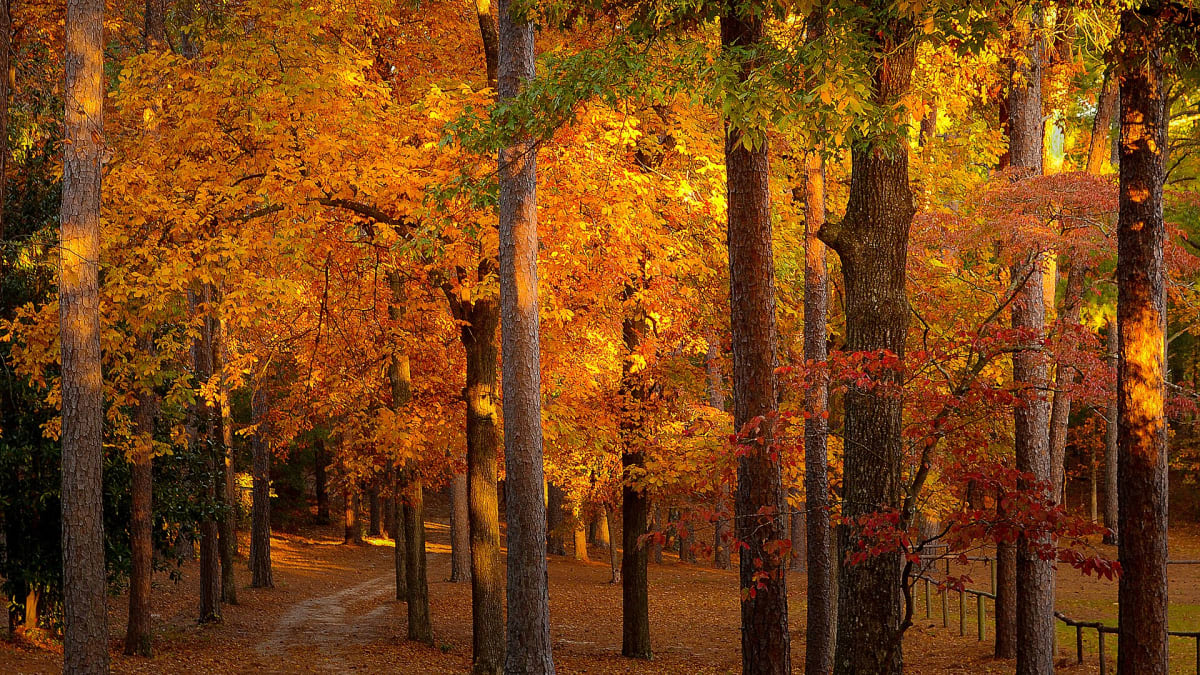
A wild forest of longleaf pine and soft sand trails, kept for walkers and riders in the heart of a small horse town.
Hitchcock Woods is one of the largest privately held urban forests in the United States, a great sweep of woodland folded into the southern edge of Aiken. Its miles of sandy trails run through longleaf pine, oak, and hickory, crossed by small creeks and open patches of white Sandhills sand, and they are set aside for people on foot, on horseback, and in horse-drawn carriages. No cars, no bikes, no engines.
The forest is a legacy of Aiken's Gilded Age, when wealthy Northern families wintered here to ride and hunt. The land was given over to protect that quiet, and it has stayed quiet ever since. Walk in a hundred yards and the town falls away, leaving birdsong, the creak of saddle leather, and the soft give of sand underfoot.
What Travelers Love
- Miles of soft, sandy trails open to walkers, riders, and horse-drawn carriages
- The hush of old longleaf pine and towering hardwoods far from any road
- Sunlight over the open sand of Devil's Backbone, a favorite overlook
- A rare pocket of true wildness tucked against the edge of town
Worth Knowing
- Horses have the right of way; step aside and let riders and carriages pass
- Cars, bikes, and motorized vehicles are not allowed on the trails
- The sandy footing drains fast after rain but can be soft and slow going
- Trails wind and branch, so a map or landmark sense helps on a first visit
Learn about Hitchcock Woods
The Winter Colony and the gift of the woods
In the decades after the Civil War, Aiken's mild climate and dry, piney air drew wealthy families from the Northeast, who built winter homes and stables and turned the town into a resort for riding, polo, fox hunting, and racing. This Gilded Age community became known as the Winter Colony, and it shaped Aiken's wide, unpaved horse lanes and its enduring devotion to the sporting life.
Hitchcock Woods takes its name from Thomas and Louise Hitchcock, leading figures of that colony, whose family assembled the land as a private preserve for riding and hunting. In the mid-twentieth century the family placed the forest in a trust so that it would be protected forever and open to the public on foot and on horseback. It has been cared for by a nonprofit foundation ever since, one of the reasons so wild a place still survives inside a growing town.
A Sandhills forest and how it lives
The woods sit in South Carolina's Sandhills, an ancient belt of white sand that marks the shoreline of a long-vanished sea. That deep, well-drained sand gives the forest its dry footing and its signature open glades, the most famous of which is Devil's Backbone, a ridge of bright sand that riders and walkers climb for the view.
The forest's keystone is the longleaf pine, a slow-growing tree that once covered vast stretches of the Southeast and now survives in only scattered remnants. Restoring and protecting longleaf here means careful, regular controlled burning, which clears brush, returns nutrients to the soil, and lets fire-adapted grasses and wildflowers thrive. The result is an airy, open woodland floor very different from a crowded second-growth forest.
Wildlife along the trails
For its size and its closeness to town, Hitchcock Woods holds a lot of life. White-tailed deer slip through the pines, gray and fox squirrels work the oaks, and the sandy soil is a haven for burrowing creatures and reptiles that like warm, dry ground. Foxes, raccoons, and the occasional bobcat move through as well, mostly unseen.
The birding is quietly excellent. Woodpeckers, including the big pileated, drum on dead pines, hawks ride the thermals over the open sand, and warblers and songbirds fill the hardwood bottoms in spring and fall. Along the small creeks that thread the forest, look for frogs, turtles, and dragonflies in the warmer months.
Season by season
Spring is glorious, with dogwood and wild azalea blooming under a pale green canopy and the trails alive with returning birds. The air is mild, and the whole forest feels new.
Summer is warm and shady in the deep woods, though the open sand of the glades can be hot at midday, so mornings are best. Fall brings crisp air, turning hardwoods, and the busy season for riders and carriage drivers who cherish the cooler days. Winter is the classic Aiken season, quiet and clear, the sand pale under bare branches, and the reason the Winter Colony came here in the first place.
Closest Boutels
The closest Boutel™ stays, so you can turn this stop into an overnight. Each is a place we chose through independent editorial review, never a paid placement.
The Station by Compo Hotels
Boutel745 Old Buncombe Rd, Travelers Rest, SC 29690, Travelers Rest, SC
105 miles away|Learn More ›
Details
Aiken, SC
Frequently asked questions
What is Hitchcock Woods?
Hitchcock Woods, in the town of Aiken in South Carolina, is one of the largest urban forests in the country, a vast privately owned but publicly accessible woodland preserve laced with miles of sandy trails. The extensive forest of longleaf pines, hardwoods, and sandy paths is a beloved place for walking, horseback riding, and enjoying nature, and it reflects Aiken's deep equestrian heritage, as it has long been used for riding and fox hunting. A peaceful natural retreat right by the town, Hitchcock Woods offers a rare expanse of urban wilderness. With its extensive forest and trails, Hitchcock Woods offers a delightful destination in South Carolina.
What can you do at Hitchcock Woods?
You can walk, hike, or ride horseback the miles of sandy trails through the vast forest of longleaf pines and hardwoods, enjoy the peaceful natural setting, watch for birds and wildlife, and experience Aiken's equestrian heritage in this woodland long used for riding. The extensive trails and the tranquil urban wilderness are the draws, offering a rare escape into nature right by the town. Note that some trails are shared with horses. With its forest trails, natural beauty, and equestrian heritage, Hitchcock Woods offers a rewarding outdoor experience in Aiken, South Carolina.
What should I know before visiting Hitchcock Woods?
Hitchcock Woods is a large forest with many trails, so bringing a map or trail guide is helpful to avoid getting lost, and wearing sturdy shoes and bringing water is wise, as the sandy trails wind for miles. Motorized vehicles and bicycles are generally not allowed to protect the woods, and many trails are shared with horses, so walkers should be courteous and give horses space. Stay on trails and respect the private preserve's rules. Bringing a map, staying on trails, and yielding to horses ensure an enjoyable visit to Hitchcock Woods in South Carolina.
When is the best time to visit Hitchcock Woods?
Spring and fall offer the most pleasant weather for walking and riding the trails, with mild temperatures and, in spring, greenery and wildflowers, while summer is warm and humid, so mornings are best, and the pine forest offers some shade, and winter is mild. The woods are lovely in the milder months. For the best combination of comfortable weather and enjoyable trails, aim for spring or fall at Hitchcock Woods in Aiken, South Carolina.
What is near Hitchcock Woods?
Hitchcock Woods is in the town of Aiken in South Carolina, within reach of Hopelands Gardens and the Aiken Thoroughbred Racing Hall of Fame, the Aiken County Historical Museum, Aiken Polo at Whitney Field, and Aiken's horse country. That makes Hitchcock Woods a delightful stop to combine with Hopelands Gardens, the Aiken County Historical Museum, and the other attractions of Aiken's horse country on a visit to South Carolina.
Nearby
Aiken County Historical Museum
0.2 miles away
The county museum sits inside one of the Winter Colony mansions itself, which is half the point.
Aiken Thoroughbred Racing Hall of Fame
0.7 miles away
Most visitors wander into Hopelands Gardens for the live oaks and camellias and only then discover the racing museum tucked inside the old estate stable.

Hopelands Gardens
0.8 miles away
For a quick, free breather in Aiken, walk the paths of Hopelands Gardens.
Aiken Polo at Whitney Field
1.1 miles away
People assume polo is invitation-only, but in Aiken you can pull up on a Sunday and watch from the grass.

Living History Park
15 miles away
This is history kids can watch happen. Living History Park in North Augusta is a recreated 1700s village where costumed volunteers actually forge iron, dip candles, spin thread, and cook over open fir...

Augusta Canal
15 miles away
Most people passing through Augusta for the golf never learn about the canal that built the city.
Edgefield Courthouse Square and the Pottery Tradition
20 miles away
Most people have never heard of Edgefield, yet its pottery hangs in the Met and the MFA in Boston.
Congaree National Park
55 miles away
One of the tallest deciduous forests left in the world, a floodplain of champion old-growth hardwoods.