
Augusta Canal
1359 Broad St, Augusta, GA
Augusta, GA
A nineteenth-century power canal still carrying water past old brick mills, now a National Heritage Area laced with towpath trails and quiet boat tours.
The Augusta Canal is a rare survivor: a nineteenth-century industrial canal that still carries water and still powers mills today, more than a century and a half after it was dug. Built in 1845 to bring water power, transportation, and drinking water to the growing city of Augusta, it became the engine of a textile industry that turned the town into a manufacturing center of the South.
Today the canal is the centerpiece of a National Heritage Area, and its old towpath has become a beloved trail for walking, running, and biking beside the water. Covered boats called Petersburg boats carry visitors on quiet tours past the old mills and along the Savannah River, and an interpretive center inside a historic mill tells the story of the water, the machines, and the people who worked here.
What Travelers Love
- Gliding the still water on a covered Petersburg boat tour
- Walking or biking the shaded towpath along the canal and river
- The interpretive center inside a historic textile mill
- Spotting herons, turtles, and other wildlife along the quiet water
Worth Knowing
- Boat tours run on a seasonal schedule, so check availability before you go
- The towpath is long and mostly flat, good for an easy walk, run, or ride
- Bring water and sun protection; much of the trail is open along the river
- The interpretive center is the best starting point to understand the canal
Learn about Augusta Canal
Why the canal was built
In the 1840s Augusta's leaders dug the canal to harness the fall of the Savannah River, drawing water off above the rapids and running it along a controlled channel to power mills and factories. Completed in 1845 and later enlarged, it gave the city cheap, reliable water power at a time when steam was expensive and coal had to be hauled in.
The canal made Augusta an industrial powerhouse. Textile mills, a paper mill, and other factories lined its banks, and during the Civil War the Confederacy built a large gunpowder works along the canal, one of the biggest in the world at the time. A tall brick chimney from that powder works still stands as a landmark of the era.
The boat tours and the towpath
The signature way to experience the canal is aboard a Petersburg boat, a long covered vessel modeled on the flat cargo boats that once worked these waters. The tours drift quietly along the canal, with guides explaining the history of the mills, the engineering, and the wildlife, and moving slowly enough to let the scenery unfold.
On foot or by bike, the towpath offers miles of level trail between the canal and the river. Shaded by trees and lined with old stonework, it is a favorite for locals out for exercise and for visitors looking to see the mill district up close. The path connects trailheads through the city and offers views of the water at every turn.
The mills and the interpretive center
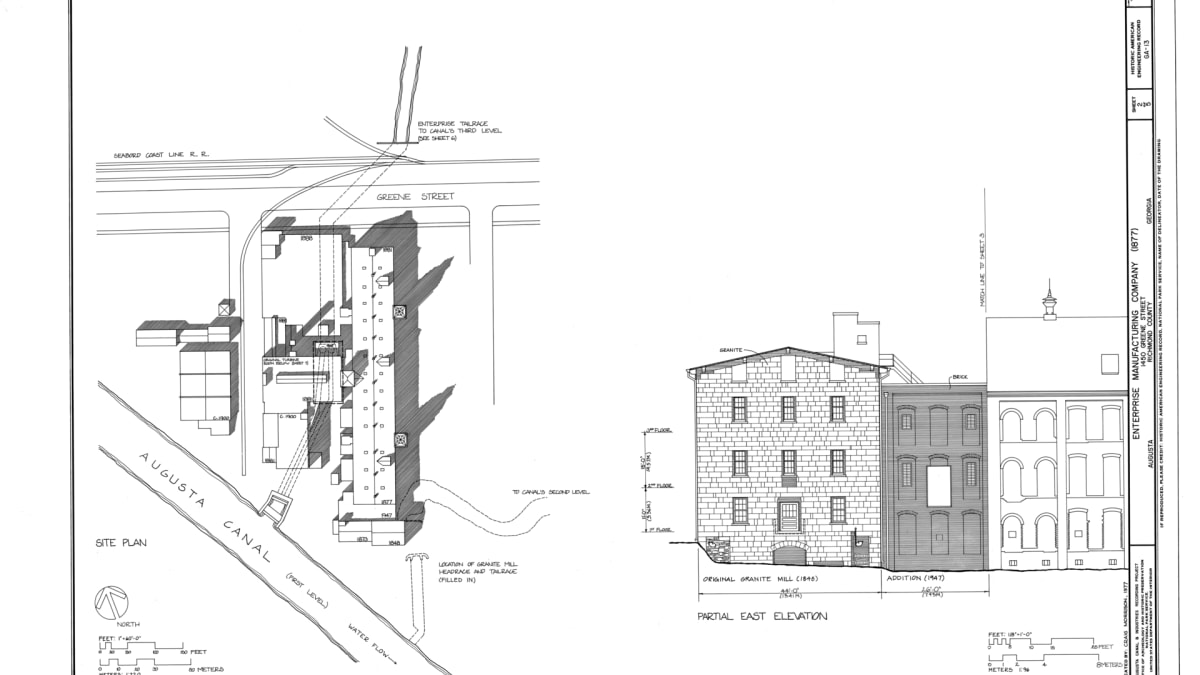
The canal's interpretive center is housed inside the Enterprise Mill, a restored brick textile mill that still turns a working turbine. Exhibits inside explain how water power drove the machines, what daily life was like for the mill workers and their families, and how the canal shaped the city over generations.
The mill district around the canal remains a striking landscape of tall brick buildings, some repurposed for new uses and some still tied to the water. Together the center and the surrounding structures give a vivid sense of an industrial age powered not by steam or electricity but by the steady pull of moving water.
Wildlife and the seasons
Despite running through a city, the canal corridor is surprisingly wild. Great blue herons stalk the shallows, turtles bask on logs, and ospreys and kingfishers work the water. The wooded banks shelter songbirds, deer wander the greener stretches, and the still water mirrors the trees.
Spring and fall are the most comfortable seasons to walk or paddle here, mild and green. Summer along the river is hot and humid, best enjoyed early in the day or from the shade of a boat, while winter is quiet and cool, the bare trees opening up longer views across the water.
Closest Boutels
The closest Boutel™ stays, so you can turn this stop into an overnight. Each is a place we chose through independent editorial review, never a paid placement.
The Station by Compo Hotels
Boutel745 Old Buncombe Rd, Travelers Rest, SC 29690, Travelers Rest, SC
105 miles away|Learn More ›
Details
Augusta, GA
Frequently asked questions
What is the Augusta Canal?
The Augusta Canal, in Augusta, Georgia, is a historic industrial canal, now a beautiful recreational and heritage destination, the only intact industrial canal of its kind in the South still in use. Built in the mid-nineteenth century to provide water power, transportation, and water supply, the canal helped make Augusta an industrial center, and today its scenic waters and towpath offer boating, kayaking, biking, and walking, along with historic boat tours aboard interpretive vessels that share the canal's history and the industrial and natural heritage along its banks. A lovely blend of history, nature, and recreation, it delights visitors. With its historic canal and recreation, the Augusta Canal offers a delightful destination in Georgia.
What can you do at the Augusta Canal?
You can take a historic boat tour aboard an interpretive vessel to learn the canal's industrial and natural history, kayak or canoe the scenic waters, bike or walk the towpath along the banks, watch for wildlife, and explore the canal's heritage and the historic mills. The historic boat tours, the paddling and towpath, the industrial heritage, and the natural scenery are the draws, making it a rewarding blend of history and outdoor recreation. Its living industrial history is unique. With its canal and recreation, the Augusta Canal offers a rewarding experience in Georgia.
Why is the Augusta Canal historically important?
The Augusta Canal is historically important as the only intact industrial canal of its kind in the South still in use, built in the mid-nineteenth century to harness water power, transportation, and water supply, which helped transform Augusta into a significant industrial center. The canal powered mills and factories and shaped the city's economy and history, and it remains a working canal today. Its survival makes it a rare and valuable piece of industrial heritage. Understanding this history enriches a visit to the Augusta Canal in Georgia.
When is the best time to visit the Augusta Canal?
The mild months of spring through fall offer the most pleasant weather for boat tours, paddling, biking, and walking along the canal, with spring and fall especially comfortable and beautiful, while summer can be warm and humid, so mornings help. Fall brings lovely color along the banks. Because boat tours run on a schedule, checking current times before you go is wise. For the most pleasant weather to enjoy the canal, aim for spring through fall at the Augusta Canal in Georgia.
What is near the Augusta Canal?
The Augusta Canal is in Augusta, Georgia, within reach of downtown Augusta along the Savannah River, the historic mills and heritage sites of the area, and the eastern Georgia region. That makes the Augusta Canal a delightful stop to combine with the downtown Augusta attractions and the other sights of eastern Georgia on a visit to the state.
Nearby

Living History Park
1.2 miles away
This is history kids can watch happen. Living History Park in North Augusta is a recreated 1700s village where costumed volunteers actually forge iron, dip candles, spin thread, and cook over open fir...

Hitchcock Woods
15 miles away
It is rare for a town this size to hold a wild forest this large right against its downtown.

Hopelands Gardens
15 miles away
For a quick, free breather in Aiken, walk the paths of Hopelands Gardens.
Aiken County Historical Museum
15 miles away
The county museum sits inside one of the Winter Colony mansions itself, which is half the point.
Aiken Thoroughbred Racing Hall of Fame
16 miles away
Most visitors wander into Hopelands Gardens for the live oaks and camellias and only then discover the racing museum tucked inside the old estate stable.
Aiken Polo at Whitney Field
16 miles away
People assume polo is invitation-only, but in Aiken you can pull up on a Sunday and watch from the grass.