
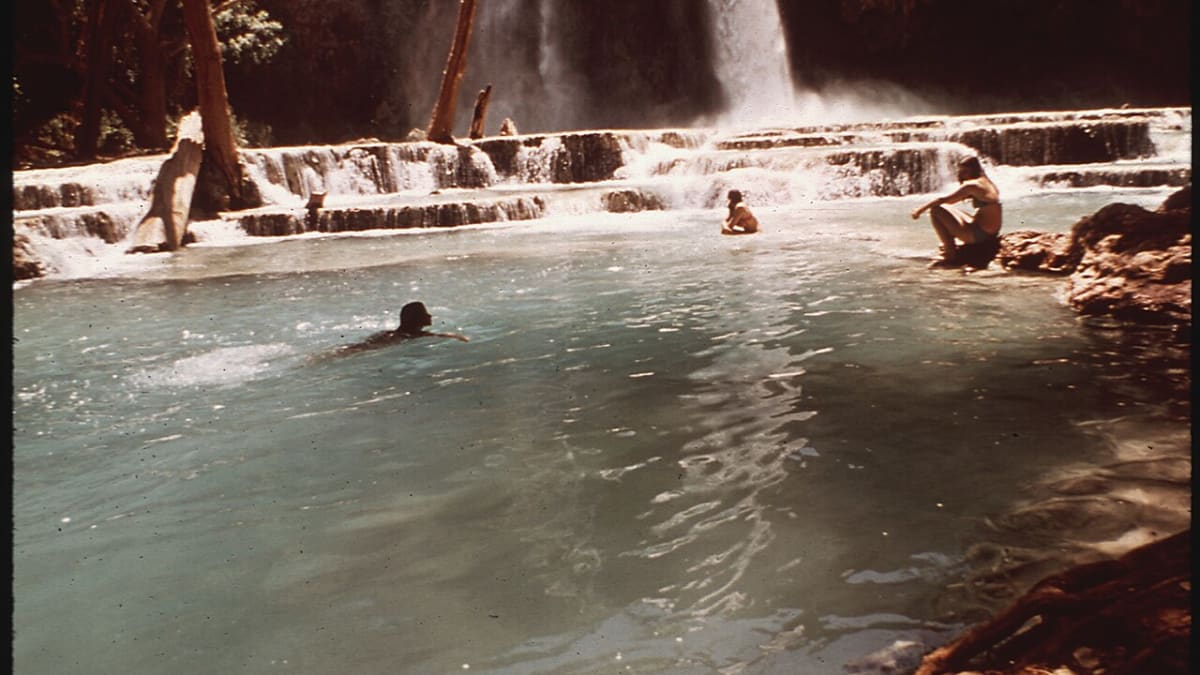
Havasu Falls
Havasu Falls Trail, Supai, AZ
Supai, AZ
A wall of turquoise water pouring over red rock into travertine pools, deep in the Grand Canyon on the land of the Havasupai, the people of the blue-green water.
Havasu Falls is one of the most photographed waterfalls in the world, and for good reason. Deep in a side canyon of the Grand Canyon, a wall of water pours over a red-rock cliff into a series of pools so vividly turquoise they almost look painted. The color is real, and it comes from minerals dissolved in the water, but the falls sit so far from any road that reaching them takes a serious commitment.
The falls belong to the Havasupai, whose name means people of the blue-green water, and whose village of Supai lies nearby. This is not a park you drive to. There is no road in, and the only ways to reach the falls are on foot down a long canyon trail, by horse, or by helicopter. That remoteness is a large part of why the place feels the way it does, and why every visitor comes as a guest on tribal land.
What Travelers Love
- The startling turquoise color of the water against the deep red canyon walls
- Swimming and wading in the travertine pools below the falls
- The long, dramatic hike in through a narrowing red-rock canyon
- The deep quiet of one of the most remote inhabited places in the United States
Worth Knowing
- This is Havasupai tribal land, not a national or state park, and a permit reserved well in advance is required for every visitor
- There is no road in, so reaching the falls means a long, hot canyon hike each way, and you carry what you need
- Flash floods can surge through the canyon during storms, so heed weather warnings and tribal guidance
- Treat the village of Supai and the whole canyon with respect as a living community and a sacred home, not a backdrop
Learn about Havasu Falls
The people of the blue-green water
The Havasupai have lived in and around this canyon for many generations, farming the fertile canyon floor in the warm months and moving up onto the plateau to hunt and gather in winter. Their name for themselves, Havasu Baaja, means people of the blue-green water, and the falls and creek are central to who they are. The village of Supai, tucked into the canyon below the rim, is home to a few hundred people and is one of the most isolated communities in the country, so remote that mail is still carried in and out by pack mule.
In the nineteenth century the tribe was confined to a small parcel of their canyon while much of their traditional plateau land was taken, and it was only in 1975 that a large portion of that land was returned to them by act of Congress. Today the Havasupai manage the falls themselves, welcome a limited number of visitors by permit, and ask that everyone treat the canyon as the living home and sacred place it is.
Why the water glows turquoise
The extraordinary color of Havasu Creek comes from what is dissolved in it. The water flows up through layers of limestone and picks up a heavy load of calcium carbonate, the same mineral that makes up limestone and travertine. When that mineral-rich water reflects sunlight, it scatters the light in a way that gives the creek its striking blue-green cast, far more vivid than ordinary water.
That same mineral load builds the landscape. As the water tumbles and slows, it deposits the dissolved calcium carbonate as travertine, a pale rock that forms shelves, dams, and terraces along the creek. Those natural dams are what create the tiered, curving pools below Havasu Falls, and because travertine is always being laid down, the shape of the pools slowly changes over the years. The canyon is essentially building its own stone stairways, one thin layer of mineral at a time.
Wildlife of the canyon
The oasis of Havasu Creek draws life into an otherwise dry canyon. Cottonwoods and willows line the water, and the greenery pulls in songbirds, hummingbirds, and canyon wrens whose falling song echoes off the walls. Bighorn sheep pick their way along the ledges above the creek, and mule deer come down to the water.
The pools and creek hold fish and frogs, and the surrounding red-rock country is home to lizards, ringtails, and rattlesnakes, so care with hands and feet matters here as anywhere in the canyon. Overhead, ravens and the occasional raptor ride the updrafts along the cliffs, and the mix of desert and water makes the canyon far richer in life than its bare red walls first suggest.
Season by season
Spring and fall are the best times to make the trip, with warm but bearable temperatures for the long hike in and out and comfortable water for swimming. These shoulder seasons avoid the worst of both the summer heat and the winter cold.
Summer down in the canyon is very hot, and the strenuous hike in full sun becomes genuinely demanding, though the cool pools are a welcome reward. Late summer is also monsoon season, when sudden storms can send dangerous flash floods roaring through the narrow canyon, so weather awareness is essential. Winter is cold and quiet, the water too chilly for most swimmers, and the canyon at its most solitary.
Closest Boutels
The closest Boutel™ stays, so you can turn this stop into an overnight. Each is a place we chose through independent editorial review, never a paid placement.
Details
Supai, AZ
Frequently asked questions
What is Havasu Falls?
Havasu Falls is a breathtaking waterfall on the Havasupai Reservation, in a remote side canyon of the Grand Canyon in Arizona, famous worldwide for its stunning turquoise-blue water plunging over red-rock cliffs into inviting pools. Part of a series of spectacular falls that also includes Mooney and Beaver Falls, it lies deep within Havasu Canyon on tribal land near the village of Supai. The surreal blue-green water, colored by high mineral content, set against the desert canyon, makes Havasu Falls one of the most beautiful and sought-after natural wonders in the American Southwest.
How do you visit Havasu Falls, and do you need a permit?
Visiting Havasu Falls requires a permit from the Havasupai Tribe, and these are limited, in extremely high demand, and must be reserved far in advance, often selling out very quickly, so you cannot visit without securing one. Permits include the required overnight stay, as day hiking to the falls is not allowed. Reaching the falls involves a strenuous hike of roughly ten miles each way from the trailhead down into the canyon to the campground near the falls. Planning far ahead for permits is absolutely essential.
What safety precautions should I take at Havasu Falls?
This is a serious undertaking: the hike is long, remote, and strenuous, with an exhausting climb out, so carry ample water, food, and sun protection, and be very fit and well-prepared, since the desert heat can be dangerous and rescues are difficult in this isolated area. Critically, flash floods can surge through the canyon with little warning, and they have forced dangerous evacuations, so heed all weather and tribal warnings and never enter during flood risk. Respect the falls, do not take risks around the water and cliffs, and follow all tribal rules.
When is the best time to visit Havasu Falls?
Spring and fall offer the most comfortable temperatures for the demanding hike, while summer brings dangerous heat in the canyon that makes the trek hazardous, and the monsoon season carries flash-flood risk, so these must be weighed carefully. The turquoise water is beautiful year-round. Because permits are limited and tied to specific dates you must book far in advance, your timing often depends on permit availability. For the safest and most comfortable trip, the milder shoulder seasons are preferable, always with careful attention to weather and flood risk.
What is near Havasu Falls?
Havasu Falls is on the Havasupai Reservation in a remote western arm of the Grand Canyon, reached via the village of Supai and a trailhead far from other services, with the broader Grand Canyon region, Route 66 towns like Seligman and Kingman, and the Grand Canyon's rims within the wider area. Because it is so remote and permit-controlled, it is very much its own destination. That makes Havasu Falls a bucket-list natural wonder best planned as a dedicated, permit-based trip rather than a casual add-on to other Arizona sights.
Nearby
Bright Angel Trail
32 miles away
Bright Angel Trail is the most accessible canyon trail, built along an ancient Havasupai route. The first rest house (3 miles, 2,120-foot drop) is the safe turnaround for day hikers.

El Tovar Hotel, Grand Canyon South Rim
32 miles away
El Tovar (1905) is a National Historic Landmark and was the premiere tourist hotel in the American West when it opened.

Grand Canyon South Rim
32 miles away
The South Rim of the Grand Canyon receives about 5 million visitors per year and is accessible year-round. The Rim Trail runs 13 miles along the canyon edge with free shuttle access to viewpoints.

Grand Canyon National Park
34 miles away
A mile deep and up to 18 miles wide, revealing nearly two billion years of Earth's history in its walls.