Grand Mesa
Trickle Park Rd, near Cedaredge, CO
Cedaredge, CO
One of the largest flat-topped mountains on Earth, a high, cool plateau of dark forest and hundreds of lakes rising above the desert of the Western Slope.
Grand Mesa is one of the largest flat-topped mountains in the world, a vast basalt-capped plateau rising to around 11,000 feet above the desert valleys of Colorado's Western Slope. From below it looks like a giant table set against the sky, and on top it opens into a rolling world of dark spruce and fir forest, aspen groves, meadows, and hundreds of lakes, a cool green island floating high above the heat of the Grand Valley.
The contrast is the wonder of it. The country around the mesa is high desert, hot and dry, but climb the scenic byway to the top and you enter an entirely different landscape, cooler by many degrees, forested, and dotted with more than three hundred lakes and reservoirs. It is a place people have long escaped to when the valleys bake, for fishing, camping, and simply breathing the cool mountain air.
What Travelers Love
- A cool, forested high plateau above the desert heat below
- Hundreds of lakes scattered across the top for fishing and paddling
- The scenic byway that climbs onto the mesa with big views
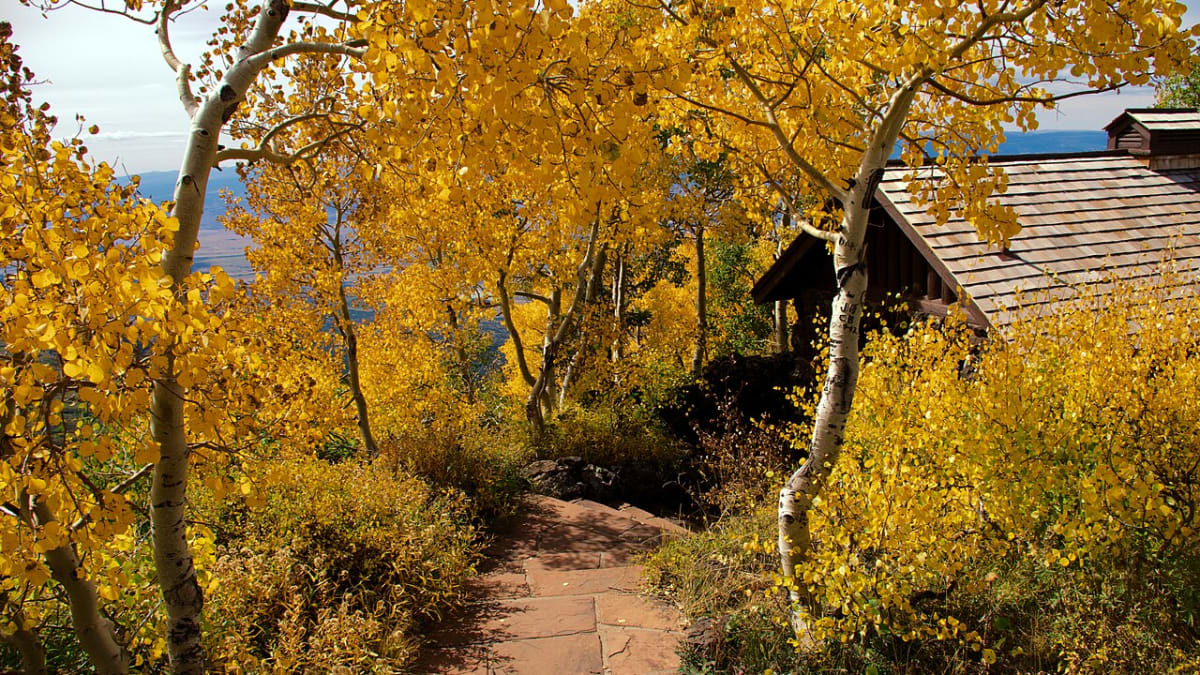
- Aspen groves turning gold across the top in autumn
Worth Knowing
- The top is much cooler than the valleys, so bring layers even in summer
- Deep snow closes much of the mesa to cars in winter
- Afternoon thunderstorms are common in summer at elevation
- It makes a welcome cool escape when the Grand Valley bakes
Learn about Grand Mesa
A mountain capped by lava
Grand Mesa owes its flat top and its great size to volcanic rock. Millions of years ago, lava flows spread across the region and hardened into thick layers of basalt, an extremely hard and durable rock. That basalt cap protected the softer sedimentary layers beneath it from erosion, so as the surrounding country wore down over the ages, the lava-topped plateau was left standing high above it, its edges falling away in steep cliffs.
The same hard cap is why the top is so broad and level rather than sharp and peaked like most mountains. Grand Mesa is not a summit so much as a high tableland, tens of miles across, a landscape shaped by fire and then by ice, with the marks of ancient glaciers helping to scoop out the basins that hold its many lakes.
A land of hundreds of lakes
The single most striking feature of the mesa top is its water. More than three hundred lakes and reservoirs are scattered across the plateau, left by glaciers and by the way water pools on the hard basalt, making Grand Mesa a paradise for anglers who come for trout in cold, clear mountain water. Many of the lakes sit right along the roads and trails, easy to reach for a morning's fishing or an evening's paddle.
That abundance of water, combined with the cool elevation, keeps the top green and lush through the summer, a striking contrast to the parched valleys below. The lakes freeze over in winter, when the whole mesa disappears under deep snow, but through the warm months they draw families to fish, boat, and camp along their shores.
Forests, wildlife, and the seasons
The mesa top is cloaked in dark forests of Engelmann spruce and subalpine fir, broken by extensive groves of aspen that make it one of the great places in Colorado to see fall color, when the whole plateau turns to shimmering gold. Wildflower meadows fill the open spaces in summer, and the cool, moist climate keeps everything green far longer than in the desert below.
The forests and meadows support abundant wildlife. Large elk and mule deer herds range across the mesa, black bears roam the forests, and the lakes and streams draw birds and beavers. The area was long known to the Ute people, whose homeland this high country is and who valued its cool summers and rich hunting, and their ties to the mesa remain part of its story.
The byway and the towns below
The Grand Mesa Scenic and Historic Byway climbs from the valleys onto the top of the mesa and over it, one of the finest drives on the Western Slope, with sweeping overlooks from the rim and access to the lakes, campgrounds, and trailheads scattered across the plateau. It is the easiest way to experience the mesa, and a summer drive over the top is a highlight of the region.
Below, the towns of Cedaredge on the south and Mesa on the north serve as gateways, with Cedaredge sitting amid orchards on the mesa's apple-growing slopes. Grand Junction and the Grand Valley lie to the west, so the mesa makes an easy cool escape from the desert country, a high green retreat rising right out of the sagebrush.
Closest Boutels
The closest Boutel™ stays, so you can turn this stop into an overnight. Each is a place we chose through independent editorial review, never a paid placement.
Details
Cedaredge, CO
Frequently asked questions
What is Grand Mesa?
Grand Mesa, in western Colorado near Grand Junction, is the largest flat-top mountain in the world, a vast, high plateau rising to around eleven thousand feet and covered with forests, meadows, and hundreds of sparkling lakes. This cool, scenic highland offers a refreshing escape from the lower desert, with abundant opportunities for fishing, hiking, camping, boating, wildlife viewing, and, in winter, snowmobiling and cross-country skiing. The scenic Grand Mesa byway winds across the plateau, offering beautiful views and access to its lakes and forests. With its unique geography, cool climate, and outdoor recreation, Grand Mesa is a beloved and distinctive natural destination in western Colorado.
What can you do at Grand Mesa?
You can fish in the hundreds of lakes and reservoirs, hike and bike the forest and meadow trails, camp at the many campgrounds, boat and paddle on the lakes, watch for wildlife, drive the scenic Grand Mesa byway with its overlooks, and enjoy the cool mountain air and beautiful scenery, while winter brings snowmobiling, cross-country skiing, and snowshoeing. The abundance of lakes makes it a paradise for anglers and water lovers. With its many lakes, trails, camping, scenic drive, and year-round recreation, Grand Mesa offers a wonderful and refreshing high-country escape in western Colorado.
What should I know before visiting Grand Mesa?
Grand Mesa's high elevation of around eleven thousand feet means it is much cooler than the surrounding lower country, with thin air that can affect visitors, so bring warm layers even in summer, when the top can be chilly and stormy, and be prepared for rapidly changing mountain weather including afternoon thunderstorms. The scenic byway and some roads may be closed or difficult in winter due to snow. Bring water, sun protection, and supplies for the high country. Being prepared for the cool temperatures, elevation, and weather ensures a comfortable and safe visit to Grand Mesa.
When is the best time to visit Grand Mesa?
Summer and early fall are ideal for fishing, hiking, camping, and enjoying the cool escape from the desert heat, with wildflowers in summer and beautiful color in fall, while winter transforms the mesa into a snowy playground for snowmobiling and cross-country skiing. Spring can be muddy as snow melts. The high elevation keeps summers pleasantly cool. For the lakes, trails, and warm-weather recreation, aim for summer or early fall, and for snow sports, visit in winter. Grand Mesa's year-round recreation makes it rewarding in multiple seasons depending on your interests.
What is near Grand Mesa?
Grand Mesa is in western Colorado near Grand Junction, close to the Palisade wine country and orchards, the stunning Colorado National Monument with its red rock canyons, the dinosaur museums and fossil sites of the area, and within reach of the region's outdoor recreation. That makes Grand Mesa a refreshing high-country stop to combine with Palisade wine country, Colorado National Monument, the dinosaur attractions, and the scenery and recreation of western Colorado on a visit to the state.
Nearby

Palisade Wine Country
20 miles away
Palisade produces the largest commercial peach crop in Colorado from an agricultural valley that benefits from reflected heat off the Book Cliffs and a growing season 50 days longer than Denver.
Little Book Cliffs Wild Horse Range
28 miles away
One of only three protected wild horse ranges in America, more than 36,000 acres of red canyons and juniper plateaus northeast of Palisade where free-roaming mustangs run.

Painted Wall
36 miles away
The Painted Wall is the tallest cliff in Colorado, a sheer 2,250-foot rampart of dark rock streaked with pale pink bands of pegmatite that look like they were brushed on by hand.
Black Canyon of the Gunnison National Park
37 miles away
A gorge so narrow and deep that parts of its walls get only 33 minutes of sunlight a day.