

Ginkgo Petrified Forest State Park
4511 Huntzinger Rd
Vantage, WA
A hillside above the Columbia where whole logs turned to stone, including the rare petrified ginkgo, entombed by lava millions of years ago.
Ginkgo Petrified Forest is one of the strangest fossil sites in the country, a place where entire tree trunks have turned to solid stone. Most petrified forests preserve a handful of familiar species, but the logs here came from an unusually rich ancient forest, and among them are rare examples of the ginkgo, a tree that survives today only in cultivation and a few wild refuges in China.
The park spreads across desert bluffs above the Columbia River at Vantage, in the dry heart of Washington. It pairs deep geologic time with human history: a small interpretive center, a trail among the stone logs, and a set of Native petroglyphs saved from the rising river.
What Travelers Love
- Seeing whole trees turned to stone, including the rare petrified ginkgo, a tree long vanished from the wild
- The interpretive center overlooking the Columbia, with polished cross-sections of ancient logs
- The Wanapum petroglyphs preserved at the site, pecked into the basalt long ago
- A trail among fossil logs in a wide-open desert landscape most travelers speed right past
Worth Knowing
- The fossil-log trail is exposed high desert, hot and shadeless in summer, so go early and carry water
- Collecting petrified wood in the park is prohibited; the specimens are protected
- A Washington Discover Pass is required to park
- The interpretive center keeps seasonal hours, though the trails and river shoreline are open more broadly
Learn about Ginkgo Petrified Forest State Park
How wood turns to stone
Millions of years ago, in the age when great floods of lava were building the Columbia Plateau, trees from a lush forest fell or washed into a shallow lake. There, waterlogged and buried in mud, they were shielded from rot and from the worst of the heat when later lava flows poured over the basin.
Slowly, mineral-rich groundwater seeped through the buried logs, replacing the wood, cell by cell, with silica until the trees became stone that still shows the grain and rings of the original wood. The lake setting is why so many different species survived here, and why the delicate ginkgo, rarely found petrified anywhere, turns up at this one hillside.
The petrified ginkgo
The ginkgo is often called a living fossil. It is the last survivor of an ancient lineage of trees, unchanged in form for a very long time, and in the wild it had all but disappeared before being kept alive in temple gardens and, later, city streets around the world.
To find it here, turned to stone in a Washington hillside, is a small marvel: proof that the tree once grew wild across this continent before the climate changed and the great lava flows reshaped the land. The park takes its name from that rare and famous fossil.
The Wanapum and the river
The Wanapum people have lived along this stretch of the Columbia for a very long time, fishing its salmon and traveling its shores, and they used the hard petrified wood exposed by erosion for tools and points. When dams raised the river in the twentieth century, petroglyphs that Native people had pecked into the basalt were at risk of being drowned.
Many of those carvings were moved and are now preserved at the park, where you can see the old images of people and animals up close. They are a reminder that this open, seemingly empty country has been a lived and traveled place for thousands of years.
Wildlife and seasons
The shrub-steppe here is home to marmots, jackrabbits, coyotes, mule deer, and rattlesnakes, with sagebrush songbirds and raptors overhead. Along the river, the reservoir shoreline draws waterfowl and fishers.
Spring is the gentlest season, when the desert greens briefly and wildflowers appear and the heat has not yet set in. Summer is hot and bright, fall is mild, and winter is cold and windy on the open bluffs, though the fossil logs are just as remarkable in any season.
Closest Boutels
The closest Boutel™ stays, so you can turn this stop into an overnight. Each is a place we chose through independent editorial review, never a paid placement.
Details
Vantage, WA
Frequently asked questions
What is Ginkgo Petrified Forest State Park?
Ginkgo Petrified Forest State Park, near the town of Vantage on the Columbia River in central Washington, protects one of the most unusual and significant fossil forests in the country, notable for its petrified ginkgo wood, a rarity, along with petrified wood from many other ancient tree species. Millions of years ago, trees were buried and turned to stone here, preserving a remarkable record of ancient forests. The park features an interpretive center, trails past petrified logs, ancient Native American petroglyphs, and scenic views over the Columbia River. With its rare petrified ginkgo, fossil wood, petroglyphs, and river scenery, Ginkgo Petrified Forest State Park offers a fascinating natural and cultural destination in central Washington.
What can you see at Ginkgo Petrified Forest State Park?
You can visit the interpretive center to learn about the petrified wood and see polished specimens, hike the trails past petrified logs still in the ground, view ancient Native American petroglyphs preserved at the park, take in scenic views over the Columbia River, and appreciate the geologic and natural history of the area. The rare petrified ginkgo wood is a special highlight. The combination of fossils, petroglyphs, and river scenery is engaging. With its petrified wood, interpretive center, petroglyphs, and Columbia River views, Ginkgo Petrified Forest State Park offers a fascinating and educational outdoor experience in central Washington.
What safety tips apply at Ginkgo Petrified Forest State Park?
The park is in an exposed, arid setting that can be very hot in summer with little shade, so carry plenty of water, wear sun protection, and hike in cooler hours during warm months. Watch for rattlesnakes in warm weather on the trails. Do not remove petrified wood or disturb the petroglyphs, which are protected. Stay on the trails and watch your footing on rocky terrain. Being prepared for the heat and sun, watching for wildlife, and respecting the protected fossils and petroglyphs ensures a safe and considerate visit to Ginkgo Petrified Forest State Park.
When is the best time to visit Ginkgo Petrified Forest State Park?
Spring and fall offer the most comfortable temperatures for hiking the exposed trails, with spring bringing wildflowers to the area and fall offering pleasant weather, while summer can be very hot in the arid central Washington setting, so early morning visits with water are best then, and winter is cold. The interpretive center is enjoyable in any weather. For the best combination of comfortable weather and enjoyable hiking to see the petrified wood and petroglyphs, aim for spring or fall, or a cool summer morning, at Ginkgo Petrified Forest State Park.
What is near Ginkgo Petrified Forest State Park?
Ginkgo Petrified Forest State Park is near Vantage on the Columbia River in central Washington, near the Wild Horse Monument overlooking the river, the Gorge Amphitheatre concert venue, and within reach of the Yakima area, the Columbia River, and the scablands and Cascade foothills. That makes Ginkgo Petrified Forest State Park a fascinating stop to combine with the Wild Horse Monument, the Columbia River, and the other attractions of central Washington on a visit to the state.
Outside the Park
Wild Horse Monument
3.3 miles away
The monument is reached from I-90 exit 139 just east of the Vantage bridge; follow the pavement a short way to the parking lot.

Yakima River Canyon
29 miles away
SR-821 through the Yakima River Canyon is a 26-mile road through a basalt canyon that concentrates wildlife viewing, fishing access, and geology in a single corridor.
Columbia National Wildlife Refuge
32 miles away
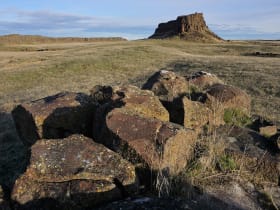
Columbia National Wildlife Refuge covers 23,000 acres of channeled scablands, pothole lakes, and basalt coulees in the heart of the Columbia Basin.