
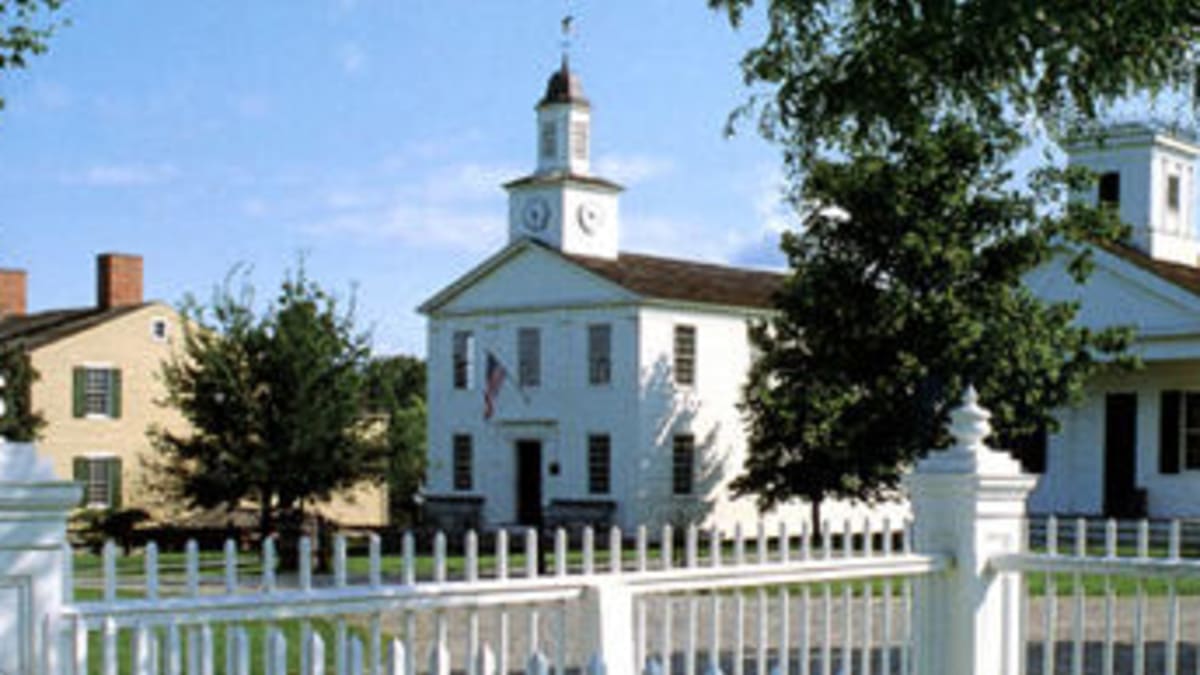
Genesee Country Village and Museum
310 Leicester St, Caledonia, NY
Mumford, NY
A whole 19th-century village reassembled building by building, where blacksmiths, printers, and farmers keep the old trades alive along dust-and-gravel streets.
Genesee Country Village and Museum is a re-created 19th-century village in the Genesee Valley of western New York, built not from replicas but from real historic buildings. Beginning in the 1960s, founders searched the region for endangered old homes, shops, and public buildings, then carefully dismantled and moved them to this site, where they were reassembled into a single living settlement of dozens of structures.
The result is one of the largest living-history villages in the country, a place where you can walk gravel streets past a tavern, a blacksmith shop, a printing office, farmhouses, and a village green. Costumed interpreters work the trades and farms with period tools, so the settlement feels less like a museum and more like a town caught in another century.
What Travelers Love
- Wandering streets of genuine 19th-century buildings saved from demolition and rebuilt here
- Costumed interpreters practicing real trades, from blacksmithing to printing to open-hearth cooking
- Heritage farm animals and heirloom gardens worked with period tools and methods
- The nature center and wetlands trails that wrap around the village
Worth Knowing
- It is a large outdoor site with a lot of walking on gravel and grass, so wear comfortable shoes
- The village runs on a seasonal calendar with special events, so check what is happening the day you go
- Much of the experience is outdoors, so dress for the weather
- The site welcomes visitors on a seasonal schedule; allow most of a day to see it well
Learn about Genesee Country Village and Museum
A village rescued and rebuilt
The Genesee Valley grew rapidly in the 1800s as settlement and the Erie Canal opened western New York, and it filled with fine brick and timber buildings. By the mid-20th century many of those buildings were threatened by decay and demolition, their craftsmanship at risk of being lost.
Starting in the 1960s, a preservation effort set out to save the best of them. Rather than let these structures fall, the founders acquired buildings from across the region, documented them, took them apart, and rebuilt them here on open farmland. Arranged along streets and around a green, they became a re-created village that preserves not just individual buildings but the feel of an entire 19th-century community. This land lies within the homeland of the Seneca, the westernmost of the Six Nations of the Haudenosaunee, whose nation continues in the region today.
The trades and daily life
What brings the village alive is the work. Interpreters in period dress staff the shops and homes, and they do the actual jobs, the blacksmith heating and hammering iron, the printer setting type by hand, the tinsmith, the potter, the cooks tending open hearths. Visitors can watch each craft up close and ask questions as the work goes on.
The village represents a span of the 1800s, so its buildings and interpreters show how homes and businesses changed across the century, from simple early cabins to more elaborate later houses. Together they tell the story of ordinary life in a growing American town, the labor, the households, the shops and gathering places that made a community run.
Farms, gardens, and heritage animals
Beyond the streets lie working heirloom gardens and a historic farm, tended with the tools and techniques of the period. Heritage breeds of cattle, sheep, pigs, and poultry, the older kinds that were common on 19th-century farms, live and graze here, and interpreters explain how those animals fit into the farm year.
The gardens grow old varieties of vegetables, herbs, and flowers, planted and harvested as they would have been long ago. Watching a field plowed by hand or a garden bed worked with period implements gives a vivid sense of how much labor daily life once demanded, and how closely a village lived by the rhythm of the seasons.
Nature center and the surrounding land
The village is wrapped by a nature center with trails through meadows, woods, and wetlands, so a visit combines human history with the living landscape of the Genesee Valley. Boardwalks cross marshy ground rich with birds, and quiet paths lead through habitat that has been protected alongside the buildings.
Migrating and nesting birds, turtles, and other wetland wildlife make the nature center a rewarding walk, especially in spring and fall. Together with the village, it turns the site into a full day out, part immersion in the 1800s and part ramble through the countryside that shaped the region.
Closest Boutels
The closest Boutel™ stays, so you can turn this stop into an overnight. Each is a place we chose through independent editorial review, never a paid placement.
Pines Motel on Lake Erie
Honorable Mention10684 West Lake Road, Ripley, NY
108 miles away|Learn More ›
Details
Mumford, NY
Frequently asked questions
What is the Genesee Country Village and Museum?
It is the largest living-history museum in New York State and one of the biggest in the country, located near Rochester. It recreates nineteenth-century life across a village of dozens of authentic historic buildings that were carefully relocated from around the region and restored. With costumed interpreters, heritage gardens and animals, and hands-on demonstrations, it immerses visitors in the sights, sounds, and daily rhythms of early America.
What can you see and do at Genesee Country Village?
You can wander the historic village and meet costumed interpreters demonstrating trades and household skills, explore period homes, shops, and farms, and see heirloom gardens and heritage-breed animals. The site also includes a nature center with trails and an art gallery, along with a full calendar of seasonal festivals and special events. It is an engaging, walk-through-time experience for the whole family.
How much time do you need at Genesee Country Village?
Plan on most of a day, since it is a large, spread-out outdoor campus with many buildings and demonstrations to explore. Wear comfortable walking shoes and dress for the weather, as you will be outdoors much of the time. Taking your time to talk with the interpreters and watch the demonstrations is a big part of the experience, so give yourself room to linger.
When is the Genesee Country Village open, and when should I go?
It is a seasonal museum, generally open from spring through fall, with special events and some holiday-season programming, so check the current calendar and hours before planning a trip. Summer and fall are especially pleasant for strolling the village grounds, and the many festivals throughout the season can add extra fun to a visit if you time it right.
Is Genesee Country Village good for families?
Very much so. The immersive, hands-on nature of the living-history village captivates children and adults alike, turning history into something you can see, hear, and sometimes try yourself. The animals, gardens, demonstrations, and nature center keep kids engaged, and the open grounds give them room to roam. It is a memorable, educational outing that brings the past to life in a way books cannot.
Nearby

The Strong National Museum of Play
18 miles away
This is a full day of doing, not just looking. The Strong in Rochester is built around play itself: kids climb, build, dress up, and race through re-created streetscapes, a giant Sesame Street area, a...
George Eastman Museum
19 miles away
Rochester built its fortune on film, and this is where you feel it. The George Eastman Museum sits in the restored 50-room mansion of the Kodak founder, the man who put a camera in everyone's hands.
Letchworth State Park
28 miles away
Letchworth earns its Grand Canyon of the East nickname honestly: the Genesee River has cut a gorge here up to 550 feet deep, banded in gray shale and rusty sandstone, and it runs for seventeen miles t...