
Fort Bridger State Historic Site
37000 Business Loop I-80, Fort Bridger, WY
Fort Bridger, WY
The mountain man Jim Bridger's trading post, a crossroads of the great emigrant trails where wagons, soldiers, and tribes all met.
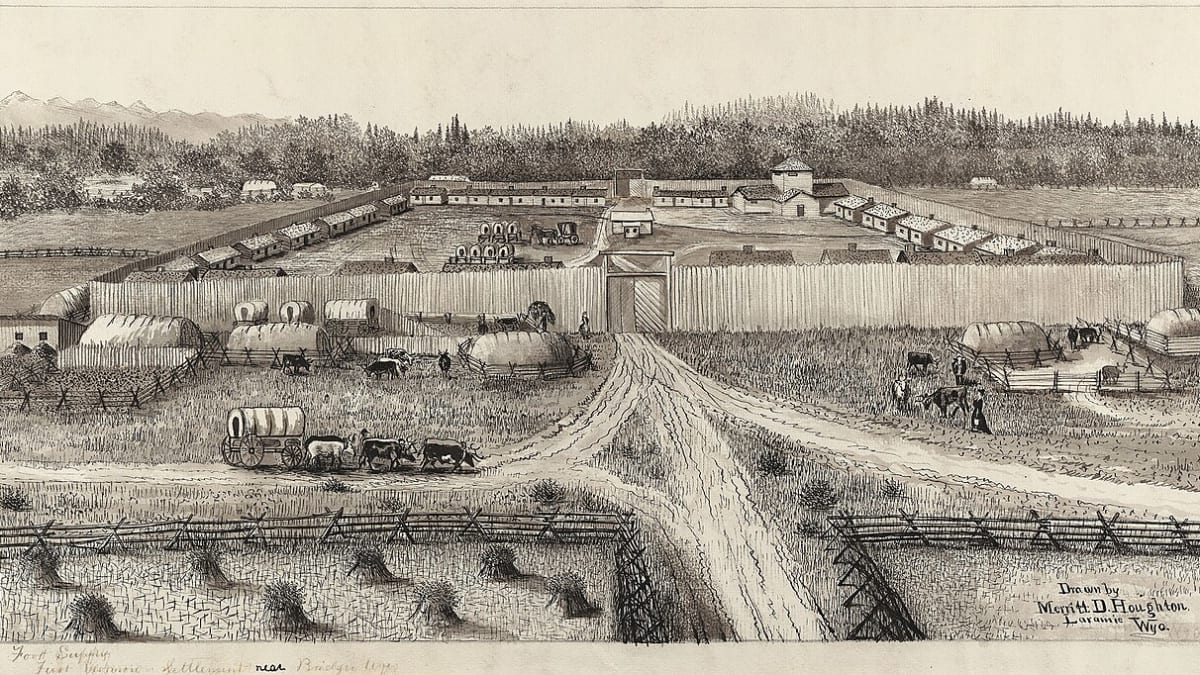
Fort Bridger began in 1843 when the famous mountain man Jim Bridger and his partner Louis Vasquez built a small trading post and blacksmith shop here, on the Blacks Fork of the Green River. They chose the spot to catch the great river of wagons rolling west, and for years it was a vital resupply point on the Oregon, California, and Mormon trails.
Over the next decades the post passed through many hands. Mormon settlers took control in the 1850s, the U.S. Army built a military post here during the Utah War, and the site served travelers, soldiers, and the Pony Express and stage lines. Today the restored and reconstructed buildings tell that whole braided story of the westward crossing.
What Travelers Love
- Walking among the restored and reconstructed buildings, from Bridger's trading post to the army barracks
- The big Fort Bridger Rendezvous over Labor Day weekend, with reenactors in period camp
- The layered history of one spot, from mountain men to Mormons to the U.S. Army
- The museum's guns, wagons, and artifacts of trail and frontier life
Worth Knowing
- Buildings and the museum are open seasonally, so check hours before an off-season visit
- The Labor Day rendezvous is the busiest and most colorful time, and worth planning around
- It is a walking site across a grassy grounds, so wear comfortable shoes and bring sun protection
- Treat the site as the shared history it is, including the Eastern Shoshone story tied to this valley
Learn about Fort Bridger State Historic Site
Jim Bridger and the trading post
Jim Bridger was one of the most famous mountain men of the fur trade, a trapper, guide, and storyteller who knew the Rockies as well as anyone alive. By the early 1840s the beaver trade was fading, and Bridger and Louis Vasquez saw a new opportunity in the emigrant wagons streaming west.
Their post offered blacksmithing, fresh horses and oxen, and supplies to travelers who arrived footsore and low on everything after crossing hundreds of miles of plains. For a wagon party, reaching Fort Bridger meant repairs, rest, and a chance to prepare for the hard mountain country still ahead.
Mormons, soldiers, and the changing fort
In the 1850s Mormon settlers from Utah took over the area and built a stone-walled fort nearby, part of their effort to control the roads into the Salt Lake valley. When tensions with the federal government boiled over in the Utah War of 1857 and 1858, the settlers burned their own outpost rather than let the approaching army have it.
The U.S. Army then established a formal military post at Fort Bridger, which it held on and off into the 1890s. Over those years the fort guarded the trails, the telegraph, and the transcontinental railroad corridor, and its barracks, officers' quarters, and other buildings form much of what visitors see restored today.
The Eastern Shoshone and the valley
This valley lies within country long used by the Eastern Shoshone and neighboring tribes, who hunted and camped along the Green River drainage and met the newcomers here to trade. Fort Bridger was a meeting ground as much as a fort, a place where Native people, trappers, and emigrants crossed paths.
The Eastern Shoshone remain a living nation, centered today on the Wind River Reservation to the north under the long legacy of Chief Washakie, who worked to secure a homeland for his people. Their history is part of the full story of this crossroads, not a closed chapter.
Visiting today and the rendezvous
The state historic site preserves and reconstructs a cluster of buildings across a grassy grounds, including a version of Bridger's trading post, army-era structures, and a museum whose collection ranges from trail wagons to frontier firearms. Interpreters help bring the layers of history to life.
The site comes most alive at the Fort Bridger Rendezvous over Labor Day weekend, one of the largest mountain-man reenactments in the country, when hundreds of participants camp in period tents and trade, shoot, and demonstrate old skills. The buildings and museum are open through the warmer months, with quieter, cooler shoulder seasons on either side.
Closest Boutels
The closest Boutel™ stays, so you can turn this stop into an overnight. Each is a place we chose through independent editorial review, never a paid placement.
Details
Fort Bridger, WY
Frequently asked questions
What is Fort Bridger State Historic Site?
Fort Bridger State Historic Site, in the Bridger Valley of southwestern Wyoming, preserves a historic frontier fort that began as a trading post established by the famous mountain man Jim Bridger along the emigrant trails. Over its long history the site served as a supply stop for pioneers on the Oregon, California, and Mormon trails, a Mormon settlement, and later a military fort. Today the restored and reconstructed buildings, museum, and grounds interpret this rich layered history, from the fur trade and westward migration to military days. With its historic buildings, museum, and frontier stories, Fort Bridger offers a fascinating historic destination in southwestern Wyoming.
What can you see at Fort Bridger State Historic Site?
You can explore the restored and reconstructed historic buildings, a reconstruction of Jim Bridger's original trading post, the military-era structures, and a museum with exhibits and artifacts telling the story of the fur trade, the emigrant trails, the Mormon period, and the army years. Interpretive displays and sometimes living-history events bring the frontier era to life. The layered history makes it especially rich. With its historic buildings, trading-post reconstruction, museum, and stories spanning the mountain men, pioneers, and soldiers, Fort Bridger offers an engaging historic experience in the Bridger Valley of southwestern Wyoming.
Who was Jim Bridger?
Jim Bridger was one of the most famous mountain men and frontiersmen of the American West, a fur trapper, scout, and guide renowned for his knowledge of the Rocky Mountain country during the early-to-mid nineteenth century. He established the trading post that became Fort Bridger as a supply stop for emigrants heading west along the trails, and his name is attached to many landmarks across the region. A legendary figure of the fur-trade and frontier era, Bridger's story is central to Fort Bridger's history. Learning about his life and the frontier he knew is part of what makes a visit to Fort Bridger so rewarding in southwestern Wyoming.
When is the best time to visit Fort Bridger State Historic Site?
Late spring through fall is the most pleasant time to explore the historic buildings and grounds, when the weather is mild and the site is fully open, with summer the peak season and sometimes hosting living-history events and a well-known rendezvous reenactment, while the museum offers an indoor experience whenever open. Checking current days, hours, and event schedules before you go is wise. Winter is cold and quieter. For the best weather, full access, and possible historical events, aim for late spring through fall at Fort Bridger State Historic Site in southwestern Wyoming.
What is near Fort Bridger State Historic Site?
Fort Bridger State Historic Site is in the Bridger Valley of southwestern Wyoming, near the town of Kemmerer with Fossil Butte National Monument, the towns of Evanston and Green River, and within reach of Flaming Gorge National Recreation Area and the route toward the Uinta Mountains. That makes Fort Bridger a fascinating historic stop to combine with Fossil Butte, the Bridger Valley towns, and the other attractions of southwestern Wyoming on a visit to the state.
Nearby
Bear River State Park
29 miles away
This one hides in plain sight right off Interstate 80 at the Evanston exits, close enough that you can be out of the car and watching wildlife within minutes of leaving the highway.

Fossil Butte National Monument
42 miles away
Fossil Butte National Monument west of Kemmerer preserves one of the world's richest Eocene fossil beds from 50 million years ago, when a subtropical lake covered southwest Wyoming.

Expedition Island
50 miles away
In the middle of the Green River at the town of Green River sits the island where John Wesley Powell launched his expeditions into the unknown canyons of the Colorado in 1869 and 1871.