
Fly Geyser
State Route 34, Fly Ranch
Gerlach, NV
A glowing, many-colored mound spitting water into the desert, a geyser made entirely by accident and now one of Nevada's strangest wonders.
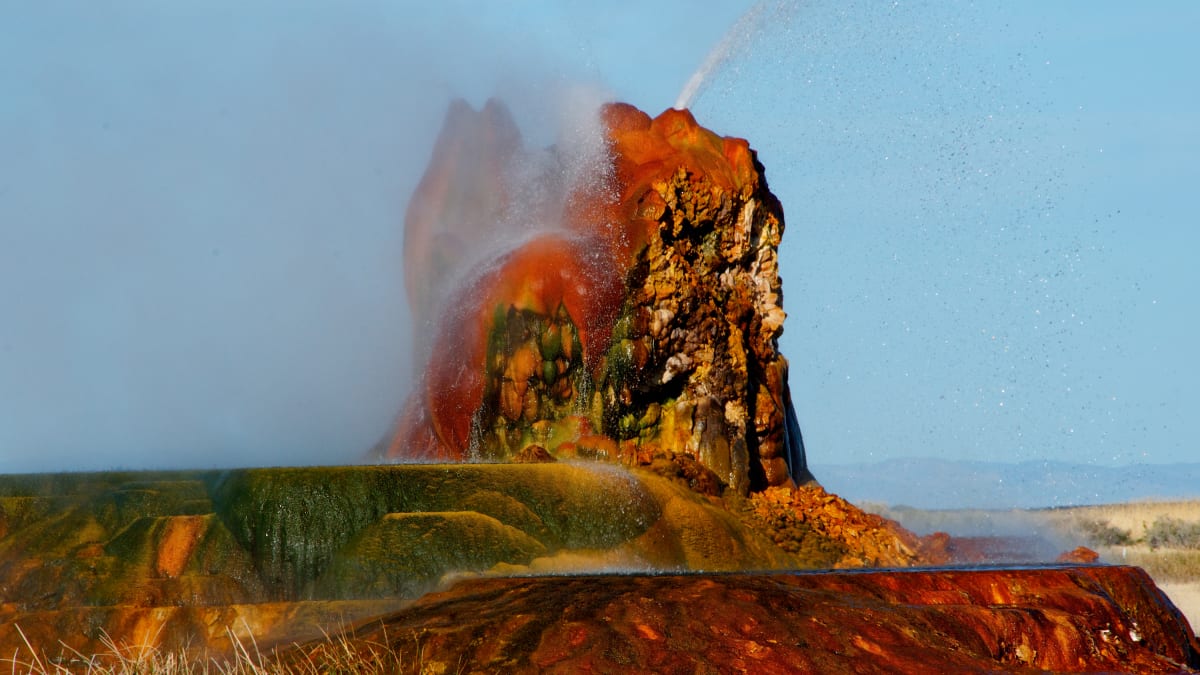
Fly Geyser looks like something from another planet: a series of small, dripping mounds glowing in vivid reds, oranges, and greens, spitting jets of water several feet into the air, all set against the flat, tan emptiness of the Black Rock Desert. The colors come from heat-loving algae, and the growing mound is travertine, the same mineral that builds cave formations, laid down grain by grain by the escaping water.
The strangest part is that none of it is natural. Fly Geyser is an accident, the result of well drilling gone wrong, that has been quietly building itself into a desert marvel for decades. It sits on private land now owned by the nonprofit behind Burning Man, and seeing it up close has become one of the more memorable side trips in northern Nevada.
What Travelers Love
- The surreal, dripping mound in shades of red, orange, and green against the bare desert
- Knowing the whole thing was created by accident, not by nature
- The wide-open Black Rock Desert setting, huge and quiet
- Guided walks that get you close and explain the geology and the ecology of the ranch
Worth Knowing
- Fly Geyser is on private land and cannot be reached on your own; access is only through scheduled Fly Ranch nature walks
- For years you could only glimpse it from the highway fence; the guided walks are the way to see it properly now
- It is remote, so plan for gas, water, and a long desert drive
- Tours run seasonally and fill up, so reserve ahead through the Fly Ranch program
Learn about Fly Geyser
A geyser made by mistake
The story begins with people trying to find water in a dry country. In 1916, homesteaders drilled a well here hoping for irrigation water, but they hit water so hot it was useless and abandoned the hole, which slowly grew its own small mineral cone over the years.
Then in 1964, an energy company drilled again nearby, testing the ground for geothermal power. The water was around two hundred degrees, not hot enough for their purposes, and the well was left uncapped. Scalding, mineral-rich water has been escaping from it ever since, building the colorful mounds you see today and pushing up the jets that give Fly Geyser its name. It is, in effect, a wound in the earth that turned into a wonder.
The colors and the mound
As the hot water flows over the mound and cools, it leaves behind travertine, calcium carbonate, building the terraces higher year by year. The brilliant colors are living things: thermophilic algae that thrive in the warm, mineral water and paint the surfaces in reds, oranges, and greens.
The result is a set of surreal, dripping cones surrounded by small terraced pools, constantly wet and steaming, that look more like coral or a fever dream than anything you expect in the Nevada desert.
Fly Ranch and how to visit
For decades Fly Geyser sat behind a locked ranch gate, and travelers could only glimpse its distant colors from State Route 34. In 2016 the Burning Man Project purchased Fly Ranch, the roughly thirty-eight-hundred-acre property that surrounds the geyser, and worked to open respectful access.
Today the way to see Fly Geyser is on a guided nature walk run in partnership with the local nonprofit Friends of Black Rock-High Rock. The walks lead across the ranch to the geyser and its wetlands and explain the geology and the surprising web of life the warm water supports. You cannot simply drive up, so plan around a scheduled tour.
The Black Rock Desert
Fly Ranch lies at the edge of the Black Rock Desert, one of the largest flat expanses in North America, a dry lakebed so smooth and empty it has been used for land-speed records and, each year, for the temporary city of Burning Man. It is a landscape of enormous scale and silence.
The ranch itself, watered by its hot springs, is an unexpected oasis in that emptiness, drawing birds and wildlife to its wetlands. The surrounding country holds hot springs, playa, and long views to distant ranges.
When to go
The guided walks generally run in the warmer months, roughly spring through fall, and sell out, so book ahead. Summer on the playa can be very hot, so early-day tours are the most comfortable.
Because it is so remote, treat a visit as a real desert outing: full tank, water, sun protection, and no expectation of services once you leave Gerlach.
Closest Boutels
The closest Boutel™ stays, so you can turn this stop into an overnight. Each is a place we chose through independent editorial review, never a paid placement.
Details
Gerlach, NV
Frequently asked questions
What is Fly Geyser?
Fly Geyser, on the private Fly Ranch near Gerlach in the Black Rock Desert region of northwestern Nevada, is a surreal and stunning man-made geyser, one of the most photographed natural curiosities in the state, famous for its vivid colors and otherworldly form. Created accidentally when a well was drilled, the geyser continuously spouts water over mineral-rich mounds that have built up into brilliant terraces streaked with red, orange, and green from thermophilic algae, surrounded by pools and wetlands. A dazzling, almost alien spectacle rising from the desert, Fly Geyser is a bucket-list sight, viewed on guided walks of the ranch. With its colorful geyser and pools, Fly Geyser offers a spectacular destination in Nevada.
How can you visit Fly Geyser?
Fly Geyser sits on the privately owned Fly Ranch, so there is no direct public access, and visitors can only see it up close by joining an official guided nature walk of the ranch, offered seasonally by the nonprofit stewards of the property in partnership with its owners. These guided walks cover the geyser and the surrounding land, and they must be reserved in advance, often filling quickly. Because access is limited to these guided walks on a seasonal schedule, checking current availability and booking ahead before you go are essential. Planning ahead ensures the chance to visit Fly Geyser in Nevada.
What should I know before visiting Fly Geyser?
Because Fly Geyser is on private land accessible only by guided walk, reserving a spot in advance is essential, as tours are seasonal and fill quickly, so checking current schedules and booking ahead before you go matter most. The guided walk covers a few miles on uneven desert ground, so sturdy closed-toe shoes, water, sun protection, and a hat are important, and the remote high desert can be hot by day and cool otherwise. Trespassing onto the private ranch is not allowed. Booking a guided walk and coming prepared ensure a rewarding visit to Fly Geyser in Nevada.
When is the best time to visit Fly Geyser?
The guided nature walks that provide access to Fly Geyser are typically offered seasonally in the warmer months, roughly late spring through fall, so planning a visit within that season and reserving ahead are essential. Within that window, the milder weather of late spring and early fall is most comfortable for the desert walk, while midsummer can be hot. The geyser's colors are vivid in good daylight. For the best access and comfortable weather, aim for a guided walk in late spring or early fall at Fly Geyser in Nevada.
What is near Fly Geyser?
Fly Geyser is on Fly Ranch near Gerlach in the Black Rock Desert region of northwestern Nevada, within reach of the vast Black Rock Desert, the town of Gerlach, and the remote high desert of northwestern Nevada, with the Reno area to the southwest. That makes Fly Geyser a spectacular stop to combine with the Black Rock Desert and the other remote attractions of northwestern Nevada on a visit to the state.
Nearby

Pyramid Lake
58 miles away
Pyramid Lake is one of the largest natural lakes in Nevada, covering 125,000 acres at an elevation of 3,800 feet in the Truckee River basin.

Massacre Rim Wilderness Study Area
58 miles away
This is a wide, roadless stretch of sagebrush in the far northwest corner of Nevada, near tiny Cedarville just over the California line, with no towns for miles and miles.
Thunder Mountain Monument
64 miles away
Thunder Mountain Monument sits a short distance off I-80 at the Imlay exit, about 40 miles southwest of Winnemucca.