

Florissant Fossil Beds National Monument
Florissant Fossil Beds National Monument, 15807 Co Rd 1, Florissant, CO
Florissant, CO
A grassy mountain valley west of Pikes Peak where giant redwood stumps turned to stone and butterflies were pressed into shale, all under some of the clearest night skies in Colorado.
Florissant Fossil Beds National Monument protects a quiet mountain valley in central Colorado, west of Pikes Peak, where the ground holds one of the richest fossil records anywhere in the world. Beneath the golden meadows and ponderosa pine lie the remains of a very different Colorado, a warm, subtropical valley of towering redwoods, giant insects, and hundreds of kinds of plants that lived here about 34 million years ago.
Two things make the place remarkable. First are the petrified redwood stumps, huge sections of ancient tree turned entirely to stone, some of them fourteen feet across, standing today in the open meadow. Second are the fossils in the shale, thousands of them, so finely preserved that you can see the veins in a leaf and the wings of a butterfly. Add the thin, clear air at 8,400 feet and a sky far from city lights, and Florissant is a place that rewards looking both down at the ground and up at the stars.
What Travelers Love
- Enormous petrified redwood stumps, some up to fourteen feet across, standing where the trees once grew
- One of the richest and most detailed fossil beds on Earth, holding insects, leaves, and even butterflies
- Easy walking trails through open meadows and pine forest at 8,400 feet
- Clear, high, dark skies far from the city glow of Colorado Springs
Worth Knowing
- The monument sits high, above 8,000 feet, so the air is thin and the sun is strong; take it slow and bring water
- Mountain weather changes fast, and afternoon thunderstorms are common in summer
- The famous fossils are fragile; collecting any rock or fossil inside the monument is not allowed
- Nights turn cold even in summer at this elevation, so bring a warm layer for stargazing
Learn about Florissant Fossil Beds National Monument
A valley written in ash
About 34 million years ago, this valley was warm and green, a subtropical place of giant redwoods and countless insects. Then a nearby volcano erupted. Rain soaked the loose ash on the slopes and sent a massive, fast-moving flow of mud and ash, called a lahar, miles down into the valley. The flow buried the bases of the great redwoods and dammed a stream, creating a lake that geologists call Lake Florissant.
That combination, the mud around the trees and the calm lake, is what preserved everything. It is why Florissant exists as it does today, a snapshot of a lost world sealed in stone. The eruptions kept coming over thousands of years, layering the valley in fine ash and building one of the most complete fossil records anywhere on the planet.
Redwoods turned to stone
The most striking sight at Florissant is the petrified stumps. When the lahar buried the standing redwoods, groundwater rich in dissolved silica from the volcanic ash slowly seeped into the wood. Over a very long time the silica replaced the wood, mineral by mineral, until the trees became stone that still shows the shape of the bark and the rings.
Some of these stumps are enormous, up to fourteen feet across, hinting at how tall the living trees once stood. A short, level trail leads visitors right to them, out in the open meadow where they grew. Standing next to a redwood stump the size of a small room, in a Colorado meadow at 8,400 feet, is a strange and wonderful way to feel deep time.
The fossils in the shale
Beyond the stumps, Florissant is famous for the fossils pressed into its fine-grained shale, the old lakebed of Lake Florissant. When insects, leaves, and flowers fell into the calm water and settled into the mud, the fine ash preserved them in astonishing detail. The result is one of the most diverse insect fossil collections ever discovered, alongside thousands of plant fossils.
The preservation is so fine that scientists can study the delicate wings of ancient butterflies, the legs of beetles, and the veins of leaves. Together these fossils tell the full story of the valley as it was millions of years ago, not just the big trees but the whole living community around them. The monument's visitor center displays many of these finds, so you can see up close what the shale has kept safe for so long.
Meadows, pines, and a dark sky
Above the fossils, the monument today is a peaceful stretch of mountain country, golden grasslands and ponderosa pine spread across a high valley. Roughly fourteen miles of trails wind through the meadows and woods, past the petrified stumps and out to a preserved 1800s homestead, the Hornbek Homestead, where a pioneer family once lived. It is gentle, open walking with big mountain views.
At night the high, thin air and the distance from the lights of Colorado Springs make Florissant a certified Dark Sky Park. Up at 8,400 feet, the clear air brings out the Milky Way and thousands of stars over the meadows. It is a calm, quiet place to sit after dark and watch the sky turn, the same valley that holds a lost world beneath it.
Closest Boutels
The closest Boutel™ stays, so you can turn this stop into an overnight. Each is a place we chose through independent editorial review, never a paid placement.
Details
Florissant, CO
Frequently asked questions
What is Florissant Fossil Beds National Monument?
Florissant Fossil Beds National Monument, in the mountains west of Colorado Springs near the town of Florissant, Colorado, preserves one of the richest and most diverse fossil deposits in the world, dating back some thirty-four million years. The monument is famous for its enormous petrified redwood stumps, some of the largest in the world, and for the exquisitely detailed fossils of ancient insects, plants, and leaves preserved in fine shale from an ancient lake bed. Set amid beautiful mountain meadows and forest, Florissant offers a fascinating window into prehistoric life, along with scenic trails and a visitor center with impressive fossil displays.
What can you see at Florissant Fossil Beds National Monument?
You can see the massive petrified redwood stumps, remnants of ancient giant trees turned to stone, along easy trails, view remarkable fossils of insects, leaves, and plants in the visitor center's exhibits, walk scenic trails through mountain meadows and forest with wildflowers and wildlife, and learn about the ancient ecosystem preserved here. Some trails are gentle and accessible. The combination of the giant petrified stumps, detailed fossils, and beautiful high-country scenery makes for a fascinating and peaceful visit, offering an engaging look at deep time and prehistoric life in the Colorado mountains.
Can you collect fossils at Florissant Fossil Beds?
No, collecting or removing any fossils, rocks, or petrified wood from Florissant Fossil Beds National Monument is strictly prohibited, since it is a protected national monument and the fossils are scientifically invaluable and irreplaceable, so everything must be left in place for research and future visitors. Removing anything is illegal. Visitors can admire the fossils on the trails and in the museum but must not take any. If you wish to experience fossil collecting, some private quarries in the nearby area offer that for a fee, but within the monument, everything is protected and must remain untouched.
When is the best time to visit Florissant Fossil Beds National Monument?
Late spring through fall offers the most pleasant weather for exploring the outdoor trails, with summer bringing wildflowers to the mountain meadows and comfortable high-country temperatures, and fall offering lovely color, while winter is cold and snowy at this elevation, though the visitor center remains a draw. Mornings are peaceful. The high elevation means cool temperatures and possible afternoon storms, so bring layers and start early. For the best combination of comfortable weather, wildflowers, and full trail access, late spring through fall is ideal at this scenic monument.
What is near Florissant Fossil Beds National Monument?
The monument is west of Colorado Springs near the town of Florissant, within reach of Cripple Creek's historic mining district and casinos, Pikes Peak, and the attractions of the Colorado Springs area including Garden of the Gods and Manitou Springs, with the mountains of central Colorado nearby. That makes Florissant Fossil Beds National Monument a fascinating stop to combine with Pikes Peak, Cripple Creek, and the many attractions of the Colorado Springs area and central Colorado mountains on a visit to the state.
Nearby

Pikes Peak
14 miles away
Pikes Peak at 14,115 feet is the most-visited fourteener in Colorado, accessible by the Pikes Peak Highway (toll road, seasonal), the Cog Railway from Manitou Springs (reservations required), or the B...
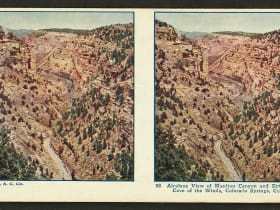
Cave of the Winds
20 miles away
Cave of the Winds in Manitou Springs has natural limestone cave tours that depart year-round, taking visitors 0.5 miles through decorated chambers with active stalactites and stalagmites.
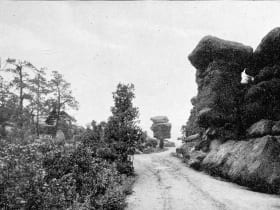
Garden of the Gods
22 miles away
This one is no secret, but the trick most visitors miss is how little you have to do for the best of it.

Mount Blue Sky Scenic Byway
50 miles away
Mount Blue Sky Scenic Byway is the highest paved road in North America, climbing from Idaho Springs to above 14,000 feet in about 28 miles.