
Fish Lake
229 UT-25, Richfield, UT
Richfield, UT
A deep, cold mountain lake ringed with aspen and evergreen, famous for its giant trout and neighbor to the largest single living thing on earth.
Fish Lake is Utah's largest natural mountain lake, a deep, cold body of water sitting high on a forested plateau, ringed by meadows, aspen groves, and evergreen forest. It has been a beloved fishing and vacation spot for well over a century, famous for producing enormous lake trout along with rainbow trout, brook trout, and splake, and dotted with historic log lodges and cabins that date to the 1930s.
Just above the lake grows something even more remarkable, an enormous aspen grove named Pando. Though it looks like a forest of separate trees, Pando is in fact a single organism, all its trunks sprouting from one vast, shared root system, and it is often called the largest and among the oldest living things on earth. Together, the lake and the grove make this quiet plateau one of Utah's most extraordinary places.
What Travelers Love
- World-class fishing for giant lake trout, rainbow trout, and splake
- A big, cool alpine lake ringed with aspen groves that turn gold in fall
- Historic 1930s log lodges and cabins with real mountain character
- The neighboring Pando aspen grove, celebrated as the largest single living organism on earth
Worth Knowing
- At around 8,800 feet the air is thin and the water cold, so dress warmly and take altitude seriously
- The lake sits high enough that snow closes access for much of the winter outside of the ice-fishing season
- Boating and fishing follow Utah regulations, so check current rules before you cast
- The Pando aspen grove is fragile and threatened, so tread lightly and stay on trails to protect it
Learn about Fish Lake
A lake long loved
The Fish Lake Plateau has long been part of the homeland of the Ute people, who camped, hunted, and fished at the lake for generations and knew it as a place of plenty. Southern Paiute people also ranged through the surrounding country. The lake's abundance of fish gave it its plain, fitting name, and it remained a gathering place through the seasons.
By the late 1800s and early 1900s the lake had become a popular mountain retreat for settlers escaping the summer heat of the valleys. The Forest Service and private operators built lodges and cabins along the shore, and the handsome log Fish Lake Lodge, raised in the 1930s, still stands as a centerpiece, its rustic architecture recalling the golden age of mountain resorts. Generations of families have returned to fish and camp here ever since.
A high mountain lake
Fish Lake fills a long, narrow basin on the high plateau, and unlike many Western reservoirs it is a natural lake, deep and cold and fed by mountain streams and springs. Its depth and elevation keep the water cool year-round, which is exactly what its trophy trout need, and the lake is large enough to hold big fish and support boating without ever feeling crowded.
The basin sits atop a volcanic plateau, part of a landscape shaped by ancient volcanic activity and later carved by ice-age glaciers and streams. The lake is ringed by broad meadows and forests of spruce, fir, and aspen that climb the surrounding ridges, and in the clear mountain air the whole scene, water, forest, and sky, feels crisp and vivid.
Pando, the trembling giant
Above the lake grows Pando, an aspen grove whose name means I spread in Latin. What appears to be tens of thousands of individual aspen trees is actually one single male organism, genetically identical, all connected underground by one immense root system that sends up new trunks as older ones die. By total mass it is often called the heaviest known living organism, and it may be tens of thousands of years old.
Pando has become a symbol of both nature's wonder and its fragility. In recent decades much of the grove has struggled to send up new growth, as browsing deer and other pressures eat the young shoots before they can mature, and conservationists now work to fence and protect parts of it. Standing among its white trunks and quaking leaves, it is humbling to realize you are within a single living thing of almost unimaginable scale.
Wildlife, fishing, and the seasons
The plateau teems with life. Mule deer and elk browse the meadows, and the aspen and evergreen forests shelter beavers, porcupines, and a wealth of birds, from ospreys and eagles that fish the lake to woodpeckers drumming in the aspens. In the lake, the famous trout draw anglers from across the region in every season, including through the ice in winter.
Summer is the prime season, cool and green at this altitude when the valleys below bake, ideal for fishing, boating, and camping. Fall is spectacular, when the aspen groves, Pando among them, blaze gold across the plateau. Winter brings deep snow that closes much of the access, though ice fishing draws the hardy, and spring comes late and green as the snow finally melts off the high country.
Closest Boutels
The closest Boutel™ stays, so you can turn this stop into an overnight. Each is a place we chose through independent editorial review, never a paid placement.
Details
Richfield, UT
Frequently asked questions
What is Fish Lake?
Fish Lake is Utah's largest natural mountain lake, set high in the Fishlake National Forest in central Utah at nearly 8,800 feet. A beautiful alpine lake ringed by forests of spruce, fir, and quaking aspen, it is famous above all for its outstanding fishing, along with historic lodges, camping, and spectacular fall color. Cool and scenic even in summer, it is a cherished mountain retreat, and it sits right beside Pando, the enormous ancient aspen clone.
What is the fishing like at Fish Lake?
Fish Lake is renowned among anglers, especially for its trophy lake trout, also called mackinaw, which can grow very large in its deep, cold water, as well as splake, rainbow trout, and yellow perch. Anglers fish from boats and shore in the warm months and through the ice in winter. A Utah fishing license is required, and checking current regulations is wise. For many visitors, the legendary fishing is the main reason to come.
What else can you do at Fish Lake?
Beyond fishing, you can boat and paddle the lake, camp at its campgrounds, stay in the historic lodges and cabins, and hike or bike the surrounding forest trails. Autumn is especially stunning, when the vast aspen groves, including the famous Pando clone right nearby, blaze gold. In winter, the area draws ice anglers and offers a chance to spot bald eagles. The high, cool setting makes it a refreshing summer and fall destination.
When is the best time to visit Fish Lake?
Summer and fall are prime, with summer offering cool mountain air and prime fishing and boating, and fall delivering breathtaking golden aspen color, ideal for leaf-peeping alongside the nearby Pando grove. Because of the high elevation, the season is relatively short and nights are cold. Winter brings ice fishing for the hardy. Whenever you go, expect cooler temperatures than the lowlands and pack accordingly.
What should I know before visiting Fish Lake?
At nearly 8,800 feet, the high altitude means thinner air, cold water, and weather that can change quickly, so bring layers, wear a life jacket on the water, and be prepared for cool conditions even in summer. Cell service is spotty, so download maps ahead. Bring a fishing license if you plan to fish, and reserve lodging or campsites in advance during the popular summer and fall seasons, since this beloved lake draws steady crowds.
Nearby
Pando
2.1 miles away
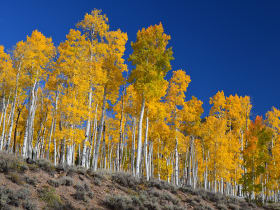
Pando, Latin for "I spread," is a grove of quaking aspen (Populus tremuloides) near Fish Lake in which all individual trunks share a single underground root system.

UT-12 Scenic Byway
24 miles away
Utah Highway 12 runs 124 miles from US-89 near Panguitch to Torrey near Capitol Reef, crossing five distinct geological formations and three national park corridors.

Big Rock Candy Mountain
30 miles away
Big Rock Candy Mountain is a bright yellow-and-orange hillside that rises right beside US-89 in Marysvale Canyon, its colors the result of hot volcanic fluids bleaching and staining the old rock.

Capitol Reef National Park
31 miles away
A hundred-mile wrinkle in the earth called the Waterpocket Fold, plus historic orchards you can still pick from.

Gifford Homestead
32 miles away
The Gifford Homestead is a beautifully preserved Mormon pioneer farmhouse in the historic Fruita district of Capitol Reef, set among green orchards beside the Fremont River.

Bryce Canyon National Park
67 miles away
The largest concentration of hoodoos on Earth, a natural amphitheater of orange and pink stone spires.