
Elephant Seal Vista Point
Highway 1 at Piedras Blancas
San Simeon, CA
A free boardwalk right off Highway 1 where thousands of northern elephant seals haul out on the sand, honking, sparring, and molting a few feet below you.
The Elephant Seal Vista Point at Piedras Blancas is one of the easiest great wildlife encounters in California: you pull off Highway 1, walk a few steps to a bluff-top boardwalk, and look down on hundreds or thousands of northern elephant seals sprawled across the sand. They bark and belch, fling sand over their backs, and, in winter, spar in bloody shoving matches while newborn pups nurse nearby.
What makes the scene even more remarkable is that these animals were very nearly gone. Northern elephant seals were hunted to the edge of extinction, and every seal on this beach descends from a tiny remnant that survived. The colony here did not even exist until the early 1990s, and it has since grown into one of the largest and most accessible rookeries in the world.
What Travelers Love
- Thousands of huge wild seals just below a safe, free boardwalk, with no reservation needed
- The winter drama of birthing, nursing pups, and males battling for the beach
- Volunteer docents who explain what you are watching
- The chance to see a wildlife comeback story up close, from near-extinction to abundance
Worth Knowing
- It is free and open every day, but there are seals on the beach in different numbers all year, so any season is worth a stop
- Stay on the boardwalk and behind the barriers; these are large wild animals and it is for your safety and theirs
- Winter, roughly December into March, is the peak for pups and fighting males
- It can be very windy and cool on the bluff, so bring a layer even on a sunny day
Learn about Elephant Seal Vista Point
Back from the brink
In the 1800s northern elephant seals were slaughtered for the oil in their blubber until they were thought to be extinct. A last handful, perhaps only a few dozen, survived on a remote island off Baja California, and every northern elephant seal alive today, likely more than two hundred thousand of them, descends from that tiny group.
As the species recovered it spread back up the coast. Seals first hauled out at Piedras Blancas around 1990, and the colony exploded from there into the tens of thousands that now use these beaches over the course of a year. A local nonprofit and its volunteer docents helped turn the site into a safe, free place to watch them, and it has become a model for how people and a recovering wild animal can share a coastline.
A year on the beach
The seals are here in changing numbers all year, following their own strange calendar. In late fall the enormous bulls arrive, some weighing well over a ton, with the drooping snouts that give the species its name, and they fight for control of the beach. In December and January the females come ashore to give birth, and the sand fills with black-coated pups and the noise of nursing and battling.
By spring the adults have gone back to sea and the weaned pups, nicknamed weaners, linger to teach themselves to swim. Through spring and summer different groups return to molt, shedding their skin and fur in patches while they lie in great snoozing piles. There is almost no time of year without seals on the beach, which is why the vista point is worth a stop whenever you pass.
Deep divers of the open ocean
Elephant seals spend most of their lives far out at sea and are among the most extreme divers of any air-breathing animal, plunging thousands of feet down into the dark to hunt fish and squid and holding their breath for long stretches. They cross enormous distances of open Pacific between their visits to this beach.
That is why they look so ungainly on land. The animal that flops and honks in the sand is built for a life underwater, and the crowded rookery is only a brief, noisy interruption in a mostly solitary ocean existence.
The wild coast around the rookery
This is the northern edge of the Central Coast, where the gentler beaches give way to the cliffs of Big Sur. Just up the shore stands the Piedras Blancas Light Station, and offshore the same rich, cold waters that feed the seals also support sea otters, whales, and seabirds.
The coast here is the ancestral home of the Chumash and neighboring peoples, who lived along this shoreline for thousands of years. Today the bluff-top setting, with the surf, the wind, and the constant motion of the seals, is one of the most memorable free stops on Highway 1.
Closest Boutels
The closest Boutel™ stays, so you can turn this stop into an overnight. Each is a place we chose through independent editorial review, never a paid placement.
Details
San Simeon, CA
Frequently asked questions
What is the Elephant Seal Vista Point?
The Elephant Seal Vista Point, at Piedras Blancas near San Simeon on California's Central Coast, is a famous spot where thousands of massive northern elephant seals gather along the beach, viewable up close from a safe boardwalk overlook. Depending on the season, visitors can watch the enormous seals resting, molting, birthing pups, and the huge males battling for dominance, all just steps from the parking area. Free and easily accessible, this remarkable wildlife spectacle draws travelers year-round and offers an unforgettable, close-up look at one of nature's great gatherings along the coast.
When can you see elephant seals at the vista point?
Elephant seals are present in large numbers at Piedras Blancas for much of the year, with different activity in different seasons: winter brings the dramatic peak of births, breeding, and males battling on the beach, spring features molting and many seals hauled out, and other times of year see varying numbers resting on the sand. Because there is almost always something to see, it is a rewarding stop year-round, though the winter breeding season, roughly midwinter, offers the most dramatic activity with pups and jousting males.
How close can you get to the elephant seals?
You view the elephant seals from a safe boardwalk and viewing area set back from the beach, which lets you see them remarkably close while keeping a protective distance, and you should never go down onto the beach or approach the seals, since they are large, wild animals that can move surprisingly fast and may be dangerous, and disturbing them is harmful and prohibited. The elevated boardwalk provides excellent views without any need to get closer. Respecting the barriers and keeping your distance protects both you and the seals.
When is the best time to visit the Elephant Seal Vista Point?
The winter breeding season, roughly midwinter, offers the most dramatic spectacle, with births, breeding, and males battling on the beach, while spring brings molting season and many seals present, and other times of year still offer seals resting on the sand, so it is rewarding year-round. Mornings can be pleasant, and clear days are best for viewing and photos. Docents are often on hand to answer questions. For the most action, aim for the winter breeding season, but any visit is likely to reward you with seals to observe.
What is near the Elephant Seal Vista Point?
The vista point is at Piedras Blancas near San Simeon, close to Hearst Castle just to the south, the historic Piedras Blancas Lighthouse, and Ragged Point at the southern gateway to Big Sur just to the north, with the charming town of Cambria and Moonstone Beach a short drive south. That makes the Elephant Seal Vista Point a fascinating, free stop to combine with Hearst Castle, Cambria, and the dramatic Big Sur coast on a Central Coast California road trip.
Nearby
Hearst Castle
5.1 miles away
Hearst Castle is one of the most unusual buildings in the United States - a 165-room hilltop estate built by newspaper magnate William Randolph Hearst and architect Julia Morgan beginning in 1919, nev...

Salmon Creek Falls
6.0 miles away
Salmon Creek Falls is a double waterfall reaching about 120 feet, located just north of the main Big Sur visitor concentration near Ragged Point, about 60 miles south of Carmel.
Ragged Point
7.8 miles away
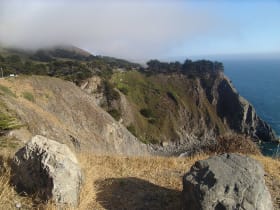
Ragged Point marks the spot where the gentle coast around San Simeon gives way to the steep, dramatic Big Sur shoreline heading north.
Moonstone Beach Boardwalk
10 miles away
A mostly level, mile-long clifftop boardwalk along Cambria's shore, over marine-sanctuary tide pools and driftwood coves, with beachcombing for the smooth moonstones that name the beach.
Fiscalini Ranch Preserve
11 miles away
A 430-acre coastal preserve at Cambria that the town saved from development in 2000, with a mile of ocean bluff trail and one of the last native Monterey pine forests on earth.

Pinnacles National Park
58 miles away
Volcanic spires and talus caves, one of the best places to watch California condors soar.