
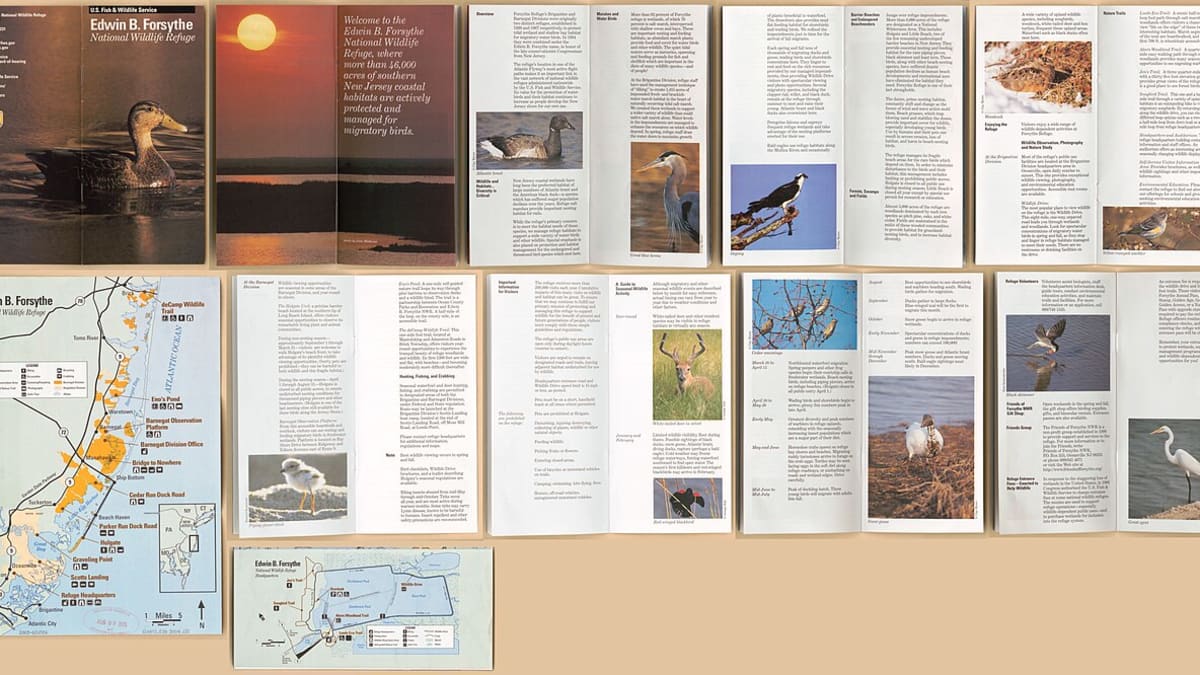
Edwin B. Forsythe National Wildlife Refuge
749 Wildlife Dr, Galloway, NJ
Galloway, NJ
A vast coastal salt marsh on the great Atlantic Flyway, threaded by a wildlife drive where egrets, herons, and clouds of migrating birds gather with the Atlantic City skyline shimmering on the horizon.
The Edwin B. Forsythe National Wildlife Refuge protects a vast sweep of coastal salt marsh along the New Jersey shore, one of the most important stopovers on the Atlantic Flyway, the great migratory highway that runs down the East Coast. Its centerpiece for visitors is an eight-mile wildlife drive, a one-way loop that winds out into the marsh past pools and impoundments teeming with birds.
The refuge is best known to birdwatchers, who come from far away to see the egrets, herons, ibises, ducks, and shorebirds that gather here by the thousands, especially during spring and fall migration. On a clear day the scene comes with a strange and memorable contrast: a wild, open marsh alive with birds, and the towers of the Atlantic City casinos shimmering on the horizon beyond the reeds.
What Travelers Love
- A wildlife drive that loops for miles out into the marsh past pools full of birds
- One of the East Coast's great birding spots on the Atlantic Flyway, alive in migration
- Egrets, herons, ibises, ducks, and shorebirds against a backdrop of open marsh and sky
- The surprising sight of a vast wild marsh with the Atlantic City skyline on the horizon
Worth Knowing
- The wildlife drive is a one-way loop on a narrow dirt road, so drive slowly and watch for stopped birdwatchers
- Bring binoculars, and morning and evening are the best times for light and bird activity
- The marsh is exposed with little shade, so bring sun protection and, in the warm months, insect repellent
- Bird activity peaks during spring and fall migration, so those seasons reward a visit most
Learn about Edwin B. Forsythe National Wildlife Refuge
A refuge on the flyway
This coast has always been a crossroads for migrating birds, which follow the Atlantic Flyway between their northern breeding grounds and their southern wintering areas, using the marshes and bays as places to rest and feed. The salt marshes here are among the most productive on the coast, and the refuge was established to protect them and the wildlife they support.
The refuge is named for Edwin B. Forsythe, a conservation-minded congressman who championed the protection of these wetlands. Over the years the refuge grew to encompass tens of thousands of acres of marsh, bay, and upland, safeguarding a vital link in the chain of habitats that migrating birds depend on.
The wildlife drive
The heart of a visit is the wildlife drive, a one-way loop of about eight miles on a raised dirt road that runs out across the marsh and around a series of managed pools. From the car, or on foot at the pullouts, visitors watch wading birds stalk the shallows, ducks paddle the open water, and shorebirds probe the mudflats.
The drive is slow going by design, meant to be taken at a crawl with frequent stops, and it is a favorite of photographers for the way birds gather close to the road. The route ends with the odd and beautiful view of the Atlantic City skyline rising far off across the marsh, wild foreground and city backdrop in a single frame.
The land and its people
These marshes and the bays behind the barrier islands were long the fishing and shellfishing grounds of the Lenape people, whose descendants today include the Nanticoke Lenni-Lenape of southern New Jersey. The rich estuaries provided fish, shellfish, and waterfowl, much as they draw birdwatchers and anglers today.
Beyond the wildlife drive, the refuge protects upland forests, freshwater areas, and a piney inland stretch, with hiking trails and observation points scattered across its holdings. The variety of habitats is part of why so many species pass through, from marsh waders to woodland songbirds to birds of prey riding the coastal winds.
The seasons and the birds
Spring and fall migrations are the peak times, when the flyway funnels huge numbers of birds through the refuge and the pools fill with ducks, shorebirds, and wading birds. These are the seasons that draw serious birdwatchers, when a single morning can turn up dozens of species.
Summer brings nesting herons, egrets, and ospreys and the buzz of a marsh in full life, though the heat and insects reward an early start. Winter is stark and quiet, the marsh grasses gone tan and gold, and it brings wintering waterfowl, raptors, and the chance of snowy owls along the coast.
Closest Boutels
The closest Boutel™ stays, so you can turn this stop into an overnight. Each is a place we chose through independent editorial review, never a paid placement.
Details
Galloway, NJ
Frequently asked questions
What is the Edwin B. Forsythe National Wildlife Refuge?
The Edwin B. Forsythe National Wildlife Refuge, along the southern New Jersey coast near Oceanville, is a vast and beautiful coastal refuge of salt marsh, bays, and wetlands that is one of the finest birdwatching destinations on the East Coast. The refuge protects thousands of acres of vital coastal habitat along the Atlantic Flyway, drawing enormous numbers of migrating and resident birds, and it is famous for its scenic Wildlife Drive, a loop road through the marshes offering superb wildlife viewing along with trails and overlooks. Its rich birdlife and scenic marshes make it a haven for nature lovers. A gorgeous and wildlife-rich refuge, it delights visitors. With its birds and marshes, the refuge offers a compelling destination in New Jersey.
What can you do at the Edwin B. Forsythe National Wildlife Refuge?
You can drive the scenic Wildlife Drive loop through the salt marshes for superb wildlife viewing, watch the abundant birds including waterfowl, shorebirds, herons, and, in migration, huge numbers of birds, walk nature trails, and take in the beautiful coastal scenery with views toward Atlantic City. The Wildlife Drive, the outstanding birdwatching, the trails, and the scenic marshes are the draws, making it a premier destination for birders and nature lovers. The variety and abundance of birds are highlights. With its wildlife, the refuge offers a rewarding experience in New Jersey.
When is the best time to visit the Edwin B. Forsythe National Wildlife Refuge?
Spring and fall migrations are especially spectacular for the sheer numbers and variety of birds passing through, making them prime times for birdwatching, while the refuge offers rewarding wildlife viewing year-round, with different species in each season and early morning and evening the best times. Because bird activity varies by season, timing a visit to migration brings the greatest spectacle. For the richest birdwatching, aim for spring or fall migration at the Edwin B. Forsythe National Wildlife Refuge in New Jersey.
What should I know before visiting the Edwin B. Forsythe National Wildlife Refuge?
The refuge's Wildlife Drive is a one-way loop through the marshes, best enjoyed slowly, so bringing binoculars, a camera, and patience enhances the wildlife viewing, and keeping a respectful distance from all wildlife and staying on designated routes protect the habitat. Insect repellent is helpful in the marshy setting, especially in the warmer months, and checking current conditions and any fees before you go helps. Bringing binoculars and respecting the wildlife ensure a rewarding visit to the Edwin B. Forsythe National Wildlife Refuge in New Jersey.
What is near the Edwin B. Forsythe National Wildlife Refuge?
The Edwin B. Forsythe National Wildlife Refuge is along the southern New Jersey coast near Oceanville, within reach of the Historic Smithville Inn nearby, Atlantic City to the south, Long Beach Island, and the southern Jersey Shore. That makes the refuge a compelling stop to combine with the Historic Smithville Inn and the other attractions of southern New Jersey on a visit to the state.
Nearby
The Historic Smithville Inn
2.2 miles away
This inn is the real thing at the center of a village that grew up to match it.

Absecon Lighthouse
6.7 miles away
Most visitors never leave the boardwalk and casinos and miss that the tallest lighthouse in New Jersey stands a few blocks inland.
Steel Pier
7.6 miles away
This is the classic Atlantic City thrill for families, an amusement park built out over the Atlantic Ocean.
Renault Winery
9.2 miles away
People are surprised to find a French winery founded in 1864 tucked into the Pine Barrens behind Atlantic City.
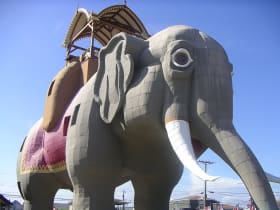
Lucy the Elephant
10 miles away
Just down the beach from Atlantic City stands a six-story elephant you can climb inside.

Beach Haven Beach
13 miles away
The wide, lifeguarded Atlantic beach of Beach Haven, the Victorian Queen City at the south end of Long Beach Island.