

Absecon Lighthouse
198 N Maine Ave, Atlantic City, NJ
Atlantic City, NJ
A candy-striped tower rising above the Atlantic City skyline, the tallest lighthouse in New Jersey and one of the tallest in the country, with a spiral climb to a rooftop view of the whole shore.
Absecon Lighthouse rises above the north end of Atlantic City, a tall brick tower painted in bands of yellow and red that has guided ships along this stretch of coast since the 1850s. At more than 170 feet it is the tallest lighthouse in New Jersey and one of the tallest in the United States, and visitors can climb its spiral staircase all the way to an open gallery near the top.
The light was built to answer a grim problem. The waters off Absecon Island had wrecked so many ships that the stretch of shore earned the nickname the graveyard of the Atlantic, and local doctor and civic booster Jonathan Pitney pushed for years to get a lighthouse built. It first shined in 1857, its beam thrown far out to sea by a great glass lens that still sits in the tower today.
What Travelers Love
- Climbing the spiral staircase to the outdoor gallery for a sweeping view of the shore and skyline
- The original first-order Fresnel lens, one of only a handful still in place in the country
- The restored keeper's house museum at the base of the tower
- How the red-and-yellow striped tower stands out against the modern casinos around it
Worth Knowing
- The climb is a long spiral staircase with more than two hundred steps and no elevator, so it takes some effort
- The tower welcomes visitors on a seasonal schedule, so check ahead before a winter trip
- Wear comfortable shoes and be ready for a steady climb up narrow iron stairs
- The rooftop gallery is exposed to the wind, which can be strong and cool even on warm days
Learn about Absecon Lighthouse
The story of the light
The land around Absecon Inlet was long the territory of the Lenape people, whose descendants today include the Nanticoke Lenni-Lenape and other Lenape communities of the region. The name Absecon comes from a Lenape word for the place, and Native fishing and shellfishing camps once dotted these barrier islands long before the resort town grew up around them.
By the middle of the 1800s the shoals off Absecon Island had claimed a long list of ships, and Jonathan Pitney, the physician often called the father of Atlantic City, lobbied Congress for a lighthouse. It was designed by George Meade, an army engineer who would later command Union forces at Gettysburg, and its light first shined in January 1857. The tower guided coastal traffic for decades until shifting sands and new navigation methods made it obsolete, and it was retired from service in the early 1930s.
After years of neglect the lighthouse was restored and reopened as a museum, its original lens back in place and its keeper's dwelling rebuilt. Today it stands as a preserved landmark run by a nonprofit and the city, a survivor from the era before the boardwalk and the casinos.
Climbing the tower
The climb is the heart of a visit. A cast-iron spiral staircase winds up the inside of the brick tower, past small windows that frame the neighborhood and the sea, to an open gallery deck near the top. From there the view takes in the Atlantic City skyline, the long ribbon of the Boardwalk, the inlet where fishing boats run, and the ocean stretching to the horizon.
Near the top sits the tower's great treasure, a first-order Fresnel lens, a beehive of hand-ground glass prisms taller than a person that once concentrated the flame of an oil lamp into a beam visible far out to sea. It is one of only a small number of such lenses still standing in their original towers in the United States, and seeing it up close is a reminder of the craft that went into these lights.
The keeper's house and grounds
At the base of the tower stands a reconstructed keeper's house, furnished to show how a lighthouse keeper and his family lived in the late 1800s. Keepers here worked in shifts to tend the light through the night, hauling oil up the stairs and keeping the lens polished, a demanding and lonely job on a barrier island that flooded in storms.
The grounds tell the wider story of the coast and the town that grew beside the light. Exhibits trace the wrecks that prompted the tower's construction, the lives of the keepers, and the rise of Atlantic City from a quiet seaside village into a booming resort connected to Philadelphia by rail.
The shore and the seasons
Absecon Island sits on the great Atlantic Flyway, and the marshes and beaches around the inlet draw shorebirds, gulls, terns, and migrating songbirds through much of the year. Just to the north lie the back bays and salt marshes that make this coast one of the richest stretches of birding on the East Coast.
Summer is the busy season, when the beach and boardwalk fill and the tower climb comes with a warm sea breeze at the top. Spring and fall bring cooler air, thinner crowds, and strong bird migrations. Winter is quiet and often windy, with the striped tower standing stark against gray skies, and the light open on a reduced schedule.
Closest Boutels
The closest Boutel™ stays, so you can turn this stop into an overnight. Each is a place we chose through independent editorial review, never a paid placement.
Details
Atlantic City, NJ
Frequently asked questions
What is the Absecon Lighthouse?
The Absecon Lighthouse, in Atlantic City, New Jersey, is the tallest lighthouse in the state and one of the tallest in the country, a historic beacon that has guided ships along the Jersey Shore since the mid-nineteenth century. Beautifully preserved, the lighthouse rises high above Atlantic City, and visitors can climb its many steps to the top for sweeping views of the city, ocean, and coast, while a museum and restored keeper's house tell its history. Its impressive height and history make it a rewarding landmark to visit. A historic and lofty lighthouse, it delights visitors. With its heights and history, the Absecon Lighthouse offers a compelling destination in New Jersey.
Can you climb the Absecon Lighthouse?
Yes, visitors can climb the many steps to the top of the Absecon Lighthouse, the tallest in New Jersey, and be rewarded with sweeping views of Atlantic City, the ocean, and the coast from its lofty gallery. Because it is a tall climb up a spiral staircase, it requires some effort and good footing, so being prepared for the climb and taking your time are wise. A museum and restored keeper's house at the base add to the visit. Climbing carefully and enjoying the view reward visitors at the Absecon Lighthouse in New Jersey.
What can you see at the Absecon Lighthouse?
You can climb to the top for panoramic views of Atlantic City, the ocean, and the coast, tour the museum and restored keeper's house, and learn the lighthouse's history as the tallest in New Jersey. The climb and the sweeping views, the museum, the keeper's house, and the maritime history are the draws, making it a rewarding stop combining a bit of a workout with history and scenery. The view from the top is the highlight. With its heights and history, the Absecon Lighthouse offers a rewarding experience in New Jersey.
When is the best time to visit the Absecon Lighthouse?
The lighthouse is open for climbing and touring through much of the year, with clear days offering the best views from the top and the mild months especially pleasant, though hours can be seasonal. Because hours and access can vary, checking the current schedule before you go is wise. For the best views and pleasant conditions, aim for a clear day, and check current hours, at the Absecon Lighthouse in New Jersey.
What is near the Absecon Lighthouse?
The Absecon Lighthouse is in Atlantic City, New Jersey, within reach of the Atlantic City boardwalk and Steel Pier, the beaches, Lucy the Elephant in nearby Margate, and the southern Jersey Shore. That makes the Absecon Lighthouse a compelling stop to combine with Steel Pier, Lucy the Elephant, and the other attractions of the Atlantic City area on a visit to New Jersey.
Nearby
Steel Pier
1.1 miles away
This is the classic Atlantic City thrill for families, an amusement park built out over the Atlantic Ocean.
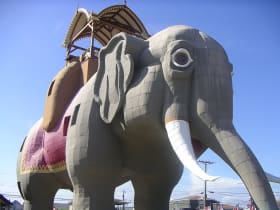
Lucy the Elephant
6.2 miles away
Just down the beach from Atlantic City stands a six-story elephant you can climb inside.

Edwin B. Forsythe National Wildlife Refuge
6.8 miles away
Behind the casinos lies one of the great wild places of the Jersey Shore. The Edwin B.
The Historic Smithville Inn
8.9 miles away
This inn is the real thing at the center of a village that grew up to match it.
Renault Winery
14 miles away
People are surprised to find a French winery founded in 1864 tucked into the Pine Barrens behind Atlantic City.

Beach Haven Beach
16 miles away
The wide, lifeguarded Atlantic beach of Beach Haven, the Victorian Queen City at the south end of Long Beach Island.