
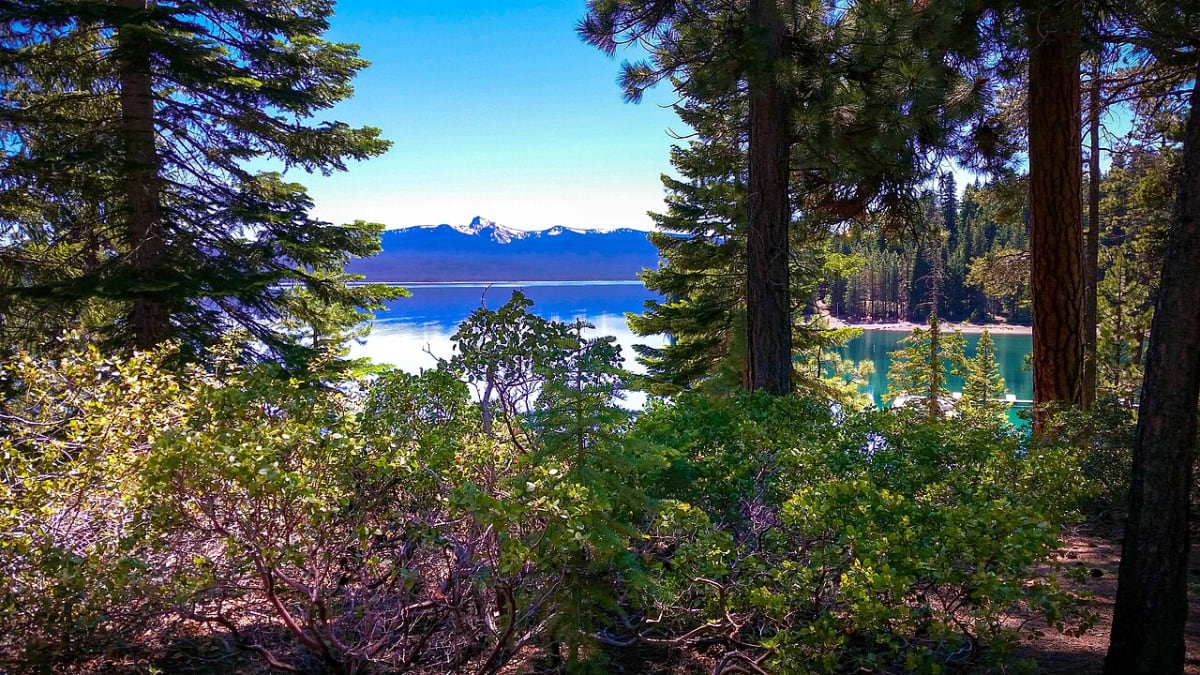
Crescent Lake & Odell Lake
Crescent Lake
Just east of Willamette Pass, two big, deep, glacier-carved lakes sit side by side on the crest of the Oregon Cascades: Crescent Lake, named for its curving crescent-moon shape, and Odell Lake, named for a surveyor who helped map the pass in 1865. Both are cold and clear, ringed by lodgepole pine, and each falls well over 250 feet at its deepest.
They make a natural pair for a weekend. Crescent Lake has the sandy shoreline and the swimming beach; Odell Lake has the trophy fishing and a reputation for reliable afternoon winds that make it a favorite among sailors. Between them sits the small, rustic community of Crescent Lake Junction, and above them rises Diamond Peak.
Learn about Crescent Lake & Odell Lake
The story of the lakes
Both lakes were named in July 1865 by the surveyors Byron Pengra and William Odell, who were laying out the Oregon Central Military Road across the Cascades. Crescent Lake took its name from its crescent-moon shape, and Odell Lake carries the surveyor’s own name. The road they scouted became, in time, the route of Highway 58.
Twelve years earlier, this high country nearly swallowed a wagon train. In 1853 a promoter named Elijah Elliott talked roughly a thousand emigrants, in some 250 wagons, onto a ‘free emigrant road’ over Willamette Pass that had not actually been finished. The train was stranded in the mountains for weeks until a rescue party reached them from the valley below. It is remembered as the Lost Wagon Train of 1853.
What finally opened the lakes to travelers was the railroad. The Southern Pacific spent two decades pushing its Cascade line over the pass, boring a summit tunnel and completing the crossing in 1926. Stations appeared at the lakes, the little community at Crescent Lake was surveyed within months of the first train, and lodges and resorts followed.
People have been drawn here far longer than that. At the south end of Odell Lake, archaeologists documented an early campsite, stone points buried beneath a layer of volcanic pumice, evidence of hunters here in the distant past. These are the homelands of the Molalla, who ranged the western Cascade slopes, and the Klamath to the south. The two peoples traded, intermarried, and gathered at the high huckleberry grounds of the Cascades, where the berries were prized enough to carry down and trade.
How the lakes formed
Both lakes are the work of ice. During the last ice age, glaciers grinding down the east flank of the High Cascades carved these deep basins and then dammed them with moraines, ridges of rock and rubble bulldozed to the edge of the ice. When the glaciers melted, the basins filled. Odell Lake reaches about 282 feet deep and Crescent about 265, which is part of why they stay so cold and clear.
The peaks around them are volcanoes worn down by that same ice. Diamond Peak, at 8,748 feet, stands just to the west in its own wilderness, its flanks scooped into cirques and bowls. Maiden Peak and Odell Butte rise nearby, and Willamette Pass itself crosses the crest at just over 5,100 feet.
Fish, birds, and forest
Odell Lake is famous among anglers for its trophy lake trout, or mackinaw. A state-record mackinaw of more than forty pounds was pulled from these waters in 1984, and the record still stands. Each fall, kokanee salmon turn crimson and run up Trapper Creek at the west end of the lake to spawn. Crescent Lake adds brown trout to the mix. Both lakes hold native mountain whitefish as well, and Odell shelters threatened bull trout, which are protected and closed to fishing.
Odell Lake is a noted spot for bald eagles, especially in fall, and ospreys fish both lakes through the summer. In the surrounding forest, watch for the Canada jay, the Clark’s nutcracker prying seeds from the cones, and the bold Steller’s jay, with woodpeckers and nesting western tanagers among the pines.
The woods are lodgepole pine and mountain hemlock, home to mule deer, black bear, and the Pacific marten, a sleek, tree-hunting weasel of dense old forest. The understory fills with huckleberry and beargrass, and lupine colors the openings in summer.
Season by season
Summer is the heart of the season: swimming and picnicking at Simax Beach on Crescent Lake, boating and paddling on both, and fishing all day. Odell Lake is known for strong, dependable afternoon winds that funnel through the low gap of Willamette Pass, which has long made it a destination for sailors and windsurfers.
Fall brings the kokanee run and a deep quiet as the crowds thin, good for fishing and camping in the cooling air.
Winter turns the pass into snow country. The Willamette Pass ski area runs downhill and Nordic trails, and sno-parks along Highway 58 open the area to cross-country skiing and snowmobiling. A state sno-park permit is required in the snowy months.
Spring is ice-out and snowmelt, when the creeks run high and the high country slowly reopens.
Closest Boutels
The closest Boutel™ stays, so you can turn this stop into an overnight. Each is a place we chose through independent editorial review, never a paid placement.
Frequently asked questions
What is there to do at Crescent Lake and Odell Lake?
These two large, deep mountain lakes near Willamette Pass are classic Cascade playgrounds for boating, paddling, fishing, and swimming for the cold-tolerant, with sandy beaches, campgrounds, and rustic lakeside lodges. In winter the surrounding area turns to snow sports near the pass. Cradled by forest and peaks, they are a scenic, less-crowded alternative to some of Oregon's busier lakes.
Is the fishing good at Odell and Crescent Lakes?
Yes, both are well known among anglers. Odell Lake is famous for its large lake trout, also called mackinaw, along with kokanee salmon and rainbow trout, while Crescent Lake offers trout fishing in beautiful surroundings. Trolling from a boat is a popular approach on these deep waters. Check current fishing regulations and, for the big lake trout, consider local knowledge, since they hold in deep water.
Is it windy at these lakes?
It can be, especially at Odell Lake, which is known for strong afternoon winds funneling through the pass, a draw for sailors and windsurfers but a real hazard for small boats and paddlers. Mornings are usually calmer. If you are kayaking, canoeing, or in a small craft, get out early, watch the sky and water, wear a life jacket, and head in well before the wind picks up in the afternoon.
When is the best time to visit Crescent and Odell Lakes?
Summer, roughly July through September, is prime for water recreation once the high country has warmed, while winter brings snow sports to the nearby pass. Because these lakes sit at high elevation, the season is short and the water stays cold, and early summer can bring mosquitoes. Late summer often hits the sweet spot of warm days, fewer bugs, and good conditions on the water.
What should I know before visiting these Cascade lakes?
Come prepared for a high-elevation setting: cold water, cool nights even in summer, and limited services, so bring layers, food, and fuel. Respect the water by wearing life jackets and minding the wind, especially on Odell. Reserve campsites ahead in peak summer, and check road and facility status in the shoulder seasons, since snow lingers late and returns early at the pass.
Nearby
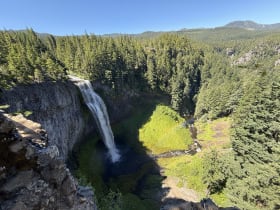
Salt Creek Falls, Willamette National Forest
9.4 miles away
The falls drop 286 feet off a basalt cliff into a narrow canyon. The main overlook is paved, reachable in minutes from the parking lot, and gives a full face-on view of the falls.

Waldo Lake Wilderness
19 miles away
One of the clearest lakes on earth, with visibility past 100 feet because no rivers run in. Gas motors are banned, so it belongs to kayaks, canoes, and sailboats.
Diamond Lake
24 miles away
The lake sits in a broad, shallow crater at 5,183 feet, filled with snowmelt and surrounded by pumice flats and lodgepole pine.

Crater Lake Rim Drive
37 miles away
The Cleetwood Cove Trail descends 1.1 miles to the lake and is the main place where you can touch the water. The trail is steep; plan 30 minutes down, 45 up.

Crater Lake National Park
43 miles away
The deepest lake in the United States, filling the caldera of a collapsed volcano with impossibly blue water.