
Continental Divide Overlook
93475 US-40, Idaho Springs, CO
Idaho Springs, CO
A high viewpoint on the crest of the Rockies, where a single ridgeline splits the country's waters toward two distant oceans.
The Continental Divide is the great spine of North America, the high ridgeline where the land tips one way or the other and rain and snowmelt begin their long journey toward either the Pacific or the Atlantic. This overlook in the Front Range gives travelers a chance to stand on or near that crest high in the Colorado Rockies, taking in the sweep of peaks that mark the roof of the continent.
From a viewpoint like this, a raindrop falling on one side of the ridge will eventually make its way toward one ocean, while a drop on the other side flows toward the far side of the continent. It is a simple idea with an outsized grandeur, and standing at the divide, surrounded by alpine peaks, gives it a vivid reality that a map never can.
What Travelers Love
- Standing on the very crest where waters divide toward two oceans
- Sweeping views across ranks of high Rocky Mountain peaks
- Cool, thin alpine air and big skies near treeline
- A dramatic high point on a classic Colorado mountain drive
Worth Knowing
- This is a very high, exposed spot, so weather changes fast and it can be cold and windy any time of year
- Take altitude seriously; move slowly and carry water and warm layers
- Mountain roads here can be snowy or icy outside summer, so check conditions
- Afternoon thunderstorms are common and dangerous above treeline, so plan to be up early
Learn about Continental Divide Overlook
The great divide
The Continental Divide runs the length of the Americas, following the highest crests of the Rocky Mountains through Colorado. It is a hydrologic boundary rather than a single mountain: on one side, waters drain generally westward toward the Pacific, and on the other, they head toward the Atlantic by way of the great rivers of the interior.
In Colorado the divide threads through some of the highest country in the Rockies, crossing passes and peaks well above treeline. Overlooks along the mountain highways let travelers pause where the road meets or approaches the crest, taking in a landmark that shapes the flow of water across half a continent.
A landscape of high peaks
The country around the overlook is classic high Colorado alpine terrain, a world of bare rock, tundra, and wind above the last stunted trees. In the short summer, hardy alpine wildflowers bloom in the meadows, and marmots and pikas live among the rocks, while herds of elk and bighorn range the high slopes.
These mountains are the traditional homeland of the Ute people, who traveled and hunted this high country for generations and whose connection to the Colorado Rockies endures today. The overlook offers a wide view across ranks of peaks that make plain just how vast and rugged this stretch of the range really is.
A high mountain drive
The overlook lies along one of Colorado's classic mountain corridors, where the highway climbs from the canyon towns up toward the passes and ski country of the high Front Range. The drive itself is part of the draw, winding up through spruce forest and out toward treeline with the peaks growing steadily closer.
Reaching the divide by car makes an accessible high point for travelers who want the grandeur of the alpine without a long hike, though the setting demands respect. The thin air, fierce weather, and quick-building storms are all part of standing this high, and they are a reminder of just how serious Colorado's high country can be.
Season by season
Spring is slow to arrive at this elevation, with deep, lingering snow and cold, changeable weather well into the warmer months.
Summer is the prime and often only truly accessible season, with wildflowers, milder days, and the best driving conditions, though violent afternoon storms are a real hazard above treeline.
Fall brings crisp, clear air and golden aspen on the slopes below, a beautiful time to make the drive before the snows return.
Winter turns the divide into a world of deep snow, fierce wind, and cold, stunning to see but demanding real caution on icy mountain roads.
Closest Boutels
The closest Boutel™ stays, so you can turn this stop into an overnight. Each is a place we chose through independent editorial review, never a paid placement.
Details
Idaho Springs, CO
Frequently asked questions
What is the Continental Divide Overlook?
A Continental Divide Overlook is a scenic viewpoint in the Colorado Rockies offering views of the Continental Divide, the great mountain ridgeline that separates the waters flowing toward the Atlantic Ocean from those flowing toward the Pacific. Winding through the high peaks of Colorado, the Continental Divide is a dramatic natural feature, and overlooks along mountain passes and scenic roads let visitors take in sweeping vistas of the divide's rugged, often snow-capped mountains. These overlooks provide a wonderful opportunity to appreciate the grandeur of the high Rockies and the geographic significance of the divide, making them memorable stops on a Colorado mountain journey.
What is the Continental Divide?
The Continental Divide is the principal hydrological divide of North America, a continuous ridgeline that determines which way water flows across the continent, with precipitation on one side draining toward the Pacific Ocean and on the other toward the Atlantic, including the Gulf of Mexico. In Colorado, the divide follows the crest of the high Rocky Mountains, crossing dramatic peaks and passes. It is a significant geographic and natural landmark, and standing at an overlook or crossing point on the divide, where a raindrop's fate is decided by which side it falls on, is a striking way to appreciate the mountains' scale and importance.
What can you do at a Continental Divide Overlook?
You can take in sweeping panoramic views of the high Rocky Mountains and the Continental Divide's rugged, often snow-capped peaks, learn about the divide's geographic and hydrological significance from interpretive information, photograph the spectacular mountain scenery, and appreciate the grandeur of Colorado's high country. Some overlooks are along scenic mountain roads or at high passes where the divide is crossed. The dramatic vistas make these overlooks memorable stops. With its stunning mountain views and the fascinating natural significance of the divide, a Continental Divide Overlook offers a scenic and educational highlight on a Colorado mountain drive.
What should I know before visiting a Continental Divide Overlook?
Continental Divide overlooks are typically at high elevations in the mountains, where the thinner air can affect visitors, temperatures are cooler, and weather can change quickly, including afternoon thunderstorms and sudden snow even in summer, so bring warm layers, sun protection, and water, and be prepared for changing conditions. The mountain roads leading to them can be steep and winding, and some high passes and scenic roads are only open seasonally, closing in winter. Checking current road and weather conditions and dressing for the cool, high country ensures a safe and enjoyable visit to these scenic overlooks.
When is the best time to visit a Continental Divide Overlook?
Summer and early fall are generally the best times, when the mountain roads and high passes leading to Continental Divide overlooks are typically open and the weather is mildest, offering clear views of the peaks, with fall adding golden aspen color, while many high-country roads close in winter due to snow. Clear mornings offer the best views before afternoon storms build. For the best combination of open access, comfortable weather, and clear mountain vistas, aim for summer or early fall, always checking current road and weather conditions and preparing for the cool, high elevation.
Nearby

Mount Blue Sky Scenic Byway
11 miles away
Mount Blue Sky Scenic Byway is the highest paved road in North America, climbing from Idaho Springs to above 14,000 feet in about 28 miles.

Clear Creek Canyon
14 miles away
The steep granite gorge US-6 threads from Golden up to Idaho Springs, where Colorado's gold rush began in 1859.

Dillon Reservoir
19 miles away
Dillon Reservoir is a 3,300-acre alpine reservoir at 9,017 feet, created in 1963 by damming the Blue River. It now supplies 50% of Denver's water via a 23-mile tunnel through the Continental Divide.
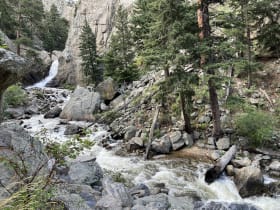
Boulder Falls
24 miles away
A 70-foot waterfall spills into Boulder Canyon just steps from Highway 119, the natural halfway marker on the scenic mountain drive between Boulder and the little town of Nederland.

Rocky Mountain National Park
41 miles away
Tundra, alpine lakes, and elk-filled meadows along Trail Ridge Road, the highest paved road in the country.