
Big Basin Prairie Preserve
1473 County Road 32, Protection, KS
Ashland, KS
A mile-wide sinkhole where the ground dropped hundreds of feet, now a native prairie roamed by a small herd of bison and cut by a spring-fed well that never runs dry.
Big Basin Prairie Preserve protects one of the strangest pieces of ground in Kansas, a natural sinkhole close to a mile wide and a few hundred feet deep, its floor now a rippling native prairie grazed by a small herd of bison. You drive down into the bowl on a rough track and find yourself surrounded by grassland walls, as if the plains had opened up and dropped away.
A short distance off lies a second, smaller sinkhole holding St. Jacob's Well, a deep, clear, spring-fed pool that local lore says has never been known to go dry, even in the worst droughts. Together the two basins tell a hidden story about what lies beneath the Red Hills, and the whole preserve is a fine, quiet window into the wild short-grass prairie.
What Travelers Love
- Standing on the rim of a natural sinkhole nearly a mile across
- Watching the resident bison herd graze the native prairie inside the basin
- The short walk down to St. Jacob's Well, a deep, spring-fed pool that has never gone dry
- Red Hills country and dark, quiet skies with almost no light for miles
Worth Knowing
- The bison are wild animals, so stay in or near your vehicle and keep a safe distance
- The road into the basin is unpaved and can be rough or slick after rain
- There are no services at the preserve, so bring your own water and supplies
- Watch your footing near the well and along the rims, and keep an eye out for rattlesnakes in warm months
Learn about Big Basin Prairie Preserve
Bison, prairie, and the people of the Red Hills
This red-earth country lay within the historic hunting range of the Southern Plains tribes, among them the Kiowa, Comanche, and the Cheyenne and Arapaho, whose descendants are federally recognized nations today. For centuries the great bison herds moved across these grasslands, and a spring-fed pool like St. Jacob's Well would have been a known and valued water source in a dry land.
The commercial slaughter of the 1800s all but wiped the bison out, and the animals that graze Big Basin today are a small managed herd, part of the long effort to keep native grazers on native prairie. Watching them move across the basin floor gives a real sense of the plains as they once were.
How the ground fell in
Both basins are sinkholes, formed where thick beds of salt and gypsum deep underground slowly dissolved in groundwater over long ages. As those layers washed away, the rock and soil above lost their support and collapsed downward, leaving a great bowl in the surface of the plains.
St. Jacob's Well sits in a smaller, deeper collapse where the sinkhole reached down to the water table, so it holds a permanent spring-fed pool. The steady water in a dry region is what made it famous, and its reliability in drought is part of the reason it drew travelers and stock for generations.
Wildlife of the basin
Besides the bison, the preserve supports the wildlife of the mixed and short-grass prairie. Pronghorn and mule deer range the grass, coyotes work the draws, and prairie dogs, hawks, and grassland songbirds fill out the community.
The permanent water at St. Jacob's Well draws birds and other animals from across the surrounding country, especially in the dry heat of late summer. On a still evening the basin can feel remarkably alive, with the sounds of insects and birds rising off the grass.
Season by season
Spring brings green grass and wildflowers to the basin floor and the best all-around weather, though spring rains can make the road in tricky. Summer is hot and open, with long light for evening visits when the bison are most active and the heat has eased.
Fall turns the prairie gold and brings clear, cool days that are ideal for a slow visit. Winter is cold and wind-swept out here, and snow or mud can make the road into the basin difficult, so the warmer seasons are the surer bet.
Closest Boutels
The closest Boutel™ stays, so you can turn this stop into an overnight. Each is a place we chose through independent editorial review, never a paid placement.
Evergreen Inn Motel & RV Park
Honorable Mention20001 W. US Highway 54, Pratt, KS
50 miles away|Learn More ›
Prairie Lodge Motel
Honorable Mention1219 Old US Highway 56, Council Grove, KS
193 miles away|Learn More ›
Details
Ashland, KS
Frequently asked questions
What is the Big Basin Prairie Preserve?
The Big Basin Prairie Preserve, in Clark County in southwestern Kansas, is a striking natural area protecting a vast prairie sinkhole basin and a herd of wild bison, a rare and scenic slice of the plains. The preserve's centerpiece is Big Basin, an enormous natural depression nearly a mile wide formed when underground rock dissolved and the land collapsed, along with the smaller St. Jacob's Well, a spring-fed sinkhole pond. A free-roaming herd of bison lives on the preserve, and the rolling prairie, wildlife, and unusual geology make it a beautiful and educational destination. With its prairie sinkholes and bison, the Big Basin Prairie Preserve offers a fascinating destination in Kansas.
What can you do at the Big Basin Prairie Preserve?
You can drive and walk the preserve to view the enormous Big Basin sinkhole and the spring-fed St. Jacob's Well, watch for the free-roaming herd of bison and other wildlife from a safe distance, take in the rolling native prairie, and learn about the unusual sinkhole geology. The dramatic prairie sinkholes, the wild bison, and the scenic native prairie are the draws, offering a memorable and educational look at the plains. Seeing bison in a natural prairie setting is a highlight. With its sinkholes and bison, the Big Basin Prairie Preserve offers a rewarding experience in Kansas.
How should visitors behave around the bison at Big Basin?
The bison at the Big Basin Prairie Preserve are wild, powerful animals that must always be viewed from a safe distance and never approached, fed, or crowded, as bison can be dangerous and surprisingly fast, and getting too close risks serious injury. Viewing them from your vehicle or a good distance, staying alert to their location, and never getting between animals is essential, especially during calving and rutting seasons. Respecting the bison's space protects both you and the animals. Keeping a safe distance ensures a safe visit to the Big Basin Prairie Preserve in Kansas.
When is the best time to visit the Big Basin Prairie Preserve?
The mild months of spring through fall offer the most pleasant weather for exploring the preserve, with spring bringing green prairie and wildflowers and fall comfortable temperatures, while summer can be hot and winter cold and windy on the open plains. Bison can be seen year-round, often more active in cooler parts of the day. For the most pleasant weather and prairie beauty, aim for spring through fall at the Big Basin Prairie Preserve in Kansas.
What is near the Big Basin Prairie Preserve?
The Big Basin Prairie Preserve is in Clark County in southwestern Kansas, within reach of Dodge City with the Boot Hill Museum, Meade County State Park with the Dalton Gang Hideout, the Big Well in Greensburg, and the Fromme-Birney Round Barn near Mullinville. That makes the Big Basin Prairie Preserve a fascinating stop to combine with the Boot Hill Museum, the Dalton Gang Hideout, and the other attractions of southwestern Kansas on a visit to the state.
Nearby
Fromme-Birney Round Barn
20 miles away
Fromme-Birney Round Barn: on a county road southwest of Mullinville in Kiowa County. A restored 1912 true round barn, 70 feet across, with a domed self-supporting roof and no center posts.
M.T. Liggett Roadside Art
23 miles away
M.T. Liggett Roadside Art: along the highway on the edge of Mullinville, Kiowa County. Free, always visible from the road.
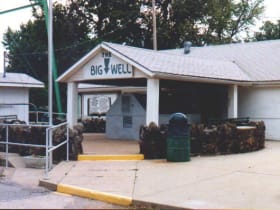
The Big Well
28 miles away
The Big Well Museum: 315 S Sycamore St, Greensburg. Walk down into a stone-lined well 109 feet deep and 32 feet wide, hand-dug in the 1880s to water steam trains.