
B-29 Museum
82 Curran Rd
Pratt, KS
On the Kansas prairie where the world's first B-29 crews trained, including the men who would fly the atomic missions, in a restored wartime parachute building.
Out on the flat Kansas prairie just outside Pratt stands a plain wartime building that holds an outsized piece of history. This is the B-29 Museum, and it tells the story of Pratt Army Airfield, which in 1943 became the first place in the world set up to train crews for the brand-new Boeing B-29 Superfortress, the huge, high-flying bomber that was still rolling off the assembly lines in nearby Wichita.
Over the next few years more than twenty thousand airmen and ground crew learned to fly and service the B-29 on this open ground, including a couple of pilots whose names history would remember. The museum sits in a restored building from that era at the old airfield, keeping the memory of those crews and their remarkable aircraft alive in the very place they trained.
What Travelers Love
- Standing on the actual ground where the world's first B-29 crews trained
- The direct link to the atomic-mission pilots who trained here before the war's end
- A restored World War II parachute building that is itself part of the story
- Knowledgeable volunteers and personal artifacts that make the history feel real
Worth Knowing
- This is a volunteer-run local museum, so it keeps limited seasonal hours; check ahead before a long detour
- The site is at the working municipal airport just outside town, an easy drive from Highway 54
- It pairs naturally with the All Veterans Memorial nearby, which honors service members from the area
- Give yourself an unhurried hour to read the displays and talk with the volunteers on duty
Learn about B-29 Museum
The world's first B-29 base
When the B-29 Superfortress was being rushed into service during World War II, the Army needed somewhere to teach crews to handle it, and the huge new bomber was so advanced that no existing base was ready for it. Pratt, with its flat land, clear skies, and closeness to the Boeing plant in Wichita where the planes were built, was chosen, and in 1943 Pratt Army Airfield became the first B-29 training facility anywhere in the world.
The base was built to a serious scale for a prairie town: three runways each about a mile and a half long, five hangars large enough to hold a B-29, dozens of barracks, and quarters for hundreds of officers. From 1943 until it closed in 1946, more than twenty thousand flight and ground crew members passed through, learning to master an aircraft that was bigger, faster, and more complex than anything most of them had ever seen.
The pilots who trained on the prairie
The single fact that most surprises visitors is who spent time training on this quiet Kansas airfield. Among the airmen who trained at Pratt were Paul Tibbets, who would go on to pilot the Enola Gay on the mission over Hiroshima, and Charles Sweeney, who piloted the B-29 Bockscar on the mission over Nagasaki. The two aircraft that ended the war both flew with pilots who had learned the Superfortress here.
That connection gives an ordinary-looking prairie base a weight far beyond its size. The museum does not sensationalize it; it simply lays out the record of the crews who trained here and the wider effort they were part of, from the young men who never came home to the mechanics and support staff who kept the giant planes flying. It is a reminder that some of the twentieth century's largest events ran through small, out-of-the-way American places like this one.
A museum in a parachute building
The museum itself occupies a restored World War II building from the airfield, a former parachute building where the delicate life-saving canopies were once packed, inspected, and hung to dry. Reusing an original structure rather than a modern hall means the setting is part of the exhibit; you are standing inside a piece of the base you are learning about.
Inside, the collection leans on the human side of the story: photographs, uniforms, tools, personal belongings, and artifacts tied not only to Pratt but to the other Kansas B-29 bases as well. Because it is cared for by volunteers, many of them with family ties to the airfield or to the service, a visit often turns into a conversation, the kind of first-person storytelling you cannot get from a plaque.
Visiting the B-29 Museum
The museum is out at the Pratt Regional Airport just outside town, an easy hop off Highway 54, the main route across south-central Kansas. Because it is run by volunteers it keeps limited, mostly seasonal hours, so it is worth checking ahead before planning a stop, especially if you are making a special trip off the highway to see it.
Nearby stands the All Veterans Memorial, which honors service members from the region across many wars and makes a fitting companion to the museum. Set aside an unhurried hour to walk the displays, look closely at the personal items, and let the volunteers fill in the stories behind them. For anyone drawn to aviation, to the Second World War, or simply to the surprising history hidden in small-town America, this stop on the Kansas prairie punches far above its weight.
Closest Boutels
The closest Boutel™ stays, so you can turn this stop into an overnight. Each is a place we chose through independent editorial review, never a paid placement.
Evergreen Inn Motel & RV Park
Honorable Mention20001 W. US Highway 54, Pratt, KS
5 miles away|Learn More ›
Prairie Lodge Motel
Honorable Mention1219 Old US Highway 56, Council Grove, KS
139 miles away|Learn More ›
Details
Pratt, KS
Frequently asked questions
What is the B-29 Museum?
The B-29 Museum, in Wichita, Kansas, honors the legendary B-29 Superfortress, the famous World War Two heavy bomber, many of which were built in Wichita, a major center of aircraft production. The museum and hangar celebrate this aviation heritage, and Wichita is home to one of the few B-29 Superfortress aircraft restored to flying condition, a beloved symbol of the city's wartime manufacturing legacy and the workers who built these planes. Through the aircraft, exhibits, and stories, the museum shares the history of the B-29, the war effort, and Wichita's proud role as the Air Capital. With its historic bomber and aviation heritage, the B-29 Museum offers a fascinating destination in Kansas.
Why is the B-29 important to Wichita?
The B-29 Superfortress is important to Wichita because the city was a major production center for the aircraft during World War Two, with thousands of workers building B-29 bombers that played a decisive role in the war, cementing Wichita's identity as the Air Capital of the World for its aircraft manufacturing. The museum honors this heritage and the many workers who built the planes, and a restored, flying B-29 preserved in the city is a treasured link to that legacy. Understanding this history enriches a visit to the B-29 Museum in Wichita, Kansas.
What can you see at the B-29 Museum?
You can see the historic B-29 Superfortress aircraft and hangar, exhibits on the bomber's history, the wartime manufacturing effort, and Wichita's role as an aviation hub, and learn about the aircraft, the crews who flew them, and the workers who built them. The historic bomber, the aviation heritage exhibits, and Wichita's proud manufacturing story are the highlights, offering an engaging look at aviation and wartime history. Seeing the massive aircraft up close is a memorable experience. With its historic bomber and exhibits, the B-29 Museum offers an engaging visit in Kansas.
When is the best time to visit the B-29 Museum?
As a mostly indoor museum and hangar, the B-29 Museum is enjoyable year-round in various weather, making it a rewarding stop in any season for aviation and history lovers. Because hours, aircraft availability, and any special events or flights can vary, checking the current schedule before you go is important, especially if you hope to see the aircraft in a particular condition or in operation. Confirming current details ahead ensures a rewarding visit to the B-29 Museum in Wichita, Kansas.
What is near the B-29 Museum?
The B-29 Museum is in Wichita, Kansas, the Air Capital, within reach of Exploration Place with its aviation displays, the Sedgwick County Zoo, the Museum of World Treasures, and the other attractions of Wichita. That makes the B-29 Museum a fascinating stop to combine with Exploration Place, the Wichita museums, and the other attractions of the city on a visit to Kansas.
Nearby
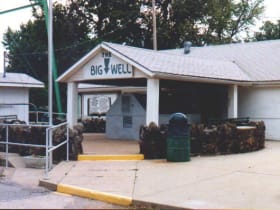
The Big Well
31 miles away
The Big Well Museum: 315 S Sycamore St, Greensburg. Walk down into a stone-lined well 109 feet deep and 32 feet wide, hand-dug in the 1880s to water steam trains.

Quivira National Wildlife Refuge
35 miles away
Quivira NWR: Wildlife Drive, Stafford (west of Stafford on KS-19). Free, open daily dawn-dusk. 14-mile auto tour route. Big Salt Marsh overlook: best for scanning large flocks.
Fromme-Birney Round Barn
39 miles away
Fromme-Birney Round Barn: on a county road southwest of Mullinville in Kiowa County. A restored 1912 true round barn, 70 feet across, with a domed self-supporting roof and no center posts.