

Atlanta History Center
130 W Paces Ferry Rd NW, Atlanta, GA
Atlanta, GA
A green campus in the heart of Buckhead where museum galleries, historic homes, native gardens, and a massive Civil War Cyclorama tell the long story of Atlanta.
The Atlanta History Center spreads across a wooded campus in Buckhead, combining museum galleries, historic houses, and gardens into one of the largest history museums in the Southeast. It gathers the story of Atlanta and the region under one umbrella, from Native history and the Civil War to the rise of the modern city, the 1996 Olympics, and Atlanta's central place in the Civil Rights Movement.
The center's signature attraction is the Cyclorama, a huge circular oil painting of the 1864 Battle of Atlanta, one of the last surviving works of its kind in the country. Beyond the galleries, the campus holds the grand Swan House mansion, the Smith Family Farm, and acres of gardens and trails, so a visit blends indoor exhibits with time outdoors among the trees.
What Travelers Love
- The restored Cyclorama, a giant circular painting of the Battle of Atlanta
- Wandering the gardens and woodland trails across the leafy campus
- Touring the Swan House mansion and the Smith Family Farm
- Rich exhibits on Atlanta, the Civil War, and Southern history
Worth Knowing
- The campus is large, so allow several hours and wear comfortable walking shoes
- Much of the site is outdoors, so dress for the weather and the season
- The Swan House and other historic buildings are often toured on a set schedule
- The affiliated Margaret Mitchell House sits at a separate midtown location
Learn about Atlanta History Center
The Cyclorama and the galleries
The Cyclorama is a monumental painting created in the late 1880s, wrapping the viewer in a 360-degree scene of the Battle of Atlanta during the Civil War. After decades in an older building, it was carefully restored and rehoused at the History Center, where it now hangs in a purpose-built rotunda with three-dimensional figures in the foreground and a program that explains both the battle and the long, complicated life of the painting itself.
The surrounding galleries range widely across Atlanta and Southern history. Exhibits cover the Civil War, the growth of the city, sports and the Olympic Games, and the Civil Rights Movement, in which Atlanta played a leading role. The center handles that history with care, presenting the era and its figures within the fuller story of the city and the South.
The Swan House and historic homes
The Swan House is an elegant 1920s mansion built for a prominent Atlanta family, designed in a classical style and set among formal gardens and cascading fountains. Its grand staircase and period rooms have made it a favorite for tours and a recognizable filming location, and it offers a window into the city's Jazz Age wealth.
Nearby stands the Smith Family Farm, a preserved nineteenth-century farmstead moved to the campus and restored to show rural Georgia life before the Civil War. Together the two sites bracket the social range of the era, the fine city mansion and the working farm, within a short walk of each other.
The gardens and grounds
The campus is as much a landscape as a museum, with native plant gardens, formal beds, and woodland trails winding among mature trees. The Goizueta Gardens showcase the plants of the Southern Piedmont and the region's horticultural traditions, and quiet paths make it easy to spend an hour simply walking outdoors.
That green setting is part of the appeal, a leafy retreat in the middle of busy Buckhead. Families spread out on the lawns, and the mix of indoor and outdoor spaces means you can shape a visit around the weather, ducking into galleries when it is hot and lingering in the gardens when it is fine.
Atlanta's story
The land that became Atlanta lies within the ancestral homeland of the Muscogee, or Creek, and Cherokee peoples, who were forced west in the 1830s on the Trail of Tears; their descendant nations continue in Oklahoma, and the Eastern Band of Cherokee remains in North Carolina. Atlanta itself grew up as a railroad hub in the mid-nineteenth century.
The city was largely destroyed in the Civil War and rebuilt into the commercial capital of the New South, later becoming a national center of the Civil Rights Movement and home to leaders like Martin Luther King Jr. The History Center weaves these threads together, and its exhibits give visitors a grounding in the forces that shaped the modern city.
Closest Boutels
The closest Boutel™ stays, so you can turn this stop into an overnight. Each is a place we chose through independent editorial review, never a paid placement.
Details
Atlanta, GA
Frequently asked questions
What is the Atlanta History Center?
The Atlanta History Center, in Atlanta, Georgia, is one of the largest history museums in the country, a sprawling campus of exhibits, historic houses, and gardens telling the story of Atlanta, the South, and pivotal chapters of American history. The center features extensive exhibitions on Atlanta's history, the Civil War, Southern folk culture, and more, historic homes and buildings on its grounds, beautiful gardens and woodland trails, and the famous Cyclorama, a massive panoramic painting depicting a Civil War battle. Blending in-depth history with historic sites and green space, it offers a rich and immersive destination. With its exhibits and grounds, the Atlanta History Center offers a fascinating destination in Georgia.
What can you see at the Atlanta History Center?
You can explore extensive exhibitions on Atlanta's history, the Civil War, and Southern culture, view the famous Cyclorama, a massive panoramic painting of a Civil War battle, tour historic houses and buildings on the campus, and stroll the beautiful gardens and woodland trails. The in-depth history exhibits, the dramatic Cyclorama, the historic homes, and the lovely grounds are the highlights, offering a rich and varied experience blending indoor exhibits with historic sites and gardens. Its scope is impressive. With its exhibits and grounds, the Atlanta History Center offers a rewarding visit in Georgia.
When is the best time to visit the Atlanta History Center?
The Atlanta History Center blends indoor museum exhibits with outdoor historic houses and gardens, so the mild months of spring through fall are ideal for enjoying the full campus including the gardens and trails, with the indoor exhibits enjoyable in any weather. Spring blooms and fall color make the grounds especially lovely. Because it is large, allowing several hours is wise. For the fullest experience with the gardens, aim for spring through fall, or visit the exhibits any time, at the Atlanta History Center in Georgia.
What should I know before visiting the Atlanta History Center?
The Atlanta History Center is a large campus with indoor exhibitions, the Cyclorama, historic houses, and outdoor gardens and trails, so allowing several hours, wearing comfortable shoes, and planning your route help you see the highlights. Admission is charged. The history presented includes the Civil War and its complex, difficult chapters, which the center interprets thoughtfully. Checking current hours before you go is wise. Allowing ample time ensures a rewarding visit to the Atlanta History Center in Georgia.
What is near the Atlanta History Center?
The Atlanta History Center is in Atlanta, Georgia, within reach of downtown Atlanta with the Georgia Aquarium and the World of Coca-Cola, the Fox Theatre, the Martin Luther King Jr. National Historical Park, and Stone Mountain Park. That makes the Atlanta History Center a fascinating stop to combine with the Atlanta attractions and the other sights of the area on a visit to Georgia.
Nearby

The Fox Theatre
4.8 miles away
Peachtree Street hides a genuine 1929 movie palace behind its marquee.

Georgia Aquarium
5.5 miles away
This is the anchor of a great kid day downtown. The Georgia Aquarium is among the biggest in the world, and its huge Ocean Voyager tank holds whale sharks, the largest fish on the planet, gliding over...

World of Coca-Cola
5.5 miles away
Right next to the aquarium, this one is pure fun for kids. The World of Coca-Cola walks through the story of the drink an Atlanta pharmacist mixed up in 1886, with a vault said to guard the secret for...
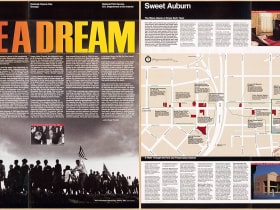
Martin Luther King Jr. National Historical Park
6.0 miles away
This is sacred ground for American history, and it is free. The Martin Luther King Jr. National Historical Park in Sweet Auburn gathers the places of Dr.

Stone Mountain Park
14 miles away
Stone Mountain is a geological giant: the largest exposed granite dome on earth, an 825-foot bald rock that swells out of the Georgia piedmont and runs miles underground.