

Wormsloe Historic Site
7601 Skidaway Rd
Savannah, GA
A colonial estate reached down a mile-and-a-half avenue of live oaks draped in Spanish moss, one of the most photographed tree tunnels in the South.
Wormsloe is a colonial-era estate on the Isle of Hope near Savannah, and its most famous feature greets you at the gate: an avenue of live oaks stretching about a mile and a half, their limbs meeting overhead and dripping with Spanish moss to form a shaded green tunnel. It is one of the most photographed scenes in Georgia, and it sets the tone for a place steeped in the early history of the colony.
Beyond the oaks lie the tabby ruins of a fortified house built by one of Georgia's first colonists, among the oldest standing structures in the state. Trails lead through maritime forest to the salt marsh and tidal river, and living-history demonstrations bring colonial coastal life into view. Wormsloe pairs natural beauty with a deep sense of Georgia's founding, all a short drive from downtown Savannah.
What Travelers Love
- Driving and walking the long avenue of moss-draped live oaks
- The tabby ruins of the colonial fortified house, among the oldest in the state
- Trails winding through maritime forest to the marsh and river
- The living-history demonstrations of colonial coastal life
Worth Knowing
- The famous oak avenue is at the entrance, so save time to walk it as well as drive it
- Wear bug protection in the warm months; the marsh and forest bring mosquitoes
- It is a preserved historic site, so stay on trails and respect the fragile tabby ruins
- Pair it with Savannah and the Isle of Hope for a full coastal-history day
Learn about Wormsloe Historic Site
A founding-era estate
Wormsloe was established by Noble Jones, a carpenter and physician who came from England with the very first group of colonists who founded Georgia in 1733 under James Oglethorpe. Jones acquired the land on the Isle of Hope and built a fortified home there, both a plantation and an outpost meant to help defend the young colony against the Spanish to the south in Florida.
The estate has remained connected to Jones's descendants across the centuries, an unusually long thread of family history for an American property. Part of the land became a state historic site open to the public, preserving the ruins and the grounds, while the story of the family and the colony gives the place a depth that reaches back to Georgia's very beginning.
The tabby ruins
At the heart of the site stand the tabby ruins of Noble Jones's fortified house. Tabby is a colonial-era building material made by burning oyster shells to make lime and mixing it with sand, water, and more shells to form a kind of concrete, a technique well suited to the shell-rich coast. The Wormsloe ruins are among the oldest standing structures in Georgia.
Walking among the weathered tabby walls, you can trace the outline of the defensive house and imagine the isolation and danger of a frontier outpost guarding a brand-new colony. The ruins are fragile and protected, a rare physical link to the 1730s, and they anchor the historical story that the site's museum and living-history programs build around them.
The avenue of oaks
The image most people carry away from Wormsloe is the oak avenue. Live oaks planted in long rows line the entrance drive for about a mile and a half, their spreading limbs arching to meet overhead and hung with the Spanish moss that gives the Southern coast its dreamy look. The result is a shaded green corridor that feels almost like a cathedral nave.
Though the trees were planted in the 1800s, later than the colonial founding, they have grown into one of the South's iconic scenes and a favorite of photographers, filmmakers, and wedding parties. Driving in beneath them is memorable, but the avenue rewards a slow walk even more, when you can feel the scale of the oaks and the quiet under their canopy.
Forest, marsh, and colonial life
Beyond the ruins and the avenue, trails thread through the maritime forest of live oak, pine, and palmetto out toward the salt marsh and the tidal river. These paths reveal the coastal ecosystem the colonists lived within, a rich edge of land and water alive with wading birds, marsh grass, and the pulse of the tides.
The site also brings the colonial past to life with demonstrations of the skills and crafts of early coastal Georgia, from tools and trades to daily survival on the frontier. Spring and fall are the most comfortable seasons to explore, mild and less buggy, while summer is hot and humid and best walked early. Together, the history, the oaks, and the marsh make Wormsloe one of the coast's most rewarding stops.
Closest Boutels
The closest Boutel™ stays, so you can turn this stop into an overnight. Each is a place we chose through independent editorial review, never a paid placement.
Details
Savannah, GA
Frequently asked questions
What is the Wormsloe Historic Site?
The Wormsloe Historic Site, near Savannah, Georgia, preserves the remains of a colonial estate famous for its breathtaking avenue of ancient live oaks and its early Georgia history. The site is renowned for its stunning entrance drive, a long avenue lined with hundreds of majestic live oaks draped in Spanish moss forming a cathedral-like canopy, one of the most photographed sights in the state. Beyond the iconic oak avenue, the site preserves the tabby ruins of Georgia's oldest standing structure, a colonial fortified house, along with nature trails, a museum, and the history of the estate, interpreted with attention to the enslaved people who lived and labored there. With its oak avenue and colonial history, the Wormsloe Historic Site offers a fascinating destination in Georgia.
What can you see at the Wormsloe Historic Site?
You can drive or walk the breathtaking avenue of ancient live oaks, see the tabby ruins of Georgia's oldest standing structure, a colonial fortified house, explore the museum and nature trails, and learn the history of the estate and colonial Georgia. The iconic oak avenue, the historic colonial ruins, the museum, and the nature trails are the draws, offering both stunning scenery and deep history. The site interprets the full history, including the enslaved people connected to the estate. The oak avenue is unforgettable. With its oak avenue and history, the Wormsloe Historic Site offers an engaging visit in Georgia.
What is the oak avenue at Wormsloe?
The oak avenue at Wormsloe is the site's most iconic feature, a long, majestic entrance drive lined with hundreds of ancient live oaks draped in Spanish moss, their branches arching overhead to form a stunning cathedral-like canopy stretching for over a mile. Planted long ago, the oaks have grown into one of the most beautiful and photographed sights in Georgia, evoking the beauty and history of the Old South. Driving or walking beneath the arching oaks is a breathtaking experience and the signature image of a visit to the Wormsloe Historic Site in Georgia.
When is the best time to visit the Wormsloe Historic Site?
The mild months of spring through fall offer the most pleasant weather for enjoying the oak avenue, ruins, and nature trails, with the moss-draped oaks beautiful year-round and the soft light of morning and late afternoon especially lovely for the famous avenue. Spring blooms and mild fall days are ideal. For the most pleasant weather and beautiful light on the oak avenue, aim for spring through fall at the Wormsloe Historic Site near Savannah, Georgia.
What is near the Wormsloe Historic Site?
The Wormsloe Historic Site is near Savannah, Georgia, within reach of Bonaventure Cemetery, the Pin Point Heritage Museum, historic downtown Savannah, Fort Pulaski National Monument, and Tybee Island. That makes the Wormsloe Historic Site a fascinating stop to combine with Bonaventure Cemetery, historic Savannah, and the other attractions of the Savannah area on a visit to Georgia.
Nearby
Pin Point Heritage Museum
2.6 miles away
Almost no visitor finds Pin Point, and it is one of the most quietly moving stops on the coast.
Bonaventure Cemetery
7.0 miles away
Plenty of visitors know Bonaventure from the book Midnight in the Garden of Good and Evil, but far fewer actually make the short drive out to walk it, and it rewards the effort.
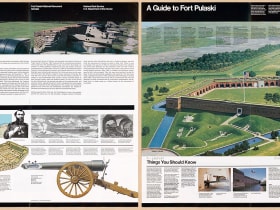
Fort Pulaski National Monument
12 miles away
A massive brick fort in the marshes at the mouth of the Savannah River, thought impregnable until Union rifled cannon breached its walls in a single day in 1862, ending the age of masonry forts.
Tybee Island Marine Science Center
13 miles away
This is the reliable rainy-hour or midday-heat stop on a Tybee beach day, and kids love it.
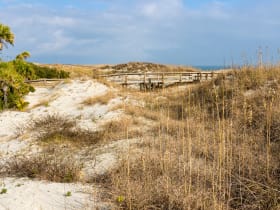
Tybee Island Beach and Pier
13 miles away
Savannah's beach, a wide Atlantic shore anchored by the free Walter Parker Pier and its breezy octagonal pavilion, built where the famous Tybrisa Big Band dance hall once stood.

Tybee Island Light Station
14 miles away
Climbing the lighthouse is the highlight of a Tybee day for most kids.