
Pin Point Heritage Museum
257 Shipyard Rd
Savannah, GA
The living story of a Gullah Geechee community, told inside the marshside oyster and crab factory where its people once worked the water.
The Pin Point Heritage Museum tells the story of Pin Point, a small Gullah Geechee community founded on the marsh south of Savannah by formerly enslaved people and their descendants after the Civil War. For generations the community lived close to the water, oystering, crabbing, fishing, and casting nets, holding tight to a distinct culture and language rooted in West and Central African heritage.
The museum is housed in the old A. S. Varn and Son oyster and crab factory, where many in the community worked shucking oysters and picking crab for much of the twentieth century. When the factory closed, the buildings were preserved and turned into a museum, so the community's story is told in the very place where so much of its life unfolded.
What Travelers Love
- The chance to hear a Gullah Geechee community's story in its own voice
- The setting inside the old A. S. Varn and Son oyster and crab factory on the marsh
- Displays of net-making, cast-net fishing, and the daily work of the water
- The peaceful marsh views and the deep sense of place
Worth Knowing
- The museum keeps limited days and hours, so confirm it is open before you drive out
- It is an intimate site, best appreciated slowly and with attention to the stories told
- The marsh setting means sun and insects, so come prepared in warm months
- It pairs well with Wormsloe and Savannah's coastal history for a fuller day
Learn about Pin Point Heritage Museum
The Gullah Geechee
The Gullah Geechee are descendants of Africans enslaved on the rice, indigo, and cotton plantations of the Lowcountry coast, from the Carolinas through Georgia and into Florida. Isolated on coastal islands and marshes, they preserved a remarkable amount of their African heritage, in language, foodways, crafts, spirituality, and community, developing a distinct creole culture found nowhere else.
The Gullah Geechee language, a creole with deep African roots, and traditions such as sweetgrass basketry, net-making, and particular styles of music and cooking survive to this day. Their story is one of endurance and cultural strength, and communities like Pin Point are among the places where that heritage remains most alive.
A community on the marsh
Pin Point was settled in the years after emancipation by families seeking a place of their own, and they built a tight community on the marsh where the tidal creeks gave up oysters, crabs, shrimp, and fish. Life ran on the water and the seasons, and the community raised its own church, school, and traditions largely apart from the wider world.
For much of the twentieth century, the A. S. Varn and Son factory was the community's economic heart, employing many residents to shuck oysters and pick crabmeat that was shipped to markets far away. The rhythms of the factory and the tides shaped daily life, and the museum captures that world through photographs, tools, and the recollections of the people who lived it.
The factory and its work
Inside the preserved factory buildings, the museum shows the labor that sustained Pin Point, the shucking tables, the crab-picking rooms, and the tools of oystering and net fishing. Demonstrations and displays of net-making and cast-net throwing reveal skills passed down through generations, essential to a life lived off the marsh.
The setting is part of the story. Standing in the weathered buildings on the water's edge, with the marsh stretching away outside, visitors get a direct sense of the hard, skilled, communal work that defined the community for decades, and of the pride the people of Pin Point took in it.
A notable son and a living heritage
Pin Point is the childhood home of U.S. Supreme Court Justice Clarence Thomas, who grew up in the community before moving to Savannah, and its story has drawn wider attention because of that connection. But the museum's focus is the whole community and its culture, not any single figure.
Today the Gullah Geechee heritage of the Georgia and Carolina coast is recognized and celebrated, and Pin Point stands as a place where it is preserved and shared firsthand. Visiting is a quiet, moving experience, a chance to learn a chapter of American history often left untold, in the very place where it happened.
Closest Boutels
The closest Boutel™ stays, so you can turn this stop into an overnight. Each is a place we chose through independent editorial review, never a paid placement.
Details
Savannah, GA
Frequently asked questions
What is the Pin Point Heritage Museum?
The Pin Point Heritage Museum, near Savannah, Georgia, preserves and celebrates the history and culture of the Pin Point community, a historic Gullah-Geechee community founded by formerly enslaved people and their descendants. Located in a former oyster and crab factory that was the community's economic heart, the museum tells the story of the Gullah-Geechee people, descendants of enslaved Africans who preserved a distinct culture, language, and traditions along the southeastern coast, and of the Pin Point community's way of life centered on the waterways. A meaningful window into a unique and important American heritage, it educates and honors. With its Gullah-Geechee heritage, the Pin Point Heritage Museum offers a meaningful destination in Georgia.
Who are the Gullah-Geechee people?
The Gullah-Geechee people are descendants of enslaved Africans who lived along the coast and Sea Islands of the southeastern United States, and who, due to their relative isolation, preserved a remarkably distinct culture, language, foodways, crafts, and traditions with deep African roots. Their heritage is a unique and vital part of American culture. The Pin Point community near Savannah is one such Gullah-Geechee community, founded by formerly enslaved people and their descendants, and the museum honors its history and the broader Gullah-Geechee heritage. Understanding this culture is central to a meaningful visit to the Pin Point Heritage Museum in Georgia.
What can you see at the Pin Point Heritage Museum?
You can explore exhibits on the history and culture of the Pin Point Gullah-Geechee community, learn about the former oyster and crab factory that was the community's livelihood, hear stories and see artifacts of the community's way of life centered on the coastal waterways, and gain insight into the broader Gullah-Geechee heritage. The community history, the factory setting, the cultural exhibits, and the personal stories are the draws, offering a meaningful and educational experience. Approaching this heritage with respect is encouraged. With its heritage and history, the Pin Point Heritage Museum offers a meaningful visit in Georgia.
When is the best time to visit the Pin Point Heritage Museum?
As a mostly indoor museum, the Pin Point Heritage Museum can be visited in various weather, with the mild months pleasant for also enjoying the coastal setting near Savannah. Because it is a community-based museum, its hours may be limited and can vary, so checking the current schedule before you go is wise. It pairs well with the other Savannah-area historic sites. Confirming hours ahead ensures a meaningful visit to the Pin Point Heritage Museum near Savannah, Georgia.
What is near the Pin Point Heritage Museum?
The Pin Point Heritage Museum is near Savannah, Georgia, within reach of the Wormsloe Historic Site, Bonaventure Cemetery, historic downtown Savannah, Fort Pulaski National Monument, and Tybee Island. That makes the Pin Point Heritage Museum a meaningful stop to combine with the Wormsloe Historic Site, historic Savannah, and the other attractions of the Savannah area on a visit to Georgia.
Nearby

Wormsloe Historic Site
2.6 miles away
Visitors chase the oak avenue at Wormsloe on the Isle of Hope, and it delivers: a mile and a half lane of roughly 400 live oaks, planted in the 1890s, arching into a shaded green tunnel that is one of...
Bonaventure Cemetery
8.0 miles away
Plenty of visitors know Bonaventure from the book Midnight in the Garden of Good and Evil, but far fewer actually make the short drive out to walk it, and it rewards the effort.
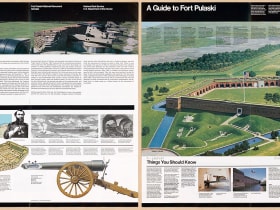
Fort Pulaski National Monument
14 miles away
A massive brick fort in the marshes at the mouth of the Savannah River, thought impregnable until Union rifled cannon breached its walls in a single day in 1862, ending the age of masonry forts.
Tybee Island Marine Science Center
16 miles away
This is the reliable rainy-hour or midday-heat stop on a Tybee beach day, and kids love it.
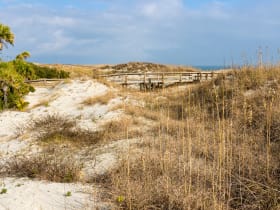
Tybee Island Beach and Pier
16 miles away
Savannah's beach, a wide Atlantic shore anchored by the free Walter Parker Pier and its breezy octagonal pavilion, built where the famous Tybrisa Big Band dance hall once stood.

Tybee Island Light Station
16 miles away
Climbing the lighthouse is the highlight of a Tybee day for most kids.