
Whiskey Basin
Trail Lake Rd
Dubois, WY
Winter home to one of the largest bighorn sheep herds on earth, ringed by glacial lakes and ancient rock art, on public land just east of Dubois.
Whiskey Basin is one of the great wildlife-watching spots in the American West, and it sits just a few miles east of Dubois on public land. Set aside in the 1950s as protected winter range, the basin draws bighorn sheep down out of the high peaks each fall, and by winter it holds one of the largest herds of these wild mountain sheep found anywhere on earth. Seeing a group of rams with their heavy curled horns against the snow is the kind of moment travelers remember for years.
There is far more here than the sheep. A chain of glacial lakes strung along Torrey Creek offers fishing, paddling, and quiet places to sit, and the surrounding slopes hold ancient rock art carved into the boulders by the Sheepeater people who lived in these mountains long ago. A trailhead at the upper lakes leads on into the northern Wind River high country. It all adds up to one of the richest, most rewarding public stops in Wind River Country.
What Travelers Love
- The chance to see wild bighorn sheep up close, part of one of the largest herds anywhere
- A string of clear glacial lakes on Torrey Creek, good for fishing, paddling, and picnicking
- Ancient rock art carved by the Sheepeater people, some of the oldest human marks in the region
- A trailhead into the northern Wind River high country, with waterfalls and alpine lakes beyond
Worth Knowing
- The lakes and trailhead are reached by a gravel road east of Dubois that is fine in dry weather but can be rough when wet
- To protect wintering wildlife, vehicles are kept out from early December into mid-May, though people on foot or horseback are welcome year-round
- The petroglyphs are fragile and can be hard to find; the Dubois Museum runs guided treks, which is the best and most respectful way to see them
- This is bear and moose country with no services on site, so carry water, food, and bear spray, and keep a safe distance from all wildlife
Learn about Whiskey Basin
The bighorn sheep of Whiskey Basin
Whiskey Basin was set aside as a wildlife habitat area in 1954 to protect crucial winter range for bighorn sheep, the powerful wild sheep famous for the males' massive curled horns. In summer the sheep scatter high in the mountains, but as snow deepens they move down to these lower, windswept slopes where they can still reach grass, and the basin fills with them. The herd here is counted among the largest bighorn herds in the world.
The best time to watch is the colder months, from roughly late fall through early spring, when the sheep are concentrated on the winter range and easiest to spot. Elk, moose, deer, and many birds share the basin as well. Bring binoculars or a spotting scope, watch from a distance, and never approach or feed the animals, especially in winter when every bit of their energy matters for survival.
Glacial lakes and Sheepeater rock art
Torrey Creek runs through the basin past a chain of clear glacial lakes, including Torrey, Ring, and Trail lakes, cupped in bowls the ice left behind. The lakes hold trout and other fish and make fine spots to paddle, cast a line, or simply picnic with the mountains reflected in the water. From the upper lakes, a trail climbs into the high Wind River country, passing waterfalls on its way toward remote alpine lakes for those ready for a longer hike.
Scattered among the big glacial boulders near the lakes is some of the region's most important rock art. These petroglyphs, images pecked into the stone, are in the distinctive Dinwoody style and are believed to be the work of the ancestral Mountain Shoshone, often called the Sheepeaters, who lived in and hunted these mountains for generations. Some of the figures connect to Shoshone stories and spirits, and the whole group is protected on the National Register of Historic Places.
Visiting Whiskey Basin
Whiskey Basin lies about four miles east of Dubois off U.S. Highway 26 and 287, reached by a gravel road that leads back toward the lakes and the mountains. The road is passable for most vehicles in dry weather but can turn rough or muddy, so plan around the conditions. To protect the wintering sheep, vehicles are kept off part of the area from early December into mid-May, though you may still explore on foot or horseback year-round.
The rock art is fragile and easy to miss or, worse, to damage by accident, so the best way to see it is on a guided trek run by the Dubois Museum, whose guides know where the panels are and how to view them respectfully. However you visit, treat this as the wild place it is: carry water, food, and bear spray, keep your distance from the sheep and moose, and leave every boulder and lakeshore just as you found it for the next traveler.
Closest Boutels
The closest Boutel™ stays, so you can turn this stop into an overnight. Each is a place we chose through independent editorial review, never a paid placement.
Details
Dubois, WY
Frequently asked questions
What is Whiskey Basin?
Whiskey Basin, near the town of Dubois in west-central Wyoming, is a scenic area at the foot of Whiskey Mountain renowned as the winter home of one of the largest herds of Rocky Mountain bighorn sheep in North America. Each winter, hundreds of bighorn sheep migrate down to the basin, making it one of the premier places to view these magnificent animals up close. The area, near the Torrey Lake chain, also features ancient Native American petroglyphs, scenic lakes, hiking, and fishing amid the beautiful Wind River country. With its remarkable bighorn sheep, petroglyphs, and scenery, Whiskey Basin offers a rewarding wildlife-viewing and outdoor destination near Dubois, Wyoming.
When can you see bighorn sheep at Whiskey Basin?
The bighorn sheep are best seen at Whiskey Basin in winter, roughly from late fall through early spring, when hundreds of them migrate down from the high country to the lower basin to spend the winter, gathering in one of the largest wintering herds in North America and making them relatively easy to spot. In the warmer months, the sheep disperse to higher elevations. For the best chance to see the impressive bighorn sheep up close, plan a winter visit to Whiskey Basin, keeping a respectful distance from the animals, near Dubois in west-central Wyoming.
What can you do at Whiskey Basin?
In winter you can view the large herd of bighorn sheep that gathers in the basin, while year-round you can see the ancient Native American petroglyphs in the area, hike the trails, fish and enjoy the Torrey Lake chain of lakes, watch for other wildlife, and take in the beautiful Wind River country scenery at the foot of Whiskey Mountain. The bighorn sheep in winter and the petroglyphs are highlights. Bringing binoculars enhances wildlife viewing. With its wintering bighorn sheep, petroglyphs, lakes, and scenic beauty, Whiskey Basin offers a rewarding wildlife and outdoor experience near Dubois, Wyoming.
What should I know about viewing the bighorn sheep at Whiskey Basin?
When viewing the bighorn sheep, keep a respectful distance and never approach, feed, or disturb them, as they are wild animals and getting too close stresses them, especially in winter when they are conserving energy to survive, so observe them from your vehicle or from a distance with binoculars or a spotting scope. Driving slowly and being patient improves your chances of good sightings. Following any local guidance and respecting the animals' space protects the herd. Being a respectful, low-impact wildlife watcher ensures both a good experience and the wellbeing of the bighorn sheep at Whiskey Basin.
What is near Whiskey Basin?
Whiskey Basin is near the town of Dubois in west-central Wyoming, near the Dubois Badlands, the Brooks Lake area toward Togwotee Pass, the Wind River Range, and within reach of the Museum of the Mountain Man in Pinedale, Lander, and the route toward Grand Teton National Park. That makes Whiskey Basin a rewarding wildlife stop to combine with the Dubois Badlands, Dubois, the Wind River country, and the other attractions of west-central Wyoming on a visit to the state.
Nearby
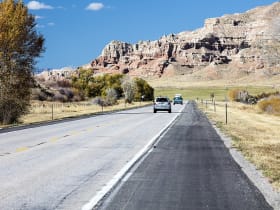
Dubois Badlands
4.6 miles away
A public BLM tract of red and tan eroded hills, ridges, and benches right at the eastern edge of Dubois.

Brooks Lake
28 miles away
A clear mountain lake at about 9,000 feet in Shoshone National Forest, set below the gray rock spires of the Pinnacle Buttes.

Fremont Lake
39 miles away
Fremont Lake 5 miles north of Pinedale is Wyoming's second largest natural lake, glacially carved and 600 feet deep.
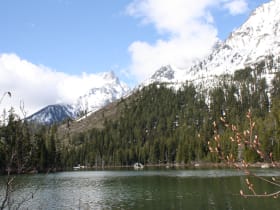
Grand Teton National Park
58 miles away
Jagged peaks rising straight from the valley floor, mirrored in the string of lakes at their base.