
Torrey Pines State Reserve
12600 N Torrey Pines Rd
La Jolla, CA
One of the last wild stretches of Southern California coast, home to the rarest pine in the country clinging to sculpted sandstone bluffs.
Torrey Pines protects a tree that grows wild in only two places on Earth. The Torrey pine is the rarest pine in the United States and one of the rarest anywhere, a windblown, twisting survivor believed to be the remnant of an ancient coastal forest. It grows naturally only on this small strip of San Diego coast and on Santa Rosa Island offshore.
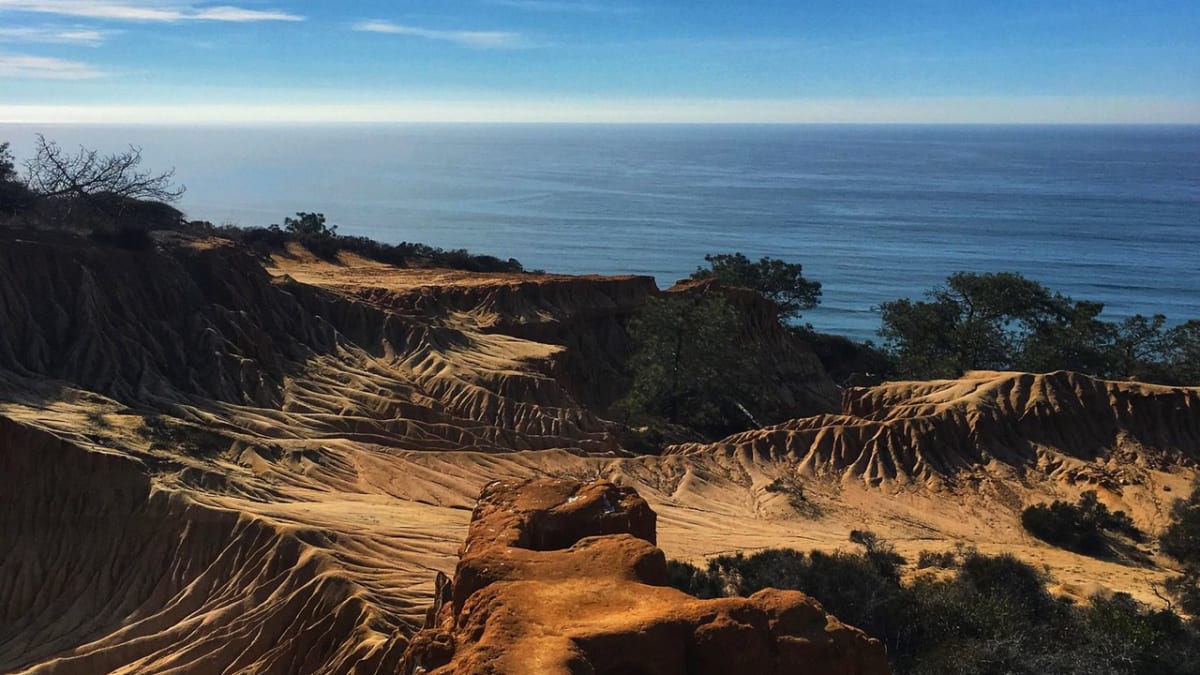
The setting is as remarkable as the tree. The reserve rides a headland of layered sandstone carved by a million years of rising seas, wind, and rain into ridges, ravines, and hoodoo-like formations. Trails thread among the pines and along the cliff edges before dropping to a wide, wild beach, all of it wedged improbably between the sprawl of San Diego and the sea.
What Travelers Love
- Walking among Torrey pines, the rarest pine species in the United States
- Trails along eroded sandstone bluffs that drop to a wide Pacific beach
- The reflection-filled Los Penasquitos Lagoon alive with shorebirds
- A genuinely wild coast preserved in the middle of a huge metro area
Worth Knowing
- It is a nature reserve, not a park, so there is no picnicking or food inside, which keeps it quiet and pristine
- Parking fills early on weekends and warm days, though you can walk in from the beach lot below
- Stay on the trails, since the sandstone is fragile and erosion is a constant concern
- Trails connect down to the beach, but check tides so you are not caught by high water at the base of the cliffs
Learn about Torrey Pines State Reserve
The rarest pine in the country
The Torrey pine is a relic. Scientists believe it once grew across a cooler, wetter Southern California and retreated to these last fog-touched pockets as the climate dried. Today the wild groves survive only here and on Santa Rosa Island in Channel Islands National Park, which makes the reserve one of the most important botanical refuges in the state.
The trees are shaped by their exposure, gnarled and leaning where the ocean wind hits hardest, taller and straighter in sheltered ravines. Because the population is so small and isolated, the reserve is carefully protected, and even a downed tree is left in place as part of the ecosystem.
Sandstone shaped by the sea
The bluffs are a slow-motion sculpture. Nearly a million years of fluctuating sea levels, heavy rains, and stream erosion carved the layered sandstone into the terraces, badlands, and fluted formations that give the reserve its dramatic terrain. Some of the underlying rock is far older still, and a few stones here traveled from as far away as central Mexico before being laid down.
Because sandstone erodes easily, the reserve's trails and closures are managed to protect the formations, and visitors are asked to keep to the paths so the fragile cliffs are not loved to death.
The Kumeyaay coast
This coast is the homeland of the Kumeyaay people, who traveled in family bands between the shore, mountains, and desert foothills and gathered here among the pines and the lagoon. Sage and other native plants were and remain important, and the tidepools and estuary offered a steady larder of shellfish, fish, and waterfowl.
Walking the bluffs today follows the same ground the Kumeyaay knew, and the reserve works to tell that longer story alongside the natural one.
Wildlife and when to go
The reserve is a haven for birds. Los Penasquitos Lagoon at its foot draws herons, egrets, terns, and migrating shorebirds, while raptors ride the updrafts along the cliffs and California gnatcatchers hide in the coastal sage. Offshore, dolphins are common and gray whales pass in winter.
The reserve is open year round and is beautiful in every season, though spring brings wildflowers to the bluffs and the mildest hiking weather. Come early to find parking and to walk the cliffs before the day warms, and check the tide before heading down to the beach.
Closest Boutels
The closest Boutel™ stays, so you can turn this stop into an overnight. Each is a place we chose through independent editorial review, never a paid placement.
Details
La Jolla, CA
Frequently asked questions
What is Torrey Pines State Reserve?
Torrey Pines State Natural Reserve, on the coast of San Diego near La Jolla and Del Mar, California, protects one of the rarest pine trees in the world, the Torrey pine, along with a beautiful stretch of coastal wilderness. Set on dramatic sandstone bluffs overlooking the Pacific, the reserve features scenic hiking trails winding through the rare pines and eroded canyons to stunning ocean overlooks and a pristine beach below. A treasured natural sanctuary amid the city, Torrey Pines offers gorgeous coastal scenery, unique flora, and wonderful hiking in one of San Diego's most beautiful and protected landscapes.
What can you do at Torrey Pines State Reserve?
You can hike the network of scenic trails through the rare Torrey pines and sculpted sandstone canyons to breathtaking clifftop ocean overlooks, descend to the beautiful beach below, watch for wildlife and, in season, whales and dolphins offshore, enjoy wildflowers in spring, and learn about the rare pines and ecology at the visitor center. The trails range from easy to moderate. Note that it is a protected reserve, so activities like picnicking are restricted. With its rare pines, dramatic bluffs, ocean views, and beach access, Torrey Pines offers superb coastal hiking and scenery.
What should I know before visiting Torrey Pines State Reserve?
As a protected natural reserve, Torrey Pines has rules to preserve the fragile environment, so stay on the trails, do not pick plants or disturb wildlife, and note that picnicking and food are generally not allowed within the reserve to protect it. Parking is limited and fills quickly, especially on weekends, so arriving early is wise, and there is a day-use fee. Bring water and sun protection, since the trails are exposed. Respecting the reserve's rules and planning for the limited parking helps ensure a smooth and responsible visit.
When is the best time to visit Torrey Pines State Reserve?
The cooler months and milder morning hours are best for hiking the exposed trails in comfort, with spring bringing wildflowers and winter and spring offering whale watching offshore, while clear days provide the best ocean views. San Diego's mild climate makes it pleasant year-round. Arriving early, especially on weekends, helps with the limited parking and smaller crowds. For the best combination of comfortable hiking, wildflowers, and clear coastal views, aim for a clear morning in the cooler months, arriving early to secure parking at this popular reserve.
What is near Torrey Pines State Reserve?
The reserve is on the San Diego coast near La Jolla and Del Mar, close to the beaches of the area, the upscale village of La Jolla with its cove and sea life, the Del Mar area, and within reach of downtown San Diego and its many attractions. That makes Torrey Pines State Reserve a scenic natural stop to combine with La Jolla, the beaches, and the other attractions of San Diego on a Southern California visit, offering beautiful coastal hiking amid rare pines.
Nearby
Self-Realization Fellowship Meditation Gardens
8.5 miles away
Free clifftop gardens of koi ponds and small waterfalls on a bluff above the Pacific at the south end of Encinitas, ending at an ocean overlook.

Moonlight State Beach
9.3 miles away
Encinitas's beloved family cove, named for early-1900s moonlit picnics and remembered as a cradle of two-man beach volleyball.
Old Town San Diego State Historic Park
12 miles away
The birthplace of California, kept as a real 1820s to 1870s town of adobe homes and dirt lanes around a shaded plaza.
Sunset Cliffs Natural Park
14 miles away
Sunset Cliffs Natural Park in Ocean Beach runs approximately 1.5 miles along the Pacific coast and is managed by the City of San Diego as a natural park with no facilities and no admission fee.
Shelter Island Shoreline Park
15 miles away
A mile-long public bayfront park on a man-made spit off Point Loma, with a promenade, picnic lawns, a fishing pier, and the two-ton bronze Yokohama Friendship Bell in its pagoda.

Coronado Beach
17 miles away
Coronado Beach is a wide golden strand that sparkles with flecks of mica, running along the ocean side of Coronado below the fairy-tale 1888 Hotel del Coronado.

Cabrillo National Monument
17 miles away
Cabrillo National Monument at the tip of Point Loma in San Diego has tide pools on the Pacific side of the point that are accessible during low tides and consistently productive: owl limpets, purple u...

South Oceanside Beach
19 miles away
The quiet, local south end of Oceanside's coast, a wide beach break well away from the busy pier.