
Sloss Furnaces National Historic Landmark
20 32nd St N, Birmingham, AL
Birmingham, AL
A rust-red forest of towers, pipes, and stoves where iron was made for nearly ninety years, the only blast furnace of its kind preserved as a public landmark.
Sloss Furnaces is a towering complex of blast furnaces, blowing engines, and tall stoves on the edge of downtown Birmingham, preserved just as it stood when it stopped making iron. For nearly ninety years, from the early 1880s into the early 1970s, these furnaces turned local ore, coal, and limestone into pig iron and helped make Birmingham the great industrial city of the South.
Today it is a National Historic Landmark and one of the only blast furnace sites of its kind anywhere preserved and opened to the public. Visitors walk among the rust-red towers and pipes, learn the story of the men who worked the furnaces, and, on some days, watch modern artists pour molten iron in the same tradition that built the city.
What Travelers Love
- Walking among the towering furnaces, stoves, and pipes of a real industrial giant
- The eerie, atmospheric feel of the rusted complex, a favorite of photographers
- The metal arts program, where artists still pour molten iron on site
- Learning the hard, human story of the workers who made the iron
Worth Knowing
- This is a preserved industrial site, so wear closed-toe shoes and watch your step on uneven ground and stairs
- Much of the walk is outdoors and shadeless, so bring water and sun protection in warm months
- It welcomes visitors and hosts festivals, concerts, and metal arts events through the year
- The site is often called one of the most atmospheric in the South, and it draws ghost-tour lore, though the real history is compelling on its own
Learn about Sloss Furnaces National Historic Landmark
The furnaces that built the Magic City
Birmingham was founded in 1871 at a rare spot where the three raw materials of ironmaking, iron ore, coal, and limestone, all lay close together in the ground. James Withers Sloss, a businessman and railroad man, built these furnaces in the early 1880s to take advantage of that geology, and the plant grew into one of the largest producers of pig iron in the district. The city grew so fast on iron and steel that people called it the Magic City.
For decades the furnaces ran day and night, their glow lighting the sky. They were rebuilt and modernized over the years to keep pace with changing technology, but by the early 1970s the old plant could no longer compete and shut down. Rather than scrap it, the community fought to save it, and in time it was preserved and opened as a museum, one of the few blast furnaces in the world protected as a public landmark.
The workers behind the iron
Making iron was brutal, dangerous work, done around the clock in heat, smoke, and noise. The workforce at Sloss was largely African American, many of them descendants of enslaved people and, in the early decades, some of them convicts leased out under Alabama's harsh convict-lease system, a practice that amounted to forced labor and cost many lives. The story of Sloss is inseparable from the story of these men and the toll the work took on them.
The site does not shy away from that history. Its exhibits and tours tell of the labor, the danger, and the segregated world of the industrial South, and of the skilled and grueling jobs, from the men who tapped the molten iron to those who tended the furnaces through the night. Understanding who did the work, and under what conditions, is essential to understanding what Sloss really was.
Walking the complex
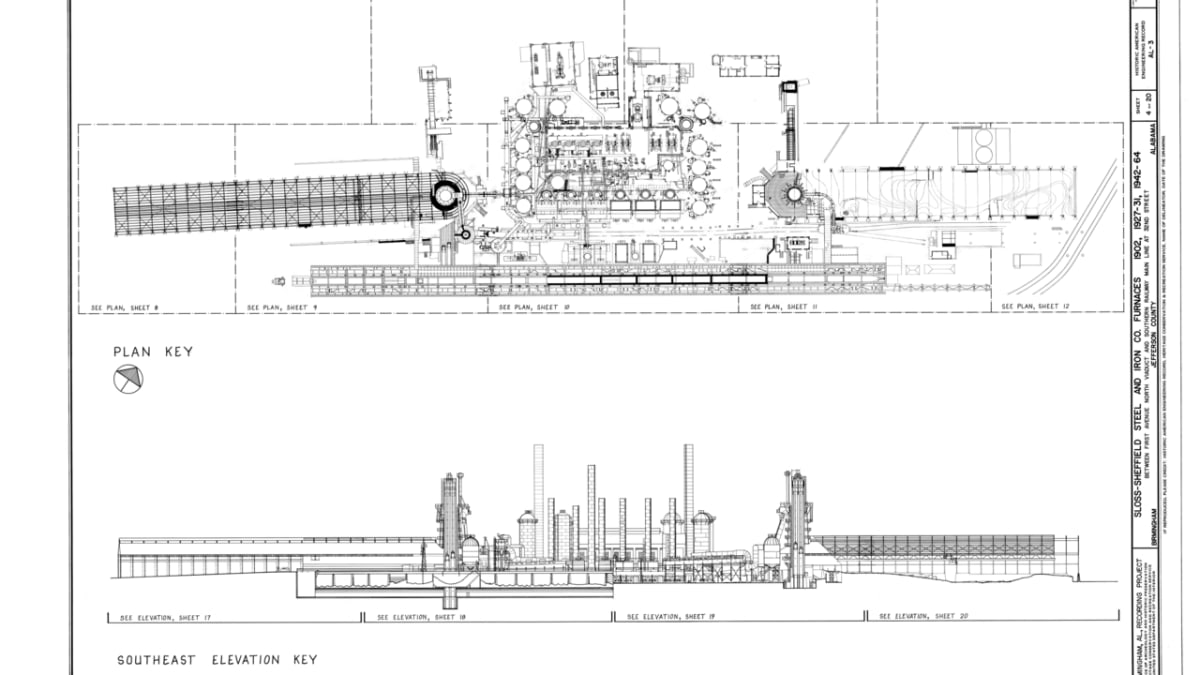
A visit means wandering among towering structures on a human scale you rarely get near industry: the two big furnaces, the tall cylindrical stoves that heated the blast, the web of pipes and walkways, and the great blowing engines that forced air through the furnaces. Everything is weathered to a deep rust red, and the sheer size and strangeness of it all is unforgettable.
The atmosphere has made Sloss a magnet for photographers, filmmakers, and artists, and it has drawn its share of ghost stories over the years. Whatever you make of the lore, the place has a genuine power, a sense of standing inside a machine the size of a city block, silent now but unmistakably alive with its own history.
The metal arts program, events, and seasons
Sloss keeps the ironmaking tradition alive in an unexpected way, through a working metal arts program. On its grounds, artists cast sculpture in molten iron and teach the craft, and on event days visitors can watch a live iron pour, the glowing metal streaming out just as it once did on an industrial scale. It is a striking link between the old furnaces and living art.
Beyond the arts program, the site hosts festivals, concerts, and seasonal events, and it welcomes visitors year round. Much of the tour is outdoors, so spring and fall are the most comfortable seasons, with mild air over the metal. Summer is hot and the furnaces offer little shade, while cool winter days can be striking, the rust-red towers stark against a gray Birmingham sky.
Closest Boutels
The closest Boutel™ stays, so you can turn this stop into an overnight. Each is a place we chose through independent editorial review, never a paid placement.
Details
Birmingham, AL
Frequently asked questions
What is Sloss Furnaces?
Sloss Furnaces, in Birmingham, Alabama, is a dramatic and historic former iron-producing blast furnace complex, now a National Historic Landmark and museum that tells the story of the industry that built Birmingham. Operating for nearly a century, Sloss produced the pig iron that made Birmingham a booming industrial city known as the Magic City, and today its towering furnaces, pipes, and industrial structures stand preserved as a striking monument to that era. Visitors can explore the atmospheric grounds, learn the history of iron-making and the workers who toiled here, and experience a powerful piece of Southern industrial heritage. With its towering furnaces and history, Sloss Furnaces offers a fascinating destination in Alabama.
What can you do at Sloss Furnaces?
You can explore the atmospheric grounds of the historic blast furnace complex, walking among the towering furnaces, pipes, and industrial structures, learn about iron-making and the workers, many of them Black laborers and former sharecroppers, whose hard and often dangerous labor built Birmingham, see exhibits, and take in the striking industrial architecture. The dramatic preserved furnaces, the industrial history, and the story of the workers are the highlights, offering a powerful and evocative experience. It also hosts events and metal arts. With its furnaces and history, Sloss Furnaces offers an engaging visit in Birmingham, Alabama.
Why is Sloss Furnaces historically important?
Sloss Furnaces is historically important because it produced the iron that fueled Birmingham's explosive growth into a major industrial center in the late nineteenth and early twentieth centuries, earning the city its nickname, the Magic City. The furnaces also tell the human story of the laborers, many of them Black workers and former sharecroppers, whose grueling and hazardous work in the heat and danger of the furnaces made that industry possible. Preserved as a National Historic Landmark, Sloss honors that industrial and social heritage. This significance makes Sloss Furnaces a meaningful destination in Birmingham, Alabama.
When is the best time to visit Sloss Furnaces?
The cooler, drier months of fall through spring offer the most comfortable weather for exploring the largely outdoor industrial grounds, while summer can be hot, so mornings are best then. The site also hosts special events and festivals through the year. Because hours and any events vary, checking the current schedule before you go is wise. Wear comfortable shoes and use care around the historic industrial structures. For the most comfortable weather to explore the grounds, aim for fall through spring at Sloss Furnaces in Birmingham, Alabama.
What is near Sloss Furnaces?
Sloss Furnaces is in Birmingham, near downtown and the Birmingham Civil Rights District, within reach of the McWane Science Center, Vulcan Park and its overlook, Rickwood Field, and the Birmingham Botanical Gardens. That makes Sloss Furnaces a fascinating stop to combine with the Civil Rights District, the McWane Science Center, and the other attractions of Birmingham on a visit to Alabama.
Nearby
McWane Science Center
1.0 miles away
McWane Science Center is a full day of hands-on fun for kids in downtown Birmingham.

Birmingham Botanical Gardens
1.3 miles away
The Birmingham Botanical Gardens pack a lot into 67 free acres near the heart of the city, but the Japanese Garden is the reason to make the trip.
Vulcan Park Overlook
2.0 miles away
For the best quick view of Birmingham, stop at Vulcan Park on Red Mountain.
Rickwood Field
3.9 miles away
Baseball fans light up when they realize what this is: the oldest professional ballpark in America, opened in 1910, older than Fenway and Wrigley.

Barber Vintage Motorsports Museum
10 miles away
Even people who do not care about motorcycles walk out of here dazzled.