
Silver City Museum and Historic District
508 W Broadway St, Silver City, NM
Silver City, NM
A Victorian mining town turned arts colony at the doorstep of the Gila Wilderness, where an old mansard-roofed mansion tells the story of a boom that almost washed away.
Silver City began as a rough silver-mining camp in the 1870s and grew, improbably, into one of the most charming small towns in the Southwest, a place where Victorian brick, old adobe, and a thriving arts scene sit at the very edge of the Gila Wilderness. Its historic district is walkable and well preserved, and its crown jewel is the Silver City Museum, set in a grand 1881 mansion topped by a cupola and a mansard roof.
The town's history has a wild streak. Its original main street was so thoroughly torn out by floods in the 1890s that the street itself became a deep gully, now the sunken green park locals call the Big Ditch. Silver City was also boyhood home to Henry McCarty, better known as Billy the Kid, and today the mining money, the frontier grit, and the flood that reshaped the town all come together in a downtown that has aged into something genuinely lovely.
What Travelers Love
- The Silver City Museum, housed in an ornate 1881 mansion with a cupola and mansard roof
- A lively downtown of galleries, cafes, and old brick storefronts
- The Big Ditch, the sunken green park where the main street once ran before a flood
- The town's link to a young Billy the Kid, who spent boyhood years here
Worth Knowing
- Silver City sits high in the mountains, so it stays cooler than the desert and evenings can be chilly
- Downtown is compact and best explored on foot, with plenty of parking on the surrounding streets
- The town is the natural base for the Gila cliff dwellings and hot springs, which are a scenic drive to the north
- Many galleries and shops keep lighter hours early in the week, so weekends are liveliest
Learn about Silver City Museum and Historic District
The Silver City Museum
The museum occupies the H.B. Ailman House, built in 1881 by a miner who struck it rich in silver, a showpiece of the boom years with its brick walls, decorative cupola, and steep mansard roof. Climbing to the cupola gives one of the best views over the historic district and the mountains beyond, and the house itself is part of the exhibit, a survivor of the town's most prosperous decade.
Inside, the collections trace the region's mining history, its Victorian domestic life, and the many cultures that shaped this corner of New Mexico, from the Mimbres people who made the region's famous painted pottery to the miners, ranchers, and merchants who followed. The museum is free to enter and serves as a fine first stop for understanding how a raw silver camp became the town you see today.
The Big Ditch and a town remade by flood
In the 1890s a series of ferocious floods roared down the town's main street, which had been built along a natural drainage. The water scoured the street away entirely, cutting a gully dozens of feet deep where the busiest thoroughfare had been. Rather than fight it, the town rebuilt facing the next streets over and left the old route to the water.
That scar is now the Big Ditch, a sunken linear park running through the heart of downtown, planted and shaded and threaded with a walking path along the creek at the bottom. It is a quietly remarkable thing, a green refuge where a bustling street once stood, and a reminder of how completely water can rewrite a place.
Billy the Kid, mining, and the many peoples of the Gila
Silver City counts a famous outlaw among its former residents. Henry McCarty, who would become known as Billy the Kid, spent part of his boyhood here in the 1870s, and his mother is buried in the town. Long before that, this country was home to the Mimbres branch of the Mogollon culture, whose strikingly painted black-on-white pottery is among the finest ancient art of the Southwest, and to the Apache peoples, including the bands led by Mangas Coloradas and Geronimo, whose homelands surrounded these mountains.
Mining built the town and shaped the region around it, first silver, then copper on a vast scale at nearby pits and towns. That industry brought waves of workers and cultures, Hispano, Anglo, Chinese, and others, whose mark remains in the town's architecture, food, and families. Silver City today wears all of that history lightly, a former hard-rock town now known as much for its galleries as its mines.
Gateway to the Gila
Silver City's greatest asset is its location at the doorstep of the Gila National Forest and the Gila Wilderness, the first tract of land in the world set aside as designated wilderness, in 1924. From town, a winding scenic road climbs north into high pine country toward the Gila cliff dwellings, natural hot springs, and hundreds of miles of trail.
That combination, a walkable arts town below and true wilderness above, gives Silver City an unusual balance. A visitor can spend a morning in the museum and the galleries, then drive into the mountains for an afternoon among cliff dwellings or a soak in a wild hot spring, all from the same small base.
Closest Boutels
The closest Boutel™ stays, so you can turn this stop into an overnight. Each is a place we chose through independent editorial review, never a paid placement.
Details
Silver City, NM
Frequently asked questions
What is the Silver City Museum and Historic District?
Silver City, in southwestern New Mexico, is a charming historic town known for its well-preserved Victorian and territorial architecture, vibrant arts scene, and rich mining history, and its museum and historic district celebrate this heritage. The Silver City Museum, housed in an elegant nineteenth-century mansion, showcases the region's mining, frontier, and cultural history through exhibits and artifacts. The surrounding historic district features beautifully preserved buildings, galleries, shops, and cafes along walkable streets. Once a rough mining and Wild West town connected to Billy the Kid's boyhood, Silver City today blends history, art, and small-town charm, offering a delightful and cultured destination in southwestern New Mexico.
What can you do in the Silver City Museum and Historic District?
You can tour the Silver City Museum in its historic mansion to learn about the region's mining, frontier, and cultural history, stroll the walkable historic district admiring the Victorian and territorial architecture, browse the many art galleries, boutiques, and shops that reflect the town's thriving arts scene, dine at local cafes and restaurants, and soak up the blend of Old West heritage and creative energy. Seasonal events and festivals add to the appeal. With its museum, historic architecture, arts, dining, and charm, the Silver City Museum and Historic District offer a rich and enjoyable cultural experience in southwestern New Mexico.
What is Silver City's connection to Billy the Kid?
Silver City has a notable connection to the legendary outlaw Billy the Kid, who spent part of his boyhood in the town in the early 1870s, before his later infamous career. His mother is buried in Silver City, and the town features in the early chapters of his story, adding to its Wild West heritage. This link to one of the most famous figures of the Old West is part of Silver City's colorful history, and the town and its museum help tell the story. For those interested in frontier and Wild West history, this connection adds intrigue to a visit to Silver City.
When is the best time to visit Silver City?
Silver City's mild, high-desert climate makes it enjoyable year-round, with spring through fall offering pleasant weather for strolling the historic district and enjoying outdoor events and festivals, and fall especially lovely, while summers are warm but tempered by the elevation and winters are cool but mild. The museum and galleries are enjoyable in any weather. Checking the calendar for the town's arts and cultural events can enhance a visit. For the best combination of pleasant weather and lively atmosphere, aim for the milder months from spring through fall in Silver City.
What is near the Silver City Museum and Historic District?
Silver City is in southwestern New Mexico, serving as a gateway to the vast Gila Wilderness and the Gila Cliff Dwellings National Monument to the north, near the Catwalk National Recreation Trail and Mogollon ghost town, the City of Rocks State Park, and within reach of the region's mining history and scenery. That makes the Silver City Museum and Historic District a charming base to combine with the Gila Wilderness, the Gila Cliff Dwellings, City of Rocks, and the other attractions of southwestern New Mexico on a visit to the state.
Nearby
Western New Mexico University Museum
0.2 miles away
Mimbres pottery is the draw and it works surprisingly well for children, because the ancient artists painted animals with real humor: leaping rabbits, cross-eyed fish, birds mid-flight.
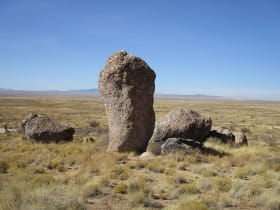
City of Rocks State Park
22 miles away
The rock here is welded tuff from the Emory Caldera eruption, and geologists have found only a handful of formations like it worldwide.
Rockhound State Park
30 miles away
Most state parks tell you to leave everything where it lies. Rockhound does the opposite, and that is the whole reason to come.