
Western New Mexico University Museum
436 W 6th St, Silver City, NM
Silver City, NM
One of the world's great collections of Mimbres pottery, whose thousand-year-old painted bowls hold some of the finest ancient art of the Southwest.
The Western New Mexico University Museum holds one of the finest collections of Mimbres pottery anywhere in the world, a treasury of thousand-year-old painted bowls that rank among the great achievements of ancient American art. The Mimbres people, a branch of the Mogollon culture, painted these bowls in bold black-on-white designs, filling them with strikingly stylized animals, human figures, and intricate geometric patterns.
For a small, free university museum, its holdings are extraordinary, drawn largely from the Mimbres Valley region that surrounds Silver City, the very heartland of this culture. To stand before a case of these bowls, painted with a rabbit, a bat, a fish, or a pair of figures more than a thousand years ago, is to meet the artistry of the Mimbres people directly, and it makes the museum one of the essential stops in southwestern New Mexico.
What Travelers Love
- One of the largest collections of Mimbres black-on-white pottery in the world
- The remarkable painted designs of animals, people, and geometric patterns on the bowls
- Learning the story of the Mimbres people who made this ancient art
- A free, welcoming university museum in a handsome historic building
Worth Knowing
- The museum is on a university campus, so its hours can follow the academic calendar
- The museum welcomes visitors, a rare chance to see world-class ancient Mimbres art
- It pairs well with the Silver City Museum downtown and the Gila cliff dwellings to the north
- Photography rules vary by exhibit, so ask at the desk before taking pictures of the pottery
Learn about Western New Mexico University Museum
The Mimbres and their painted bowls
The Mimbres were a branch of the Mogollon culture who lived and farmed along the Mimbres River and its valley in southwestern New Mexico about a thousand years ago. They are known above all for their pottery, painted in fine black lines on a white slip, decorated with animals, insects, birds, fish, human figures, and complex geometric designs of remarkable balance and invention.
Many of the finest bowls were made as burial offerings and were placed over the face of the dead, often with a small hole punched in the base, a practice sometimes described as killing the bowl to release its spirit. The imagery is so lively and inventive, and so unlike most other ancient Southwestern pottery, that Mimbres bowls are prized worldwide as art. The Pueblo peoples of today, whose ancestors include the Mogollon, are the living descendants of the culture that created them.
The collection at Western New Mexico
The museum's Mimbres holdings are among the largest and most important anywhere, gathered over the past century largely from sites in the surrounding region. The bowls are displayed so that visitors can study the painted designs closely, from playful depictions of animals to dense, precise geometric patterns that reward long looking.
Beyond the pottery, the museum holds broader collections tracing the human history of the region, from the Mogollon and Mimbres through the mining and ranching eras, along with rotating exhibits. Housed in a handsome historic building on the university campus, it offers a serious, well-curated look at the deep past of southwestern New Mexico, and it does so free of charge.
Ancient art and modern questions
The beauty of Mimbres pottery has, unfortunately, also been its danger. For much of the twentieth century, Mimbres sites were heavily looted for their bowls to sell to collectors, which destroyed the archaeological record that would have told us far more about the people who made them. Museums like this one now play an important role in preserving what survives and teaching how much is lost when a site is dug up illegally.
The museum treats the pottery not merely as beautiful objects but as the cultural heritage of living Pueblo descendants, presenting it with care and respect. That framing turns a visit into more than an art appreciation, offering a window into a vanished way of life and a lesson in why the ancient places of the Southwest deserve protection.
Silver City and the Gila country
The museum's setting in Silver City places it at the center of Mimbres country and at the doorstep of the Gila. A short walk or drive away, the Silver City Museum tells the town's own frontier and mining story, while the historic downtown offers galleries, cafes, and the sunken green park known as the Big Ditch.
To the north, a scenic mountain road climbs into the Gila National Forest toward the Gila cliff dwellings, built by the same broad Mogollon culture that produced the Mimbres pottery. Seeing the bowls in the museum and then the dwellings in the mountains connects the art to the land and the people, making Silver City a rich base for exploring the ancient Southwest.
Closest Boutels
The closest Boutel™ stays, so you can turn this stop into an overnight. Each is a place we chose through independent editorial review, never a paid placement.
Details
Silver City, NM
Frequently asked questions
What is the Western New Mexico University Museum?
The Western New Mexico University Museum, in Silver City in southwestern New Mexico, is a respected museum best known for housing the largest permanent collection of Mimbres pottery in the world. The Mimbres people, an ancient culture of the region, created exquisite black-on-white painted pottery renowned for its beautiful, intricate designs of animals, figures, and geometric patterns, considered masterpieces of ancient Native American art. Along with its remarkable Mimbres collection, the museum features exhibits on the archaeology, history, and cultures of the region. For those interested in ancient Native American art and the rich history of the Southwest, the Western New Mexico University Museum offers a fascinating and world-class collection in Silver City.
What is Mimbres pottery?
Mimbres pottery is the distinctive and highly prized ceramic art created by the Mimbres branch of the ancient Mogollon culture in southwestern New Mexico roughly a thousand years ago, famous for its striking black-on-white painted designs. The finest pieces feature beautifully rendered animals, human figures, and intricate geometric patterns painted inside bowls, showing remarkable artistry and imagination. Many were found in burials, often ritually punctured with a hole. Considered among the great achievements of ancient Native American art, Mimbres pottery is celebrated worldwide, and the Western New Mexico University Museum's unparalleled collection lets visitors admire these ancient masterpieces up close in Silver City.
What can you see at the Western New Mexico University Museum?
You can view the world's largest collection of exquisite Mimbres black-on-white pottery, admiring the intricate ancient designs of animals, figures, and patterns, along with exhibits on the Mimbres and Mogollon cultures, the archaeology and history of the region, and other artifacts and cultural displays. The remarkable pottery collection is the highlight. The museum offers rich context on the ancient peoples of the Southwest. With its unparalleled Mimbres pottery and exhibits on regional history and archaeology, the Western New Mexico University Museum offers a fascinating and world-class cultural experience for those interested in ancient Native American art and the history of southwestern New Mexico.
When is the best time to visit the Western New Mexico University Museum?
As an indoor museum, it is enjoyable year-round and a great option in any weather, including a good choice during the heat of summer or on a cool day. Weekdays and mornings tend to be less crowded, and checking current hours before you go is wise, especially around university schedules and holidays. A visit takes about an hour or two to appreciate the collection. The indoor setting means almost any time works, making the Western New Mexico University Museum a reliable and enriching stop year-round while exploring Silver City and southwestern New Mexico.
What is near the Western New Mexico University Museum?
The Western New Mexico University Museum is in Silver City in southwestern New Mexico, near the town's historic district and Silver City Museum, and serving as a gateway to the vast Gila Wilderness and the Gila Cliff Dwellings National Monument, with City of Rocks State Park and the Catwalk National Recreation Trail within reach. That makes the Western New Mexico University Museum a fascinating cultural stop to combine with Silver City's historic district, the Gila Wilderness, and the other attractions of southwestern New Mexico on a visit to the state.
Nearby
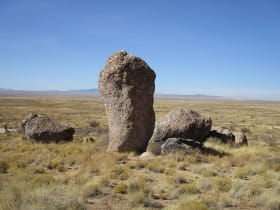
City of Rocks State Park
22 miles away
The rock here is welded tuff from the Emory Caldera eruption, and geologists have found only a handful of formations like it worldwide.
Rockhound State Park
30 miles away
Most state parks tell you to leave everything where it lies. Rockhound does the opposite, and that is the whole reason to come.
Gila Hot Springs
32 miles away
The hot springs at Gila are not a resort amenity. They are rocks in a river with hot water seeping through them. You arrive, you park, you wade across, you soak.