
Saxman Totem Park
Saxman Totem Park
Saxman, AK
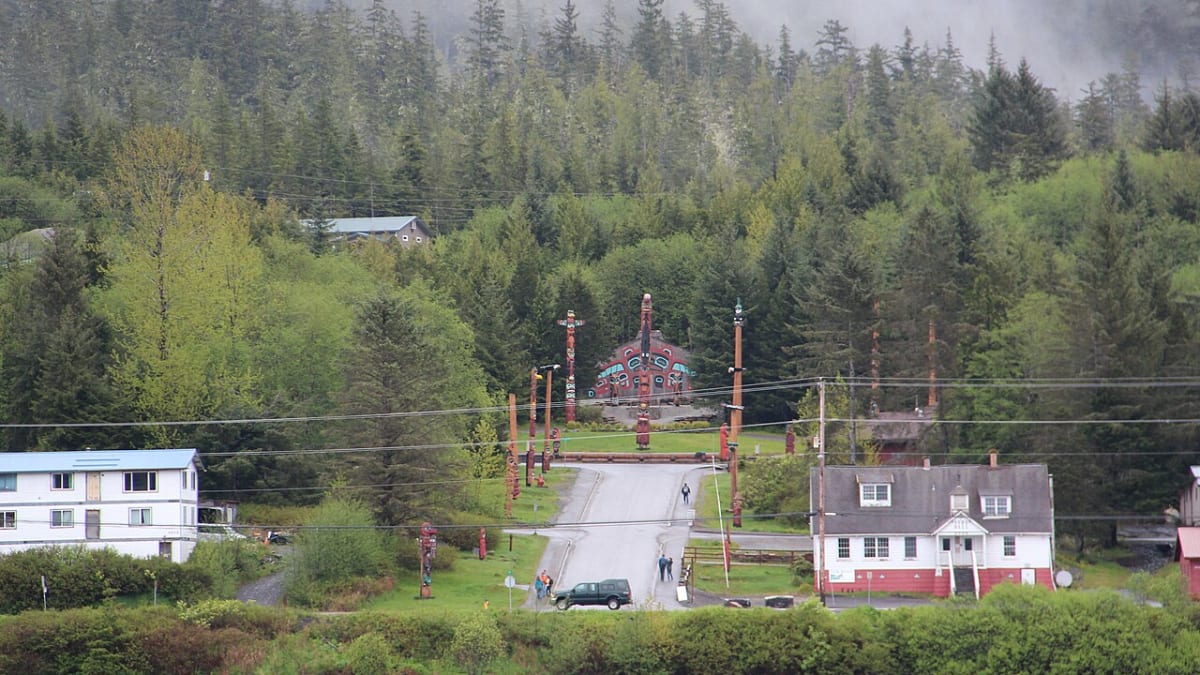
One of the largest collections of standing totem poles in the world, in a Tlingit village where carvers still raise new poles and the tradition is very much alive.
Saxman Totem Park holds one of the largest standing collections of totem poles anywhere, gathered in a Tlingit village just south of Ketchikan. Walking among them, you are not looking at relics of a vanished culture but at the living art of a people who are still here, still carving, and still telling these stories.
The park grew from a effort in the 1930s to preserve and restore old poles from villages across Southeast Alaska, and it continues today as a working cultural center where new poles are carved and raised. Totem poles are not religious idols; they are records, monuments that carry the crests, histories, and honors of the clans who own them.
What Travelers Love
- Standing among dozens of totem poles in a village where the art is living
- Watching carvers at work in the Saxman carving center
- Learning the clan stories and meanings directly from Tlingit guides
- The sense that this is a real community, not a museum set piece
Worth Knowing
- Saxman is a living village and a sovereign community, so be respectful, and consider a guided tour, which supports the community and shares the stories properly
- Totem poles tell clan histories and are cultural property; photograph them respectfully and do not climb or touch
- The carving center and cultural programming keep their own seasonal hours, fullest in summer
- The poles you see are largely restorations and new carvings, a sign the tradition is continuing, not ending
Learn about Saxman Totem Park
A living Tlingit community
The Tlingit have lived along the coast of Southeast Alaska for thousands of years, in a rich culture organized around clans, crests, and the great cedar forests that gave them houses, canoes, and totem poles. Saxman was founded in the 1890s when families from older villages, including Cape Fox and Tongass, resettled together, naming the new community for a teacher who had helped them find the site.
It is important to understand Saxman as a present-tense place. It is a federally recognized tribal community with its own government, and the people here are the descendants and inheritors of the very clans whose crests rise on the poles. When you visit, you are a guest in someone's living community, and that frame, more than any label of attraction, is the right one.
That living quality is exactly what makes Saxman special. The totem tradition on this coast was disrupted by disease, missionary pressure, and outright bans in the assimilation era, and its survival and revival is a story of cultural endurance. The carvers at Saxman are part of that continuing story.
How the totem park came together
Many of the poles at Saxman trace back to a 1930s program under the Civilian Conservation Corps and the U.S. Forest Service, which set out to save totem poles that were decaying in villages abandoned as people moved to towns for work and school. Skilled Tlingit carvers were hired to restore old poles and, where a pole was too far gone, to carve faithful copies from the original.
Those restored and re-carved poles were brought together at Saxman and other sites and raised in a park setting, both to preserve them and to keep the carving knowledge alive by employing master carvers to teach it. The result is a concentrated collection that would once have been spread across many separate villages.
Among the celebrated poles is one that playfully depicts Abraham Lincoln, a reminder that totem art has long recorded historical events and encounters, not only ancient legends. Guides can explain which poles are restorations, which are new, and what each one records.
Reading a totem pole
A totem pole is best understood as a monument that belongs to a specific clan and tells that clan's story. The figures, Raven, Eagle, Bear, Wolf, Frog, Killer Whale, and many others, are crests, comparable to a family's coat of arms, and the way they are stacked and combined narrates a history, a legend, or an honor.
Because the poles carry clan property and stories, they are not made to be touched or climbed, and it is courteous to photograph them the way you would any monument that matters to the people who made it. A guide from the community can tell you which stories a pole is entitled to share and which belong privately to a clan.
The Saxman carving center, a large clan-house-style building, is where new poles take shape. Watching a carver work adzes and knives across a cedar log connects the finished poles outside to the hands and traditions that keep making them.
Visiting and the season
Saxman is easy to reach from Ketchikan, and many visitors come on organized cultural tours that include a dance performance in the clan house, a guided walk through the poles, and a stop at the carving center. Those tours are run with the community and are the fullest way to experience the place, since they come with the stories the poles are meant to be paired with.
Summer is the busy season, when cruise ships call at Ketchikan and cultural programming runs at full schedule. The park grounds themselves can be strolled more quietly outside those hours, though the carving center and performances follow their own timetable.
In the wet shoulder seasons and winter, Saxman is peaceful and gray-skied, the poles dark with rain against the deep green of the rainforest, and the community goes about its everyday life.
Closest Boutels
The closest Boutel™ stays, so you can turn this stop into an overnight. Each is a place we chose through independent editorial review, never a paid placement.
Details
Saxman, AK
Frequently asked questions
What is Saxman Totem Park?
Saxman Totem Park, in the Native village of Saxman near Ketchikan in southeastern Alaska, is home to one of the largest collections of standing totem poles in the world, a magnificent gathering of Tlingit totem art and living culture. The park displays a striking array of totem poles, many historic poles preserved and restored along with newer carvings, representing the rich artistic and cultural heritage of the Tlingit people, alongside a clan house and a carving center where the tradition of totem carving continues. Created by and for the Native community, it celebrates living Tlingit culture. A magnificent and meaningful cultural site, it moves and educates visitors. With its totem poles, Saxman offers a compelling destination in Alaska.
What do the totem poles at Saxman represent?
The totem poles at Saxman represent the rich artistic and cultural heritage of the Tlingit people, telling stories, honoring clans and ancestors, recording histories and legends, and expressing identity through the figures and symbols carved into them. Each pole carries meaning within Tlingit culture, and the collection preserves both historic poles and the living tradition of carving. Approaching the poles with respect for their cultural and spiritual significance honors the Tlingit people who created them. Understanding this significance deepens a visit to Saxman Totem Park in Alaska.
What can you see at Saxman Totem Park?
You can see one of the largest collections of standing totem poles in the world, including historic and newer Tlingit poles, visit a clan house, and, at the carving center, see the living tradition of totem carving continue, often with cultural presentations by the Native community. The magnificent totem poles, the clan house, the carving center, and the living Tlingit culture are the draws, offering a rich and respectful experience. Learning from the Native community is the heart of a visit. With its totems and culture, Saxman offers a rewarding visit near Ketchikan, Alaska.
When is the best time to visit Saxman Totem Park?
The summer months are the prime time to visit, when Ketchikan is lively with the visitor season, cultural presentations and tours are most available, and the weather is mildest for enjoying the outdoor totem poles, while the poles can be seen in other seasons with more limited programs. Because tours and programs are seasonal, checking current information before you go is wise. For the fullest cultural experience, aim for summer at Saxman Totem Park in Alaska.
What is near Saxman Totem Park?
Saxman Totem Park is in the village of Saxman near Ketchikan in southeastern Alaska, within reach of the Potlatch Totem Park, Creek Street and downtown Ketchikan, and the Inside Passage waters. That makes Saxman a compelling stop to combine with the Potlatch Totem Park and the other attractions of Ketchikan on a visit to Alaska.
Nearby
Creek Street
2.4 miles away
People photograph Creek Street for the pretty stilt houses without knowing the story under their feet.
Potlatch Totem Park and Museum
9.7 miles away
Right next to the state totem park at Totem Bight, a family built their own version and turned it into something more.