
Saint-Gaudens National Historical Park
139 Saint Gaudens Road
Cornish, NH
The country home, working studios, and formal gardens of Augustus Saint-Gaudens, the sculptor who defined an era in American art, set on a hillside above the Connecticut River.
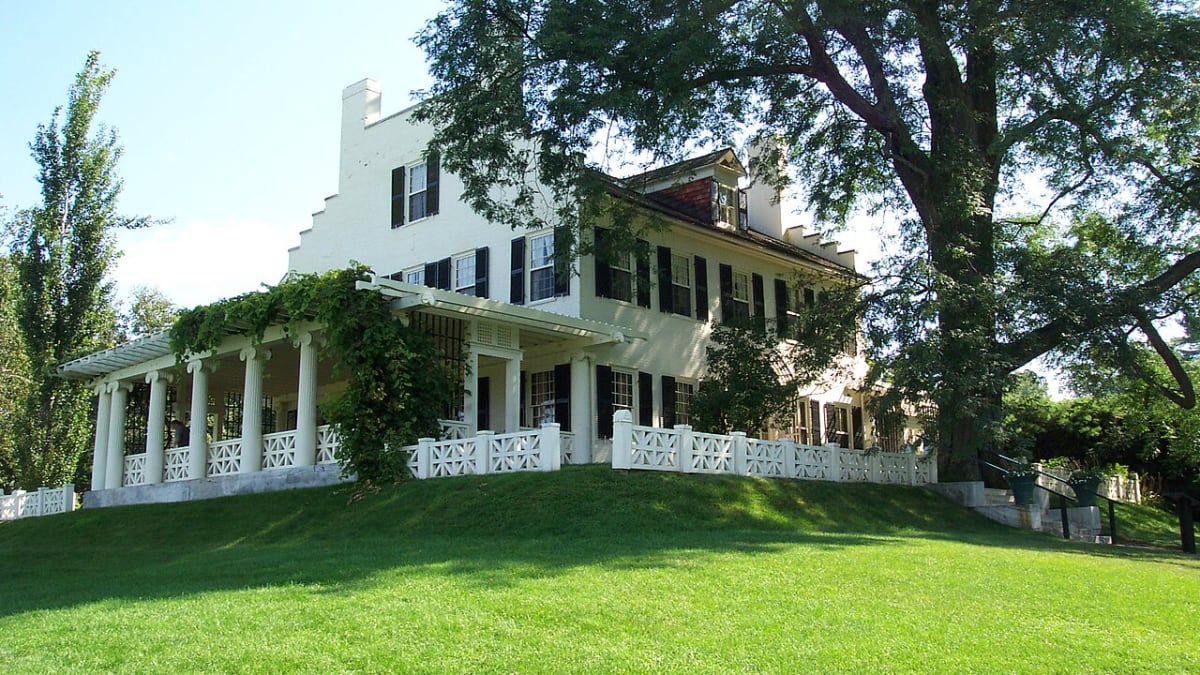
Saint-Gaudens National Historical Park preserves the country place of Augustus Saint-Gaudens, widely regarded as the greatest American sculptor of the Gilded Age, the artist behind the Shaw Memorial in Boston, the standing Lincoln in Chicago, and coins so beautiful they are still prized today. Here on a hillside in Cornish are his home, called Aspet, his working studios, and the formal gardens he laid out with a designer's eye.
The place is more than one man's estate. Saint-Gaudens drew a whole circle of painters, sculptors, writers, and architects to these hills, forming the Cornish Art Colony, one of the most important artists' communities in America around the turn of the twentieth century. It is also the only site in the entire National Park System located in New Hampshire, which makes a visit here doubly worthwhile.
What Travelers Love
- Standing among the sculptor's own casts of his most famous monuments
- Formal gardens and hedged garden rooms framing the home and studios
- The view across the Connecticut valley to Mount Ascutney that drew the artists here
- Being the only National Park Service site in New Hampshire
Worth Knowing
- The buildings and grounds are seasonal, with the fullest access in the warmer months
- Plan time to walk both the gardens and the surrounding trails, not just the studios
- Summer brings a series of Sunday concerts on the grounds
- It is the only unit of the National Park System in New Hampshire, so it can draw art travelers from afar
Learn about Saint-Gaudens National Historical Park
The sculptor of an era
Augustus Saint-Gaudens rose from a modest immigrant background, apprenticed as a cameo cutter, and trained in Paris and Rome before becoming the leading American sculptor of his generation. His public monuments shaped how the nation pictured its heroes and its history, from the Robert Gould Shaw and Massachusetts 54th Regiment Memorial in Boston to the Standing Lincoln in Chicago and the Adams Memorial in Washington.
He also designed coinage of extraordinary beauty, including the twenty-dollar gold double eagle long considered among the finest coins the country ever produced. At the park, visitors can see the artist's own bronze casts and reductions of these works displayed in and around the studios, a chance to stand face to face with monuments most people know only from afar.
Aspet, the studios, and the gardens
Saint-Gaudens first came to Cornish in 1885, renting and then buying an old brick house he named Aspet after his father's birthplace in France. He remade the property over the years, adding studios where he and his assistants worked and shaping the grounds into a series of formal gardens, terraces, and hedged outdoor rooms that frame long views of the landscape.
The gardens are as much a part of the experience as the sculpture. Saint-Gaudens treated the whole estate as a composition, with allees, pools, and plantings arranged to lead the eye toward Mount Ascutney across the river. Walking from the house through the studios and out into the gardens, you move through the world exactly as the artist arranged it.
The Cornish Art Colony
Where Saint-Gaudens settled, others followed. Over the decades around 1900 the hills of Cornish filled with painters, sculptors, architects, writers, and gardeners drawn by the scenery, the light, and one another's company, forming what became known as the Cornish Art Colony. Figures such as the painter Maxfield Parrish and many others worked in the area, and the colony helped make this quiet corner of New Hampshire a center of American art.
The colonists shared a love of the classical, of gardens, and of the view toward Mount Ascutney, and they staged elaborate outdoor pageants and gatherings. The park preserves the anchor of that world, and its summer concert series and programs carry on the tradition of art and music on the grounds.
Closest Boutels
The closest Boutel™ stays, so you can turn this stop into an overnight. Each is a place we chose through independent editorial review, never a paid placement.
Details
Cornish, NH
Frequently asked questions
What is Saint-Gaudens National Historical Park?
Saint-Gaudens National Historical Park, in Cornish in the Upper Valley of western New Hampshire, preserves the beautiful home, studios, and gardens of Augustus Saint-Gaudens, one of the greatest American sculptors, set amid lovely grounds overlooking Mount Ascutney. The only National Park Service site in New Hampshire, it was the sculptor's summer home and later year-round residence and the heart of an artists' colony, and today it displays many of his masterful sculptures, his preserved studios, elegant formal gardens, and wooded trails. A serene and inspiring blend of fine art, history, and beautiful landscape, it delights art lovers and visitors alike. With its sculptures, studios, and gardens, Saint-Gaudens National Historical Park offers a fascinating destination in New Hampshire.
Who was Augustus Saint-Gaudens?
Augustus Saint-Gaudens was one of the most celebrated American sculptors, a leading artist of his era renowned for his masterful and expressive works, including famous public monuments and memorials. He made his home in Cornish, New Hampshire, which became the center of a noted artists' colony, and there he created and refined many of his greatest sculptures. His home, studios, and gardens are preserved as the national historical park that bears his name. Learning about Saint-Gaudens and his art enriches a visit to Saint-Gaudens National Historical Park in New Hampshire.
What can you do at Saint-Gaudens National Historical Park?
You can tour the sculptor's preserved home and studios, view many of his masterful sculptures displayed indoors and around the grounds, stroll the elegant formal gardens overlooking Mount Ascutney, walk the wooded nature trails, and enjoy art demonstrations and, at times, concerts. The beautiful sculptures, the preserved studios, the formal gardens, and the serene setting are the highlights, offering a rich blend of art, history, and landscape. As a National Park Service site, it is thoughtfully interpreted. With its art and gardens, Saint-Gaudens National Historical Park offers a rewarding experience in New Hampshire.
When is the best time to visit Saint-Gaudens National Historical Park?
The park's buildings and full offerings are typically open seasonally in the warm months, generally late spring through fall, when the gardens are in bloom, the studios are open, and the grounds are at their most beautiful, with fall foliage especially lovely, while the grounds and trails may be accessible in other seasons. Because it is seasonal, checking current hours before you go is wise. For the gardens and studios at their best, aim for late spring through fall at Saint-Gaudens National Historical Park in Cornish, New Hampshire.
What is near Saint-Gaudens National Historical Park?
Saint-Gaudens National Historical Park is in Cornish in the Upper Valley of western New Hampshire, along the Connecticut River, within reach of the historic Cornish-Windsor covered bridge, Hanover with the Hood Museum of Art at Dartmouth, the Montshire Museum of Science across the river, and the Upper Valley towns. That makes Saint-Gaudens National Historical Park a fascinating stop to combine with the Hood Museum of Art and the other attractions of the Upper Valley on a visit to New Hampshire.
Nearby

Old Constitution House
1.4 miles away
This plain clapboard building is where Vermont literally began, and most travelers drive right past it.

Cornish-Windsor Covered Bridge
1.9 miles away
Just east of downtown Windsor, the Cornish-Windsor Covered Bridge makes an easy, memorable stop: at 449 feet, it is the longest wooden covered bridge in the United States, and it still carries cars ov...

Quechee Gorge
9.8 miles away
Quechee Gorge is a rare thing: a dramatic natural wonder you can see the moment you step out of the car.

VINS Nature Center
10 miles away
VINS is built for kids who want to get close to wild things. The center houses eagles, hawks, owls, falcons, and vultures in large enclosures, all birds that were injured and cannot return to the wild...
Simon Pearce Glassblowing at the Mill
11 miles away
It is easy to treat Simon Pearce as just a nice shop and miss the real draw downstairs.
Montshire Museum of Science
11 miles away
The Montshire is the Upper Valley family stop, minutes from Hanover just over the river.
Sugarbush Farm
13 miles away
The reward here is partly the drive: a narrow farm road, a covered bridge, and a climb to a hilltop with a Mount Ascutney view.
Enfield Shaker Museum
14 miles away
Most visitors know the Shakers from their furniture, not from a granite dormitory six stories tall on a New Hampshire lake.

Hood Museum of Art
15 miles away
People come to Hanover for the college and miss that its art museum is free and world-class.

Mount Sunapee State Park
19 miles away
Mount Sunapee gives you a clear lake and a real mountain in one park.

Ruggles Mine
19 miles away
Walking into the great stone chambers of Ruggles Mine feels like entering a lost world, and kids can leave with pockets full of shiny mica.