

Ruby Falls
1720 Scenic Hwy, Chattanooga, TN
Chattanooga, TN
A 145-foot waterfall hidden deep inside Lookout Mountain, discovered by accident and reached by a long walk through a lantern-lit cave.
Ruby Falls is one of the strangest and best-loved attractions in the South, a 145-foot waterfall hidden deep inside Lookout Mountain, just outside Chattanooga, Tennessee. Visitors ride an elevator hundreds of feet down into the mountain, then walk through a winding cave passage past glistening formations until the trail opens into a tall domed chamber where the falls pour down through the rock. Colored lights play across the cascade, giving the whole scene a theatrical glow.
The falls were found entirely by accident. In the 1920s a caver named Leo Lambert was drilling an elevator shaft to reach a different cave when his crew broke into a narrow, unknown passage. Crawling far back into the mountain, Lambert discovered the hidden waterfall, and he named it Ruby after his wife. The attraction opened to the public in 1929 and has drawn travelers off the highway to Chattanooga ever since.
What Travelers Love
- Standing at the base of a 145-foot waterfall deep underground
- The cavern walk past cave formations with fanciful names on the way to the falls
- The dramatic colored lighting that plays across the falling water
- The stone castle entrance and the lookout tower views over Chattanooga
Worth Knowing
- The falls are reached by an elevator and a walking tour through the cave, which is narrow and low in spots
- The cave stays cool and damp year round, so a light layer is comfortable
- Guided cavern tours run on a schedule and can fill up on busy days, so plan ahead
- It is one of Chattanooga's most popular attractions, so weekends and holidays draw crowds
Learn about Ruby Falls
The accidental discovery
Lookout Mountain honeycombs with caves, and in the early twentieth century a nearby cave called Lookout Mountain Cave had been a popular attraction until a railroad tunnel sealed off its natural entrance. In the 1920s Leo Lambert set out to reach it again by drilling an elevator shaft down through the mountain from the surface.
As the crew bored downward, they broke into a small opening at a level no one had known existed. Squeezing through the tight passage, Lambert and his team crawled and climbed for hours until they emerged into a chamber holding a beautiful underground waterfall, fed by rainwater and springs seeping down through the limestone. Lambert brought his wife Ruby to see it and named the falls in her honor.
Realizing the falls were more spectacular than the older cave he had been chasing, Lambert built the attraction around them instead. Ruby Falls opened to the public at the end of the 1920s, and the stone castle building at its entrance, along with the cavern route and the elevator, made it one of the pioneering roadside attractions of the American South.
Into the mountain
The visit begins with an elevator that descends hundreds of feet through solid rock to the cave level, where a guided walk leads deeper into the mountain. The passage winds past limestone formations built up drop by drop over long ages, stalactites, stalagmites, columns, and flowstone, many given whimsical names by generations of guides.
The trail ends in a tall vaulted chamber where Ruby Falls drops 145 feet from an opening high in the ceiling into a pool below. Lit with shifting colored light, the falling water is the dramatic climax of the tour. Because the waterfall lies so deep inside the mountain, it flows year round, fed by rain and springs percolating down through the porous stone above.
The mountain and the cave
Lookout Mountain is a long ridge capped with hard sandstone over thick layers of limestone. Rainwater, slightly acidic, seeps into the limestone and slowly dissolves it, carving out the caves, passages, and chambers that riddle the mountain. Ruby Falls sits in one such chamber, and the waterfall itself is simply rainwater that has gathered above and found its way down through the rock.
The same slow chemistry that hollowed the cave also decorates it. Water dripping through the ceiling leaves behind tiny amounts of dissolved mineral, and over enormous spans of time those deposits build the icicle-like stalactites hanging from above and the stalagmites rising from the floor. Everything the tour passes is the work of water and stone acting on each other, drop by patient drop.
Season by season
Because the falls are deep underground, the experience changes little with the calendar, and the cave holds a steady cool temperature no matter the weather outside. That makes Ruby Falls a fine rainy-day or hot-day destination in any month.
Spring and summer are the busiest, when Chattanooga's tourist season peaks and families tour Lookout Mountain's attractions together. Booking a tour time ahead helps on these crowded days.
Fall brings crisp weather above ground and lighter crowds, a pleasant time to pair the cave with the mountain's overlooks and the color across the surrounding ridges.
Winter is the quietest, and the constant cave temperature feels mild compared with the cold outside. Around the holidays the attraction often adds special evening events, a local tradition.
Closest Boutels
The closest Boutel™ stays, so you can turn this stop into an overnight. Each is a place we chose through independent editorial review, never a paid placement.
Details
Chattanooga, TN
Frequently asked questions
What is Ruby Falls?
Ruby Falls, inside Lookout Mountain near Chattanooga, Tennessee, is a spectacular underground waterfall deep within a cave, one of the tallest and most famous underground waterfalls open to the public in the country. Reached by descending into the mountain and walking through a cave passage adorned with formations, the falls plunge dramatically in a large underground chamber, beautifully lit for visitors, at the end of a guided tour. This remarkable hidden waterfall, discovered long ago, has been a beloved attraction for generations. A stunning and unique underground wonder, it awes visitors. With its underground waterfall, Ruby Falls offers a compelling destination in Tennessee.
What can you do at Ruby Falls?
You can take a guided tour deep into Lookout Mountain, descending by elevator and walking through a cave passage lined with formations to reach the dramatic underground waterfall in its illuminated chamber, and enjoy views and other attractions at the surface. The underground waterfall, the cave formations, the guided tour, and the sense of wonder are the draws, making it a memorable and unusual visit. The illuminated falls at the tour's climax are the highlight. With its underground waterfall, Ruby Falls offers a rewarding experience in Tennessee.
What should I know before visiting Ruby Falls?
Ruby Falls is experienced on a guided cave tour that descends into the mountain, so the cave is cool and damp with some walking, low ceilings in places, and confined passages, meaning comfortable shoes, readiness for the enclosed cave environment, and following the guide matter. Tours run on a schedule and are popular, so checking current tour times and booking ahead are wise. Being ready for the cave and reserving ahead ensure a smooth visit to Ruby Falls in Tennessee.
When is the best time to visit Ruby Falls?
Because Ruby Falls is underground, the cave stays cool and comfortable year-round, making it a great tour in any season and a welcome escape from summer heat, while tours run on a schedule that can be busier on weekends and holidays. Because tour times and demand vary, checking current information and booking ahead before you go are wise. Because the cave is comfortable year-round, Ruby Falls makes a rewarding stop any time of year in Tennessee.
What is near Ruby Falls?
Ruby Falls is inside Lookout Mountain near Chattanooga, Tennessee, within reach of Rock City Gardens, the Tennessee Aquarium in Chattanooga, downtown Chattanooga, and the other attractions of the Lookout Mountain and Chattanooga area. That makes Ruby Falls a compelling stop to combine with Rock City Gardens and the other attractions of the Chattanooga area on a visit to Tennessee.
Nearby

Tennessee Aquarium
3.0 miles away
The Tennessee Aquarium is built for kids, split into two buildings you can pair or split up.
Rock City Gardens
3.4 miles away
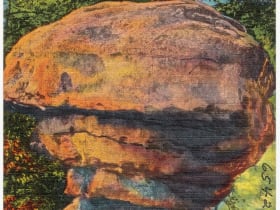
Those See Rock City barns painted across the South all point here, to a trail that turns out to be genuinely strange and fun.

Cloudland Canyon State Park
15 miles away
A thousand-foot gorge sliced into the western edge of Lookout Mountain, with two thundering waterfalls at the bottom and long, layered views along the rim.