
Ross Lake
Ross Lake, North Cascades National Park, WA
Newhalem, WA
A long mountain reservoir for paddling, fishing, and boat-in camping.
Ross Lake is a long, fjord-like reservoir stretching north through the heart of the North Cascades toward the Canadian border, ringed by steep, forested mountains. Formed by Ross Dam on the Skagit River, it reaches nearly to Canada and offers a remote, watery route deep into the wilderness.
Unlike Diablo Lake, Ross Lake has no direct road along its shores; visitors reach it by boat, water taxi, or trail, which keeps it quiet and wild. It is a base for kayaking, canoeing, fishing, and backcountry camping at boat-in and hike-in sites, drawing paddlers and anglers who are looking for solitude and mountain scenery far from the road.
What Travelers Love
- A long, fjord-like lake ringed by steep peaks
- Kayaking and canoeing in a remote mountain setting
- Boat-in and hike-in backcountry campsites
- Fishing and deep wilderness solitude
Worth Knowing
- It is in the North Cascades complex, north of Highway 20
- There is no direct road to the lakeshore; access is by boat or trail
- A resort and water-taxi service can help with access
- Permits are needed for backcountry camping; plan ahead
Learn about Ross Lake
A remote mountain lake
Ross Lake was created by Ross Dam, the highest in the series of Skagit River dams that generate hydroelectric power for Seattle. The reservoir fills a steep-walled valley and stretches roughly 20 miles north, with its far end reaching close to the Canadian border, giving it a long, narrow, fjord-like shape hemmed in by mountains.
Because there is no road running along the lake, reaching it takes some effort, which is exactly what keeps it feeling wild. That remoteness rewards visitors with quiet water, dramatic surroundings, and a real sense of being deep in the North Cascades wilderness.
Paddling, fishing, and camping
Ross Lake is popular for kayaking and canoeing, with numerous boat-in campsites scattered along its shores, allowing for multi-day paddling trips through the wilderness. Anglers come for the fishing, and hikers can reach parts of the lake by trail. A resort on the lake and a water-taxi service can help visitors and their gear get onto the water and reach campsites.
Backcountry camping requires a permit, and trips take planning, since access is limited and the setting is remote with no services on the lake itself. Weather in the mountains can change quickly and the water is cold, so paddlers should be well prepared. For those who make the effort, Ross Lake offers a quiet, immersive North Cascades experience.
Closest Boutels
The closest Boutel™ stays, so you can turn this stop into an overnight. Each is a place we chose through independent editorial review, never a paid placement.
Details
Newhalem, WA
Frequently asked questions
What is Ross Lake?
Ross Lake is a long, fjord-like reservoir in the North Cascades of Washington, stretching roughly 20 miles north through steep, forested mountains toward the Canadian border. It was formed by Ross Dam on the Skagit River, part of a hydroelectric system serving Seattle. Unlike the road-accessible Diablo Lake nearby, Ross Lake has no direct road along its shores, so visitors reach it by boat, water taxi, or trail, which keeps it remote and wild. It is a base for kayaking, canoeing, fishing, and backcountry camping at boat-in and hike-in sites. With its quiet water, dramatic mountain surroundings, and deep wilderness feel, Ross Lake appeals to paddlers and anglers seeking solitude in the heart of the North Cascades.
How do you get to Ross Lake?
Reaching Ross Lake takes more effort than the roadside lakes nearby, because no road runs directly along its shores. Common ways to access it include hiking in on trails, taking a water taxi, or using the resort on the lake, which can help transport visitors and gear. One well-known route involves reaching the lake from the North Cascades Highway area and then using boat or trail connections. Because access is limited and the setting is remote, trips to Ross Lake require planning, including arranging any water-taxi or resort services in advance and obtaining permits for backcountry camping. This remoteness is part of what keeps the lake wild and quiet, so come prepared, check current access options and conditions, and allow extra time to reach the water.
Can you camp at Ross Lake?
Yes, Ross Lake is known for its backcountry camping, with numerous boat-in and hike-in campsites scattered along its shores, which makes it popular for multi-day kayaking and canoeing trips through the wilderness. Camping in these sites requires a backcountry permit from the park, and because sites and permits can be limited, especially in the busy season, it is important to plan ahead and reserve or obtain permits according to current park rules. There are no services at the campsites, so campers must be fully self-sufficient, carrying their own food, water treatment, and gear, and practicing Leave No Trace. A resort on the lake offers another lodging option. Given the remote setting, cold water, and changeable mountain weather, careful preparation is essential for a safe and enjoyable trip.
What is the difference between Ross Lake and Diablo Lake?
Ross Lake and Diablo Lake are both reservoirs on the Skagit River in the North Cascades, formed by dams in the same hydroelectric system, but they offer very different experiences. Diablo Lake is famous for its vivid turquoise color and is easily seen from the North Cascades Highway, with a popular roadside overlook, making it a quick, accessible stop for travelers. Ross Lake, upstream and formed by the higher Ross Dam, is much longer and more remote, with no direct road along its shores; visitors reach it by boat, water taxi, or trail, and it is geared toward paddling, fishing, and backcountry camping deep in the wilderness. In short, Diablo Lake is the accessible scenic viewpoint, while Ross Lake is the remote, immersive wilderness lake.
Nearby
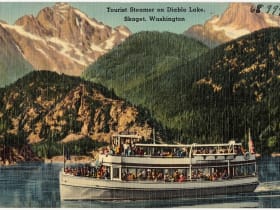
Diablo Lake
3.4 miles away
Diablo Lake turns a vivid turquoise-to-aquamarine color from glacial flour - fine particles ground from rock beneath the glaciers above that scatter blue and green wavelengths of light.
Gorge Creek Falls
6.3 miles away
Gorge Creek Falls is a tall, plunging waterfall right beside the North Cascades Highway, where Gorge Creek drops through a deep, rocky gorge on its way to the Skagit River.

Cascade Pass
18 miles away
Cascade Pass is a classic alpine hike in the North Cascades, climbing switchbacks through forest and meadow to a high pass surrounded by glaciated peaks, hanging glaciers, and tumbling waterfalls.