
Red Rock Canyon Open Space
3550 W High St
Colorado Springs, CO
Red sandstone fins, old stone quarries, and forty miles of trail tucked into the hills between Colorado Springs and Manitou Springs.
Red Rock Canyon Open Space is the Pikes Peak region's quieter red-rock secret. Just west of downtown Colorado Springs, where the city runs up against Manitou Springs, a set of tilted sandstone ridges rises out of the foothills in the same fiery color as the more famous Garden of the Gods to the north. But where the Garden draws crowds by the busload, Red Rock Canyon spreads nearly 1,500 acres of ridges, side canyons, and a small lake across forty-odd miles of trail that most visitors never think to find.
The rock here is the Fountain Formation, the same 240-million-year-old red sandstone that shows up all along the Front Range, laid down when ancient mountains eroded into deep beds of sand and gravel and later tilted on edge as the modern Rockies pushed up. The result is a landscape of parallel hogback ridges and eroded canyons that reads like a slice through deep time, and that people have used, quarried, and finally set aside as public land.
What Travelers Love
- Dramatic red sandstone fins and hogbacks with far fewer crowds than the nearby Garden of the Gods
- Around forty miles of trail that suit an easy family stroll or a hard mountain-bike climb
- Old quarry walls cut straight into the rock, a reminder of the stone that built early Colorado Springs
- Wide views of Pikes Peak and the city from the higher ridgelines
Worth Knowing
- The main entrance and parking are off Highway 24 at the west edge of town, and the open space is free to enter
- Trails are shared by hikers, runners, cyclists, and horses, so keep right and pass with care
- There is little shade on the open ridges and the elevation is real, so carry water and sun protection
- Dogs are welcome on leash, and picking up after them keeps the trails and the little lake clean
Learn about Red Rock Canyon Open Space
From ancient camps to a quarry town
People have moved through this canyon for a very long time. Archaeological evidence points to seasonal use reaching back thousands of years, when Ute, Jicarilla Apache, and other tribes camped in the shelter of the ridges and hunted the foothills. The red rock, the springs, and the mouth of the canyon made it a natural crossroads long before any road came through.
In the mining era the canyon took on a harder job. Its sandstone was quarried and cut for building stone, and for a time ore hauled down from the gold camps around Cripple Creek was processed nearby. You can still walk up to the tall, sheer quarry faces where crews sliced blocks straight out of the ridge, leaving flat gold-and-rust walls that look almost man-made against the natural fins around them.
The Bock family and the road to public land
For much of the twentieth century the canyon belonged to the Bock family. John George Bock bought the property in the 1920s and 1930s and later left it to his sons, and the eldest, John S. Bock, lived on the land and dreamed up grand schemes for it right up until his death in 2002. Traces of the old Bock homestead still sit tucked into the open space today.
In 2003 the City of Colorado Springs bought the property to hold as public open space, and it opened to everyone soon after. That is the reason it feels so unspoiled: it went almost straight from a single family's ranch to protected parkland, without the strip of hotels and shops that grew up around some of the region's other red-rock landmarks.
Walking, riding, and reading the rock
The trail network is the heart of a visit. An easy path loops the little lake near the main entrance, passing quarry walls and red-rock formations on a route flat enough for families and short on time. From there the trails climb into the side canyons and up onto the mesas and hogbacks, where mountain bikers grind up long grades and hikers earn wide views of Pikes Peak, the Garden of the Gods, and the city spread out below.
Because the whole canyon is one long section through the Fountain Formation, it is a fine place to read geology on foot. Ridge after ridge tilts skyward at the same angle, each a layer of that ancient sand and gravel turned to stone and stood on end. Interpretive signs along the way help make sense of the caves, the quarries, and the 240 million years of rock stacked into the walls, so a walk here doubles as an outdoor lesson without ever feeling like one.
Visiting Red Rock Canyon Open Space
The main entrance sits off Highway 24 at the west edge of Colorado Springs, an easy few miles from downtown and right next door to Manitou Springs, so it slots neatly into any Pikes Peak day. Parking and entry are free, and the trailheads fan out from the lot near the lake. Come early on summer weekends, when the closest lots fill and the sun climbs fast over the open ridges.
Plan for an unhurried hour around the lake or a good half day if you want to climb the mesas and link a longer loop. Carry water and sun protection, since shade is scarce up on the hogbacks and the elevation adds up, and keep to the marked trails so the fragile soil and rock stay intact. It is the kind of place that rewards a little wandering, a genuine red-rock canyon on the doorstep of the city that most road-trippers drive right past on their way to the famous names.
Closest Boutels
The closest Boutel™ stays, so you can turn this stop into an overnight. Each is a place we chose through independent editorial review, never a paid placement.
Details
Colorado Springs, CO
Frequently asked questions
What is Red Rock Canyon Open Space?
Red Rock Canyon Open Space is a scenic public park in Colorado Springs, Colorado, offering beautiful red rock formations, canyons, and meadows laced with trails for hiking, mountain biking, and rock climbing. Often considered a quieter, less crowded alternative to the nearby Garden of the Gods, this lovely open space features dramatic tilted red sandstone ridges, wooded canyons, and views of Pikes Peak, all within an accessible and free natural area. With its striking scenery, varied trails, and peaceful atmosphere, Red Rock Canyon Open Space is a favorite local spot for outdoor recreation and enjoying the beautiful red rock country of the Colorado Springs area.
What can you do at Red Rock Canyon Open Space?
You can hike or mountain bike the network of trails through red rock canyons, ridges, and meadows, rock climb on the sandstone formations, which is popular here, walk your leashed dog, enjoy scenic views of the red rocks and Pikes Peak, and appreciate the peaceful, less-crowded setting. The trails range from easy to moderate, suiting various levels. Its beauty and quiet make it great for a relaxed outdoor outing. With its red rock scenery, varied trails, and climbing, Red Rock Canyon Open Space offers a rewarding and accessible natural escape in Colorado Springs.
How is Red Rock Canyon different from Garden of the Gods?
Red Rock Canyon Open Space offers similar dramatic red sandstone scenery to the nearby and more famous Garden of the Gods, but it is generally quieter and less crowded, with a more rugged, natural feel and trails that allow activities like mountain biking and leashed dogs, which are more restricted at Garden of the Gods. Both are free and beautiful. Red Rock Canyon appeals to those seeking a more peaceful, active outdoor experience away from the bigger crowds, while Garden of the Gods is more iconic and visited. Together they make a great pair of red rock destinations in Colorado Springs.
When is the best time to visit Red Rock Canyon Open Space?
Spring and fall offer pleasant temperatures for hiking and biking, with beautiful light on the red rocks, while summer can be hot, so early morning or evening visits are best then for cooler weather and smaller crowds, and winter is quiet and can be lovely with snow. Mornings and evenings offer the prettiest light on the formations. The park is enjoyable year-round in Colorado's generally sunny climate. For comfortable weather, beautiful light, and fewer crowds, aim for spring or fall, or the cooler hours of a summer day, at this scenic open space.
What is near Red Rock Canyon Open Space?
Red Rock Canyon Open Space is in Colorado Springs, near the famous Garden of the Gods, the iconic Pikes Peak, the historic town of Manitou Springs, the Cave of the Winds, and downtown Colorado Springs, with the Front Range and Denver within reach to the north. That makes Red Rock Canyon Open Space a scenic stop to combine with Garden of the Gods, Pikes Peak, Manitou Springs, and the many other attractions of the Colorado Springs area on a visit to Colorado.
Nearby
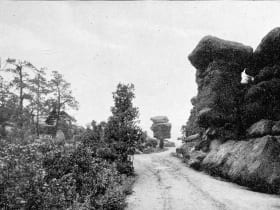
Garden of the Gods
1.8 miles away
This one is no secret, but the trick most visitors miss is how little you have to do for the best of it.
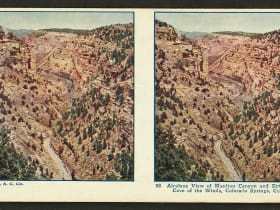
Cave of the Winds
2.5 miles away
Cave of the Winds in Manitou Springs has natural limestone cave tours that depart year-round, taking visitors 0.5 miles through decorated chambers with active stalactites and stalagmites.

Cheyenne Mountain Zoo
5.9 miles away
Cheyenne Mountain Zoo sits at 6,714 feet on the slope of Cheyenne Mountain, making it the highest elevation zoo in the United States and one of a kind in the way the terrain is incorporated into the a...

Pikes Peak
8.9 miles away
Pikes Peak at 14,115 feet is the most-visited fourteener in Colorado, accessible by the Pikes Peak Highway (toll road, seasonal), the Cog Railway from Manitou Springs (reservations required), or the B...