
Palm Springs Art Museum
101 Museum Dr
Palm Springs, CA
A cool, sculptural building at the foot of the mountains where modern art meets desert light, plus a hillside glass house an architect built for himself.
For a small resort town in the middle of the California desert, Palm Springs holds a genuinely serious art museum, and the surprise of that is part of the pleasure. What began in 1938 as a modest desert museum of natural science and Cahuilla Indian artifacts has grown, over the better part of a century, into a real art institution with twenty-eight galleries, two sculpture gardens, modern and contemporary masters on the walls, and one of the finest collections of Native American art in this corner of California.
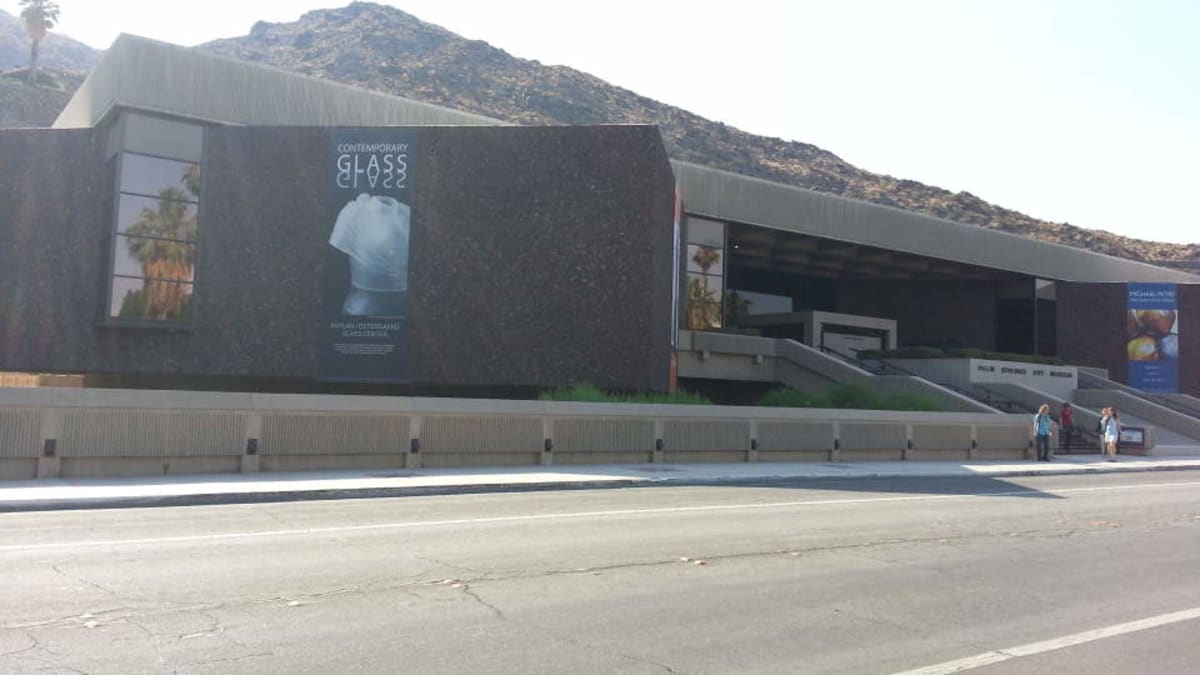
Just as memorable is the museum's home. The main building is a piece of art in its own right, a cool, low, sculptural landmark of the desert modernism that made Palm Springs a mecca for midcentury architecture. And the collection reaches beyond its walls to an architect's own glass house perched on the hill above town, so a visit here is really a visit to the whole idea of how modern design and the desert learned to live together.
What Travelers Love
- A world-class art collection you would not expect to find in a small desert resort town
- The building itself, a landmark of the midcentury desert modernism Palm Springs is famous for
- One of the best collections of Native American art in the region, a strength since the museum's very first year
- Modern and contemporary galleries with big names, plus glass, sculpture gardens, and a lively theater
Worth Knowing
- The museum runs a free evening each week, a popular time to visit that draws a crowd, so go early if you can
- The main museum is downtown, but the collection also spreads to an Architecture and Design Center nearby and a sculpture garden out in Palm Desert
- Albert Frey's glass house on the hillside above town is part of the museum and can be toured, but only on limited scheduled visits that book up, so plan ahead
- Summer days in the desert are extremely hot, so the cool galleries make a welcome midday refuge
Learn about Palm Springs Art Museum
From a desert museum to a serious art collection
The museum opened in 1938 as the Palm Springs Desert Museum, and in those first years it was a place of natural science exhibits, artifacts of the local Cahuilla people, and guided hikes into the canyons. Native American art was a collecting focus from the very beginning, and that early commitment never faded, so today its basketry, pottery, textiles, jewelry, and kachinas remain one of the collection's real strengths, a through line that connects the museum's first year to its present.
The turn toward fine art came later. Through the 1960s, as Palm Springs became a glamorous desert hideaway for Hollywood, artists were drawn by the light and the scenery, and the museum's ambitions grew with the town. A new director arrived in 1965 determined to make it the cultural center of the desert, and over the following decades the institution steadily expanded until, in the mid-2000s, it renamed itself the Palm Springs Art Museum and committed fully to being a world-class art museum with a theater program to match.
The result is a collection that would be at home in a much larger city: modern and contemporary art with recognizable names, a notable holding of studio glass, and the traditional arts of the Americas, all in a town most people think of for its pools and its palm trees.
A building that is part of the story
You cannot separate the museum from its architecture, because the architecture is one of the reasons to come. The main building was designed by E. Stewart Williams, one of the architects who defined the crisp, low-slung, indoor-outdoor look now known as desert modernism, and it opened in the mid-1970s as a deliberate landmark of that style. Its clean lines and bold geometry are a lesson in the very design language that made Palm Springs a pilgrimage site for lovers of midcentury architecture.
The museum leaned into that identity by opening an Architecture and Design Center downtown, housed in a restored 1960 building that Williams himself designed, where the story of desert modernism is told through drawings, models, and objects. Between the main museum and the design center, a visitor can see both the art the desert inspired and the buildings that made the desert famous.
Frey House II, an architect's glass house on the hill
The most unusual piece the museum owns is not a painting but a house. High on the rocky slope above downtown stands Frey House II, the tiny glass-and-steel home that the pioneering desert architect Albert Frey designed for himself in 1963. It is built right into the mountainside, with a huge granite boulder left in place to jut straight through the living space, and its wall of glass frames the whole city and valley below.
Frey lived here until his death in 1998, then left the house to the museum, and it is now one of the most sought-after tours in Palm Springs. Because of its size and its fragile hillside setting, it can only be visited on a small number of scheduled tours, which fill quickly, so anyone hoping to see it should plan well ahead. It is worth the effort: few places let you stand inside the private home of the architect who helped invent an entire style, looking out at the desert exactly as he did.
Visiting the museum
The main museum sits right downtown at the base of the mountains, an easy walk from the shops and restaurants of Palm Canyon Drive, which makes it a natural anchor for a day in town. Give yourself a couple of unhurried hours for the galleries and the sculpture garden, and check what is showing, since traveling exhibitions rotate through alongside the permanent collection.
One evening each week the museum opens for free, which is a wonderful deal and a lively time to be there, though it draws a crowd. In the deep heat of a desert summer, the cool, quiet galleries are also simply a great place to spend the middle of the day. Whether you come for the art, the architecture, or the glass house on the hill, it is a stop that rewards the curious far beyond what a resort town has any right to offer.
Closest Boutels
The closest Boutel™ stays, so you can turn this stop into an overnight. Each is a place we chose through independent editorial review, never a paid placement.
Holiday House Palm Springs
Honorable Mention200 W Arenas Rd, Palm Springs, CA
0 miles away|Learn More ›
Details
Palm Springs, CA
Frequently asked questions
What is the Palm Springs Art Museum?
The Palm Springs Art Museum is a respected art museum in downtown Palm Springs, California, known for its impressive collections of modern and contemporary art, sculpture, glass, Native American and Western art, and its connection to the region's celebrated mid-century modern architecture and design. Housed in a striking building with indoor and outdoor galleries, including sculpture gardens, the museum offers a cool, enriching cultural experience amid the desert. With rotating exhibitions and a strong permanent collection, it is a cultural cornerstone of Palm Springs, appealing to art lovers and complementing the city's reputation for art, design, and architecture.
What can you see at the Palm Springs Art Museum?
You can explore galleries of modern and contemporary art, sculpture, and studio glass, along with collections of Native American and Western art and exhibits reflecting the region's famous mid-century modern design heritage, plus rotating special exhibitions and outdoor sculpture gardens. The museum's mix of fine art, sculpture, and design gives it broad appeal. Its architecture and setting add to the experience. With its quality collections, changing exhibitions, and connection to Palm Springs's artistic and architectural identity, the museum offers a rewarding cultural stop and a pleasant, air-conditioned escape from the desert heat.
When is the best time to visit the Palm Springs Art Museum?
As an indoor museum, it is enjoyable year-round and a great option in any weather, especially as a cool refuge during the intense summer heat, while the pleasant winter and spring months are peak season in Palm Springs. Some evenings may offer free or discounted admission, so checking current hours, admission details, and exhibitions before you go can enhance a visit. Weekdays tend to be quieter. A visit typically takes an hour or two, making it easy to combine with exploring downtown Palm Springs and the area's other attractions.
Why is Palm Springs known for art and design?
Palm Springs is renowned for its rich mid-century modern architecture and design, having been a glamorous desert getaway for Hollywood stars and architects in the mid-twentieth century, leaving a legacy of iconic modernist buildings and a strong design culture that endures in its celebrated architecture, galleries, and events like Modernism Week. This design heritage, along with a vibrant arts scene, makes the city a hub for art and architecture lovers. The Palm Springs Art Museum, with its design-related collections and exhibits, is part of this creative identity that defines the city.
What is near the Palm Springs Art Museum?
The museum is in downtown Palm Springs, near the city's shops, restaurants, and iconic mid-century modern architecture, the Palm Springs Aerial Tramway, and the Indian Canyons with their palm oases, with the resort towns of the Coachella Valley and Joshua Tree National Park within reach. That makes the Palm Springs Art Museum a cultural stop to combine with downtown Palm Springs, the aerial tramway, the Indian Canyons, and the desert attractions of the Coachella Valley on a Southern California visit.
Nearby
Palm Springs Aerial Tramway
5.3 miles away
The world's largest rotating tram car climbs two and a half miles up the sheer walls of Chino Canyon, lifting you from the hot desert floor of Palm Springs to the cool pine forest of Mount San Jacinto...

Indian Canyons
5.4 miles away
Indian Canyons is a set of palm-shaded desert canyons in the San Jacinto foothills just south of Palm Springs, cared for by the Agua Caliente Band of Cahuilla Indians.

Cabot's Pueblo Museum
9.1 miles away
Cabot Yerxa homesteaded this patch of desert and spent the last quarter century of his life, from 1941 to 1965, hand-building a rambling four-story pueblo out of salvaged and reclaimed materials, with...
Living Desert Zoo and Gardens
13 miles away
The Living Desert is a zoo and botanical garden in Palm Desert focused specifically on desert ecosystems from around the world.

Joshua Tree National Park
25 miles away
Where the Mojave and Colorado deserts meet, dotted with twisting Joshua trees and giant granite boulders.