
Paducah Floodwall Murals
117 S Water St, Paducah, KY
Paducah, KY
A concrete wall built to hold back the Ohio River, turned into a painted mile of local history you can walk past panel by panel.
The Paducah Floodwall Murals turn a stretch of the city's concrete flood barrier into an open-air history book. Along the downtown riverfront, a long series of large painted panels depicts scenes from the town's past, from steamboats and river trade to the disastrous floods that made the wall necessary in the first place.
The wall itself is serious infrastructure, built to protect low-lying Paducah from the Ohio River when it rises. The murals, painted by the artist Robert Dafford and his team over many years, transformed that blank gray barrier into a civic mural project, so a walk along the river doubles as a stroll through the story of the town.
What Travelers Love
- Walking the wall panel by panel to read the town's history in pictures
- The realism of the painted scenes, drawn from old photographs
- The riverfront setting with the Ohio River right beside you
- How the wall turns flood-control engineering into public art
Worth Knowing
- The murals are outdoors and always open along the riverfront walk
- Interpretive plaques explain the scene on each panel
- It pairs easily with the National Quilt Museum and downtown shops
- Morning or late-day light is kindest for photos of the wall
Learn about Paducah Floodwall Murals
A wall born of the water
Paducah sits where the Tennessee River empties into the Ohio, a location that made it a thriving river port and also left it vulnerable to floods. The most devastating came in 1937, when the Ohio River rose to record heights and put most of the city underwater, driving thousands of residents from their homes in one of the worst floods in the region's history.
In the years that followed, the federal government built a floodwall to shield the downtown from future high water. It works, holding back the river when it swells, but for decades it stood as a plain concrete barrier cutting the town off from a view of its own riverfront. The mural project would eventually give that barrier a second life.
Painting the town's story
The murals are the work of Robert Dafford, a Louisiana muralist known for large historical wall paintings, who with his team spent years covering the floodwall with detailed scenes of Paducah's past. Many were based on old photographs, so the panels carry the accuracy of documentary images translated into paint.
Read in sequence, the panels tell the arc of the town: its founding and river-trade heyday, the steamboats and railroads that carried its commerce, the everyday life of its neighborhoods, and, fittingly, the great floods and the building of the very wall the murals adorn. Interpretive plaques accompany the scenes, so a walk along the wall becomes a guided tour through local history.
A city that made craft its calling
The murals are part of a larger arts identity that Paducah has cultivated with unusual success. In 2013 the city was named a UNESCO Creative City in crafts and folk art, one of a handful of American cities so recognized, and its arts scene draws visitors from far beyond the region.
The floodwall fits that story. What could have been a purely utilitarian barrier became instead a source of civic pride and a public gallery. Together with the National Quilt Museum, the LowerTown Arts District, and the antique shops of downtown, the murals help make Paducah a place where art is woven into the fabric of ordinary streets.
The rivers and the region
Standing at the wall, you are looking out over the Ohio River near its meeting with the Tennessee, waters that carried the barge and steamboat traffic on which Paducah was built. The riverfront remains a working landscape, with towboats and barges still passing on the current.
The wider region stretches west toward the Land Between the Lakes recreation area and the big reservoirs of Kentucky Lake and Lake Barkley, open water for boating and fishing. For a traveler, the murals are a perfect first stop in Paducah, an easy walk that lays out the town's whole story before you explore the rest of it.
Closest Boutels
The closest Boutel™ stays, so you can turn this stop into an overnight. Each is a place we chose through independent editorial review, never a paid placement.
Details
Paducah, KY
Frequently asked questions
What are the Paducah floodwall murals?
The Paducah floodwall murals, in downtown Paducah, Kentucky, are a beloved series of large, colorful murals painted along the city's Ohio River floodwall, depicting the rich history and heritage of Paducah and the region. Painted by a noted muralist, the many life-size panels vividly portray scenes from Paducah's past, from its river heritage and railroads to notable events and figures, transforming the massive floodwall into an outdoor history gallery. A striking and educational public-art attraction along the riverfront, the murals delight visitors and tell the story of the community. With its historical murals, the Paducah floodwall offers a fascinating destination in Kentucky.
What can you do at the Paducah floodwall murals?
You can stroll along the Ohio River floodwall to view the many large, colorful murals, learn about Paducah's history and heritage depicted in the vivid scenes, photograph the impressive public art, and enjoy the adjacent riverfront and downtown. The historical murals, the riverfront setting, and the storytelling of the community's past are the draws, making it a rewarding and educational free stroll. Reading the mural scenes offers a walk through local history. With its historical murals, the Paducah floodwall offers an engaging experience in Kentucky.
What do the Paducah floodwall murals depict?
The Paducah floodwall murals depict the rich history and heritage of Paducah and the region through a series of large, detailed panels, portraying scenes such as the city's river and steamboat heritage, its railroad history, notable events and floods, community life, and important local figures. Painted by a noted muralist, the murals turn the floodwall into a vivid outdoor gallery of the community's story. Together they offer a colorful, walkable history lesson. Viewing the scenes deepens appreciation of the local heritage at the Paducah floodwall murals in Kentucky.
When is the best time to visit the Paducah floodwall murals?
As an outdoor attraction, the Paducah floodwall murals can be enjoyed year-round in daylight, with the mild months of spring through fall offering the most pleasant weather for strolling the riverfront and viewing the murals. Daytime offers the best light for seeing and photographing the colorful panels, and the murals pair well with exploring downtown Paducah's creative district. For the most pleasant weather to stroll and view the murals, aim for spring through fall in daylight at the Paducah floodwall murals in Kentucky.
What is near the Paducah floodwall murals?
The Paducah floodwall murals are in downtown Paducah, Kentucky, along the Ohio River, within reach of the National Quilt Museum, downtown Paducah's creative district, the Land Between the Lakes region to the east, and western Kentucky. That makes the Paducah floodwall murals a fascinating stop to combine with the National Quilt Museum and the other attractions of western Kentucky on a visit to the state.
Nearby
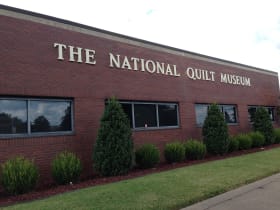
National Quilt Museum
0.2 miles away
Even people who have never sewn a stitch leave this one impressed.
Superman Statue
8.1 miles away
For a young superhero fan, this is a pilgrimage. Metropolis at the far southern tip of Illinois is the only place officially recognized as Superman hometown, and a 15-foot bronze Man of Steel stands i...
Kentucky Dam Village State Resort Park
17 miles away
A lakeside state resort park on the northern shore of Kentucky Lake at Gilbertsville, sitting at the foot of Kentucky Dam, the largest dam the TVA ever built.