
Old Santee Canal Park
950 Stony Lndg Rd
Moncks Corner, SC
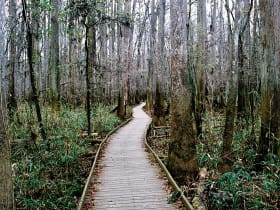
Boardwalks wind through a black-water cypress swamp along the towpath of the first true summit canal ever dug in the United States.
Old Santee Canal Park protects the southern end of a canal that was, in its day, a genuine marvel of American engineering. Dug largely by enslaved laborers and finished in 1800, the Santee Canal linked the Santee River to the Cooper River so that cotton, rice, and other goods could float from the interior of the state down to the port of Charleston. It was the first summit canal in the country, meaning it climbed over a rise of land using a chain of locks rather than simply following a river.
Today the canal itself is quiet water, and the park around it has grown into one of the loveliest swamp walks in the Lowcountry. Miles of raised boardwalk thread through cypress and tupelo, over black water dark as strong tea, past turtles sunning on logs and herons standing motionless in the shallows. An interpretive center tells the canal's story, and the shady grounds hold an early plantation house and a small county history museum.
What Travelers Love
- Boardwalks and footbridges that carry you out over the tea-colored swamp water
- The 1843 Stony Landing plantation house on the bluff above the creek
- A replica of the Little David, an early cigar-shaped semi-submersible torpedo boat
- Quiet paddling along Biggin Creek among cypress knees and Spanish moss
Worth Knowing
- Bring insect repellent in the warm months, as this is true swamp country
- Boardwalks can be slick after rain, so watch your footing
- Watch for alligators and snakes and keep a respectful distance from wildlife
- The interpretive center and canoe rentals keep seasonal hours, so check ahead before a visit
Learn about Old Santee Canal Park
The canal that connected a state
In the years just after the American Revolution, South Carolina planters faced a problem. Their cotton and rice grew far up the rivers of the interior, but the wealth of the state flowed through the port of Charleston. Moving goods overland was slow and costly, so the state chartered a canal to join the Santee River to the Cooper, giving inland crops a water road all the way to the sea.
Work began in 1793 and the canal opened in 1800, running about twenty-two miles with a series of locks to lift boats over the high ground between the two rivers. It was one of the earliest canals of its kind in the young nation, and the labor that dug it was overwhelmingly that of enslaved African Americans, whose skill and toil made the waterway possible. For a few decades it carried a steady traffic of poled and towed barges before railroads and unreliable water levels drew business away.
The canal fell out of use by the mid-1800s, and much of its route later disappeared beneath the lakes created by the Santee Cooper hydroelectric project in the 1940s. This park preserves the surviving southern terminus, where the old towpath still runs along the water and the story of the canal is told for visitors who come to walk it.
A walk through the cypress swamp
The heart of the park is its boardwalk system, a network of raised wooden paths that lets you walk dry-shod through a landscape that is otherwise standing water. Bald cypress and water tupelo rise straight out of the swamp, their trunks flaring into wide buttressed bases and ringed by knobby cypress knees poking up from the surface. Spanish moss drapes the branches, and the water below reflects the canopy like dark glass.
Along the way you cross Biggin Creek and skirt the old canal, with interpretive signs marking points of interest. Paddlers can put in and follow the creek by canoe or kayak, gliding quietly among the trees where an engine could never go. It is an easy, gentle outing, more a slow immersion in the swamp than a strenuous hike, and it rewards anyone willing to stop and watch the water.
Stony Landing and the Little David
On a bluff above the creek stands the Stony Landing plantation house, a simple frame dwelling from about 1843 that anchors the park's historic grounds. Nearby sits a full-size replica of the Little David, a strange, cigar-shaped, steam-powered vessel built during the Civil War. It rode low in the water and was designed to slip up to enemy warships and strike them with a spar torpedo, an early ancestor of the submarine.
The real Little David was built near this landing and attacked a Union ironclad off Charleston in 1863, one of the first uses of a semi-submersible torpedo boat in naval warfare. The replica on the grounds, together with the county museum housed in the park, gives visitors a window into the layered history of this quiet corner of Berkeley County, from plantation farming to wartime invention.
Wildlife and the seasons
The swamp teems with life. American alligators cruise the still water, turtles line the logs, and wading birds like great blue herons, egrets, and wood storks hunt the shallows. Barred owls call from the canopy, prothonotary warblers flash gold through the cypress in spring, and river otters and raccoons leave their tracks along the banks. Snakes, both harmless and venomous, are part of the swamp, so it pays to stay on the boardwalks and watch where you step.
Spring and fall are the most comfortable times to walk here, with mild air and active wildlife. Summer is lush and green but hot and buggy, so early mornings are best and repellent is a must. Winter strips the cypress bare and quiets the swamp, opening long views through the trees and making the boardwalk a peaceful cool-season stroll.
Closest Boutels
The closest Boutel™ stays, so you can turn this stop into an overnight. Each is a place we chose through independent editorial review, never a paid placement.
The Station by Compo Hotels
Boutel745 Old Buncombe Rd, Travelers Rest, SC 29690, Travelers Rest, SC
186 miles away|Learn More ›
Details
Moncks Corner, SC
Frequently asked questions
What is the Old Santee Canal Park?
The Old Santee Canal Park, in Moncks Corner in the Lowcountry of South Carolina, is a scenic park preserving the site of the historic Santee Canal, one of the earliest canals built in the country, constructed in the late eighteenth century to connect the Santee and Cooper rivers. The park features boardwalks and trails through beautiful cypress swamp and along the historic canal, a historic house, an interpretive center, and opportunities for canoeing, birdwatching, and enjoying nature. Blending early American engineering history with Lowcountry natural beauty, it offers a peaceful and educational escape. With its historic canal, swamp trails, and boardwalks, the Old Santee Canal Park offers a fascinating destination in South Carolina.
What can you do at the Old Santee Canal Park?
You can walk the boardwalks and trails through the scenic cypress swamp and along the historic Santee Canal, canoe or kayak the waterways, visit the interpretive center and a historic house to learn about the canal's history, watch for birds, turtles, and wildlife, and enjoy the peaceful Lowcountry scenery. The swamp boardwalks, the canal history, and the wildlife are highlights, offering both history and nature. It is a lovely, tranquil outing. With its historic canal, swamp trails, and paddling, the Old Santee Canal Park offers a rewarding experience in Moncks Corner, South Carolina.
What is the history of the Santee Canal?
The Santee Canal was one of the earliest canals built in the United States, constructed in the late eighteenth century to link the Santee and Cooper rivers, creating a water route to carry goods toward Charleston. A remarkable feat of early American engineering, it was built largely by the labor of enslaved people and operated for several decades before railroads made it obsolete. The Old Santee Canal Park preserves and interprets this early transportation history. Learning about this pioneering canal and the people who built it adds depth to a visit to the Old Santee Canal Park in South Carolina.
When is the best time to visit the Old Santee Canal Park?
Spring and fall offer the most pleasant weather for walking the boardwalks and trails and enjoying the swamp and canal, with spring bringing lush greenery and good birdwatching and fall offering pleasant temperatures and color, while summer is hot, humid, and buggy, so mornings are best then, and bring insect repellent. The park is scenic year-round. For the best combination of comfortable weather and wildlife, aim for spring or fall at the Old Santee Canal Park in Moncks Corner, South Carolina.
What is near the Old Santee Canal Park?
The Old Santee Canal Park is in Moncks Corner in the Lowcountry of South Carolina, within reach of Cypress Gardens, Mepkin Abbey, historic Charleston to the south, and the Lowcountry rivers and swamps. That makes the Old Santee Canal Park a fascinating stop to combine with Cypress Gardens, Mepkin Abbey, and the other attractions of the Lowcountry near Charleston on a visit to South Carolina.
Nearby

Mepkin Abbey
5.5 miles away
It surprises people that a Trappist monastery sits out here on the Cooper River, its gardens open to anyone who wants quiet.

Cypress Gardens
9.8 miles away
This is the classic Lowcountry swamp made walkable, and paddleable.

Middleton Place
22 miles away
The gardens most people picture when they imagine a Southern estate are here, and they are older than the country.
Congaree National Park
66 miles away
One of the tallest deciduous forests left in the world, a floodplain of champion old-growth hardwoods.