
Oklahoma City National Memorial and Museum
200 NW 5th St, Oklahoma City, OK
Oklahoma City, OK
A quiet outdoor memorial of reflecting water and empty chairs marking the site of the 1995 bombing, one of the most moving places of remembrance in the country.
On the morning of April 19, 1995, a truck bomb destroyed the Alfred P. Murrah Federal Building in downtown Oklahoma City, killing 168 people, including many children, in what was then the deadliest act of domestic terrorism in United States history. The Oklahoma City National Memorial and Museum now occupies that ground, honoring the victims, the survivors, and the many who rushed to help.
The memorial is a place of remarkable stillness and dignity. Its outdoor Symbolic Memorial, with a long reflecting pool, two great gates, and a field of empty chairs, invites quiet reflection, while the adjoining museum tells the full story of the attack, the rescue, and the recovery. Together they form one of the most moving places of remembrance anywhere in the country.
What Travelers Love
- The Field of Empty Chairs, one for each life lost, glowing softly at night
- The still Reflecting Pool framed by the two Gates of Time
- The Survivor Tree, an old elm that lived through the blast
- A museum that tells the story with care, honesty, and dignity
Worth Knowing
- The outdoor Symbolic Memorial is a place of quiet reflection, so visit accordingly
- The indoor museum tells a difficult story and may be emotionally heavy for some visitors
- It sits in downtown Oklahoma City, easy to reach and close to other attractions
- Confirm current museum days and hours before planning an indoor visit
Learn about Oklahoma City National Memorial and Museum
What happened here
On April 19, 1995, a bomb hidden in a rented truck exploded outside the Murrah Federal Building, tearing away much of its front and collapsing floors onto the people inside. One hundred sixty-eight people were killed, among them nineteen children who had been in a daycare center in the building, and hundreds more were injured. The attack shook the entire nation.
In the hours and days that followed, rescuers, medical workers, and ordinary citizens poured into the wreckage to search for survivors and the lost. The response, often remembered as the Oklahoma Standard of kindness and service, became part of the city's identity, and the memorial that grew from the tragedy was shaped with deep input from the families, survivors, and rescuers themselves.
The Symbolic Memorial
The outdoor memorial is built around a shallow Reflecting Pool set where the street once ran, framed at each end by tall bronze Gates of Time. One gate is marked with the minute before the blast and the other with the minute after, so that the still water between them holds the instant the world changed.
Beside the pool stands the Field of Empty Chairs, one chair for each person killed, arranged in rows that correspond to the floors of the building where they died, with smaller chairs for the children. Lit softly at night, the chairs are among the most powerful sights in the country. Nearby grows the Survivor Tree, an old American elm that endured the blast and now stands as a living symbol of resilience.
The museum and the story it tells
The adjoining museum leads visitors through the story with care and honesty, from an ordinary morning to the moment of the blast, the chaos and heroism of the rescue, the investigation and justice that followed, and the long work of healing. It uses the voices and belongings of those affected to keep the human scale of the loss at its center.
It is a difficult experience by design, but a deeply worthwhile one. The museum does not sensationalize the tragedy; it honors it, and it closes on themes of hope and renewal. Many visitors find it among the most affecting museums they have ever seen.
In the heart of the city
The memorial sits in downtown Oklahoma City, within easy reach of the city's other attractions, and it has become a defining part of the city's character. Oklahoma City rebuilt and grew in the years after the bombing, and the memorial stands at the center of a downtown that has since flourished, a reminder held close rather than set apart.
For anyone visiting the metro, it is close to essential. A visit pairs naturally with the nearby Bricktown district and the city's major museums, but the memorial asks for its own unhurried time. It is a place to walk slowly, to reflect, and to remember.
Closest Boutels
The closest Boutel™ stays, so you can turn this stop into an overnight. Each is a place we chose through independent editorial review, never a paid placement.
Evergreen Inn Motel & RV Park
Honorable Mention20001 W. US Highway 54, Pratt, KS
165 miles away|Learn More ›
Details
Oklahoma City, OK
Frequently asked questions
What is the Oklahoma City National Memorial and Museum?
The Oklahoma City National Memorial and Museum, in downtown Oklahoma City, is a deeply moving memorial and museum honoring the victims, survivors, and rescuers of the 1995 bombing of the Alfred P. Murrah Federal Building, one of the most tragic events in American history. The outdoor Symbolic Memorial, on the site of the building, includes the Field of Empty Chairs, a Reflecting Pool, the Survivor Tree, and the Gates of Time, creating a place of remembrance and peace, while the indoor museum tells the story of that day, its aftermath, and the resilience of the community. It is a place of solemn reflection and healing. A profoundly moving and sacred place, it honors and educates visitors. With its remembrance, the memorial offers a meaningful destination in Oklahoma.
What can you see at the Oklahoma City National Memorial and Museum?
You can visit the outdoor Symbolic Memorial, including the Field of Empty Chairs honoring each person killed, the Reflecting Pool, the Survivor Tree, and the Gates of Time, and tour the indoor museum, which tells the story of the bombing, the rescue and recovery, and the community's resilience through moving exhibits. The Field of Empty Chairs, the Reflecting Pool, the Survivor Tree, and the museum's exhibits are the heart of the memorial, offering a place of remembrance, reflection, and understanding. Each element carries deep meaning. With its remembrance and history, the memorial offers a meaningful visit in Oklahoma City, Oklahoma.
How should visitors approach the Oklahoma City National Memorial?
The Oklahoma City National Memorial is a sacred place of remembrance honoring those who were killed, those who survived, and those who helped in the 1995 bombing, so visitors should approach it with quiet respect, reverence, and sensitivity, mindful that it is a place of mourning and healing for many. Taking time to reflect, being considerate of others, especially survivors and families, and honoring the memory of the victims are important. Approaching the memorial with respect and reflection honors its purpose at the Oklahoma City National Memorial in Oklahoma.
When is the best time to visit the Oklahoma City National Memorial and Museum?
The outdoor Symbolic Memorial is open and can be visited and reflected upon at any time, and it is especially moving illuminated in the evening, while the indoor museum keeps its own hours, so checking the current museum schedule before you go is wise. The memorial welcomes visitors year-round for quiet remembrance. For the museum plan around its hours, while the outdoor memorial can be experienced any time, at the Oklahoma City National Memorial in Oklahoma.
What is near the Oklahoma City National Memorial and Museum?
The Oklahoma City National Memorial and Museum is in downtown Oklahoma City, within reach of the Bricktown entertainment district, the National Cowboy and Western Heritage Museum, Science Museum Oklahoma, and the other attractions of Oklahoma City. That makes the memorial a meaningful stop to combine with the other attractions of Oklahoma City on a visit to Oklahoma.
Nearby

Science Museum Oklahoma
1.9 miles away
Science Museum Oklahoma: 2100 NE 52nd St, Oklahoma City. Open Tuesday-Sunday. Admission is charged. IMAX and planetarium shows cost extra. Allow 3-4 hours. Best for ages 4-14.

National Cowboy and Western Heritage Museum
4.6 miles away
National Cowboy Museum: 1700 NE 63rd St, Oklahoma City. Open daily. Admission is charged. Allow 3 hours. Children under 6 free.

Museum of Osteology
8.6 miles away
Museum of Osteology: on the south side of Oklahoma City off I-240. Admission charged. Best for ages 5 and up; older kids fascinated by animals or anatomy get the most from it.
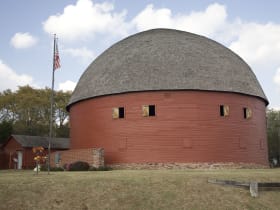
Pops 66 and the Arcadia Round Barn
16 miles away
Pops 66: on Route 66 in Arcadia, a short drive east of Edmond. Free to stop and browse the wall of bottled soda; the diner and pumps operate on their own schedule.