
North Dakota Heritage Center and State Museum
612 E Boulevard Ave, Bismarck, ND
Bismarck, ND
The state's flagship museum, walking you from dinosaurs and Ice Age giants through the native nations of the plains to modern North Dakota.
The North Dakota Heritage Center and State Museum in Bismarck is the flagship museum of the state, a sweeping journey through everything that has happened on this land, from deep geological time to the present day. Its galleries carry you from the dinosaurs that once walked here, through the Ice Age mammoths and the shaping of the plains, into the long human story of the native nations and the settlers and the modern state.
The museum's fossils were largely found in North Dakota itself, and its human-history galleries are notable for the depth and respect with which they present the Mandan, Hidatsa, Arikara, Dakota, and Lakota peoples as living nations at the center of the story. Standing on the grounds of the State Capitol, it is the best single place to understand the whole arc of North Dakota.
What Travelers Love
- The dinosaur and Ice Age galleries, with fossils found in North Dakota itself
- Deep, respectful exhibits on the Mandan, Hidatsa, Arikara, and Dakota nations
- A sweeping walk through the state's history from ancient times to the present
- Its setting on the Capitol grounds, beside the tall art-deco tower
Worth Knowing
- This is a large museum with several major galleries, so allow a couple of unhurried hours
- The native history galleries are presented with the tribes as living nations, so read with care
- It pairs well with a walk on the Capitol grounds and a visit to nearby river-history sites
- Special exhibits rotate, so there is often something new even for repeat visitors
Learn about North Dakota Heritage Center and State Museum
Deep time on the plains
The museum's earliest galleries reach back into the ancient past, when North Dakota lay under warm seas and later became a lush lowland walked by dinosaurs. Fossils found within the state, including remarkable specimens preserved with skin and soft tissue, anchor these exhibits and make the deep past feel close at hand.
From the age of dinosaurs the story moves into the Ice Age, when mammoths, giant bison, and other great mammals roamed a colder land, and the glaciers that shaped so much of the state's landscape advanced and retreated. It is a vivid, well-told introduction to the ground beneath the whole rest of the museum's story.
The first peoples
The heart of the museum is its treatment of the native nations of the Northern Plains. The Mandan, Hidatsa, and Arikara, today the MHA Nation, built the great earthlodge villages along the Missouri and farmed its bottomlands; the Dakota and Lakota ranged the wider grasslands; and the Pembina Chippewa and Métis held the Turtle Mountain country to the north. All are present in these galleries.
The exhibits present these peoples not as figures of a closed past but as living nations whose cultures, languages, and communities continue today. Artifacts, artwork, and voices from the tribes themselves tell the story, from the era of the great villages and the buffalo to the hard history of treaties and displacement and the vitality of native life in the present.
Explorers, settlers, and the modern state
The museum carries the story forward through the arrival of explorers like Lewis and Clark, whose expedition wintered among the Mandan and Hidatsa and included the young Shoshone woman Sakakawea; through the fur trade and the era of the great river posts; and through the waves of homesteaders who broke the prairie into farms.
From there it follows the making of the modern state: the railroads, the immigrant communities from Germany, Norway, and beyond, the rise of agriculture and later energy, and the shaping of daily life across the twentieth century and into the present. It is a full and human account of how North Dakota came to be what it is.
The Capitol grounds
The Heritage Center sits at the foot of the North Dakota State Capitol, a tall art-deco tower built in the 1930s and known as the Skyscraper on the Prairie, which rises over Bismarck and the surrounding country. The landscaped Capitol grounds around it are pleasant to walk, dotted with monuments and mature trees.
A visit works in any season, and the indoor galleries are a fine refuge from both summer heat and winter cold. Pairing the museum with a stroll on the Capitol grounds, and with the river-history sites just outside the city, makes for a rich day in the heart of the state.
Closest Boutels
The closest Boutel™ stays, so you can turn this stop into an overnight. Each is a place we chose through independent editorial review, never a paid placement.
Details
Bismarck, ND
Frequently asked questions
What is the North Dakota Heritage Center and State Museum?
The North Dakota Heritage Center and State Museum, in Bismarck, is the state's premier museum, a superb institution telling the full story of North Dakota from prehistoric times to the present. Located on the state capitol grounds, the museum features excellent galleries on the region's geology and prehistoric life, including dinosaurs and Ice Age creatures, the rich history and cultures of the Native peoples of the northern plains, and the state's settlement and modern history, presented with quality and care. Its comprehensive and engaging exhibits make it the best place to understand North Dakota. A superb and comprehensive state museum, it educates and delights visitors. With its exhibits, the Heritage Center offers a compelling destination in North Dakota.
What can you see at the North Dakota Heritage Center and State Museum?
You can see galleries on the region's geology and prehistoric life, including dinosaurs and Ice Age animals, exhibits on the rich history and cultures of the Native peoples of the northern plains, and displays on the state's settlement and modern history. The dinosaur and prehistoric exhibits, the Native American history and culture, and the state history galleries are the draws, offering a rich and wide-ranging experience. The prehistoric creatures and the Native heritage are highlights. With its exhibits, the Heritage Center offers a rewarding visit in Bismarck, North Dakota.
Is the North Dakota Heritage Center and State Museum good for families?
Yes, the Heritage Center is wonderful for families, with dinosaurs and Ice Age creatures, engaging Native American and state history exhibits, and quality interactive displays that interest children and adults alike. The prehistoric animals especially delight kids, while the rich history enriches the whole family, and its indoor setting is comfortable in any weather. It is one of the state's top family destinations. Its family appeal makes the North Dakota Heritage Center a delightful destination in North Dakota.
When is the best time to visit the North Dakota Heritage Center and State Museum?
As an indoor museum, the North Dakota Heritage Center and State Museum is enjoyable year-round in any weather, making it a great stop in any season and a welcome refuge from the cold or heat. Because hours can vary, checking the current schedule before you go is wise. Because it is indoors, the Heritage Center makes a rewarding stop any time of year in Bismarck, North Dakota.
What is near the North Dakota Heritage Center and State Museum?
The North Dakota Heritage Center and State Museum is on the state capitol grounds in Bismarck, within reach of the capitol, Gateway to Science, Fort Abraham Lincoln State Park across the river, the Double Ditch Indian Village site, and the other attractions of the Bismarck-Mandan area. That makes the Heritage Center a compelling stop to combine with Fort Abraham Lincoln State Park and the other attractions of Bismarck on a visit to North Dakota.
Nearby
Gateway to Science
2.3 miles away
Gateway to Science: 1600 Canary Ave in Bismarck, near the university. Admission fee applies. Best for ages 3 to 12, with enough to hold older kids for a while.
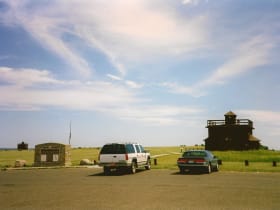
Fort Abraham Lincoln State Park
5.4 miles away
Fort Abraham Lincoln State Park: 7 miles south of Mandan off ND-1806. Entrance fee applies.
Double Ditch Indian Village State Historic Site
8.1 miles away
Double Ditch Indian Village State Historic Site: about 8 miles north of Bismarck off ND-1804. Free, always open, no staff on site.