
Double Ditch Indian Village State Historic Site
13362-11000 15th St NW, Bismarck, ND
Bismarck, ND
The grassed-over mounds and ditches of a great Mandan town above the Missouri, where you can still read the shape of homes and fortifications in the earth.
Double Ditch Indian Village State Historic Site preserves the remains of a large Mandan earthlodge town that stood on this bluff above the Missouri River for centuries. What survives is written in the land itself: the rounded depressions where earthlodges once stood, the mounds of refuse that built up over generations, and the fortification ditches that gave the site its name, all now grassed over and quietly eloquent.
The Mandan were farmers and traders who built substantial villages of earthlodges along the Missouri, raising corn, beans, squash, and sunflowers and exchanging goods across a vast Native trade network. Double Ditch was one of their major towns, and standing here, reading the shape of homes and defenses in the earth, brings that long-inhabited river country vividly to mind.
What Travelers Love
- Reading the shape of a whole Native town in the mounds, depressions, and ditches on the ground
- Sweeping views over the Missouri River valley from the bluff
- Interpretive signs and shelters that explain Mandan life and history
- A quiet, contemplative place that connects deeply to the land's first people
Worth Knowing
- This is a sacred and archaeologically fragile site, so stay on the paths and do not dig, climb the mounds, or remove anything
- The remains are subtle earthworks rather than standing structures, so the interpretive signs help make sense of what you see
- The bluff is open and exposed, so dress for prairie wind and sun and bring water
- It is an easy short drive from Bismarck, pairing well with the State Museum and Fort Abraham Lincoln
Learn about Double Ditch Indian Village State Historic Site
The Mandan and their river towns
The Mandan are among the peoples who have lived along the upper Missouri for a very long time, building villages of dome-shaped earthlodges and farming the fertile river bottoms. They grew corn, beans, squash, and sunflowers, hunted bison, and traded far and wide, and their towns were hubs where goods and news moved across the northern plains. Today the Mandan are part of the MHA Nation, the Three Affiliated Tribes, along with the Hidatsa and Arikara, with their homeland at Fort Berthold upstream.
Double Ditch was a large and long-lived village, occupied over several centuries. Waves of epidemic disease brought by newcomers devastated the Mandan and their neighbors, and villages like this one were eventually left, their people consolidating elsewhere. The site remains a place of deep meaning to the Mandan people and their descendants.
Reading the earth
There are no standing buildings at Double Ditch, but the ground itself preserves the town's plan. Shallow circular depressions mark where earthlodges once stood, low mounds are the accumulated debris of generations of daily life, and the ditches that ring the site are the remains of fortifications that helped defend the village. The name comes from these earthwork ditches.
Archaeological study has shown the village was larger and more complex than the visible remains first suggest, with the fortifications shifting over time as the town grew and contracted. Interpretive signs and shelters help visitors translate the subtle contours into the busy, crowded town that once stood here above the river.
The bluff above the Missouri
The site occupies a commanding bluff over the Missouri River, and the location was no accident: it offered good farmland in the bottoms, a defensible height, and a view up and down the valley. Today that same vantage rewards visitors with a sweeping look over the river and the wide North Dakota sky.
A walking path lets visitors move among the earthworks and take in the river views, with benches and shelters along the way. The openness of the bluff, swept by prairie wind, adds to the sense of standing in a place shaped by both nature and centuries of human life.
Visiting with respect and the seasons
Double Ditch is a sacred place and a fragile archaeological site, so visitors are asked to stay on the paths, leave the mounds and ground undisturbed, and take nothing. Approaching it thoughtfully honors the Mandan people whose ancestors lived and are remembered here.
Summer and early fall, with warm days and green or golden prairie, are the easiest times to walk the bluff, though there is little shade, so sun protection helps. Spring green-up is lovely, and even winter, when snow lies over the earthworks and the river runs cold below, has a stark beauty. Any season, the exposed bluff calls for weather-ready clothing.
Closest Boutels
The closest Boutel™ stays, so you can turn this stop into an overnight. Each is a place we chose through independent editorial review, never a paid placement.
Details
Bismarck, ND
Frequently asked questions
What is the Double Ditch Indian Village State Historic Site?
The Double Ditch Indian Village State Historic Site, along the Missouri River north of Bismarck, North Dakota, preserves the remains of a large Mandan earthlodge village where the Mandan people lived for centuries, a place of deep history and significance. For generations, the Mandan thrived here in a thriving village of earthlodges, farming the river bottoms and trading widely, and the site preserves the visible remains, including the ditches and mounds that give it its name, along with interpretive information and sweeping views of the Missouri River valley. It honors the Mandan people and their rich heritage. A significant and reverent historic site, it educates and moves visitors. With its Mandan heritage, the site offers a meaningful destination in North Dakota.
Who lived at the Double Ditch Indian Village?
The Double Ditch Indian Village was home to the Mandan people, who lived here for centuries in a large, thriving earthlodge village along the Missouri River, farming the fertile bottomlands, hunting, and trading widely across the plains. The Mandan built a rich and sophisticated culture, and this village was one of their important communities before disease and other hardships brought great changes. The site preserves and honors their heritage. Approaching it with respect for the Mandan people deepens a visit to the Double Ditch Indian Village State Historic Site in North Dakota.
What can you see at the Double Ditch Indian Village State Historic Site?
You can see the preserved remains of the Mandan village, including the ditches and mounds that mark where earthlodges and fortifications once stood, along with interpretive information telling the story of the Mandan people, and sweeping views of the Missouri River valley. The village remains, the interpretive displays, the Mandan history, and the river views are the draws, offering a meaningful and reflective experience. Approaching the site with respect for its significance honors the Mandan heritage. With its history, the site offers a meaningful visit in North Dakota.
When is the best time to visit the Double Ditch Indian Village State Historic Site?
The mild months of late spring through early fall are the most pleasant for visiting the outdoor site, walking the grounds, and enjoying the river valley views, with comfortable weather for reflection and interpretation, while the site can be visited in other seasons in suitable weather. Because it is an outdoor site, comfortable weather makes for the best visit. For the most pleasant visit, aim for late spring through early fall at the Double Ditch Indian Village State Historic Site in North Dakota.
What is near the Double Ditch Indian Village State Historic Site?
The Double Ditch Indian Village State Historic Site is along the Missouri River north of Bismarck, North Dakota, within reach of Bismarck with the North Dakota Heritage Center, Fort Abraham Lincoln State Park across and south of the river, and the other attractions of the Bismarck-Mandan area. That makes the site a meaningful stop to combine with Fort Abraham Lincoln State Park and the other attractions of Bismarck on a visit to North Dakota.
Nearby
Gateway to Science
8.0 miles away
Gateway to Science: 1600 Canary Ave in Bismarck, near the university. Admission fee applies. Best for ages 3 to 12, with enough to hold older kids for a while.
North Dakota Heritage Center and State Museum
8.1 miles away
North Dakota Heritage Center and State Museum: 612 East Boulevard Ave, on the capitol grounds in Bismarck. Free admission.
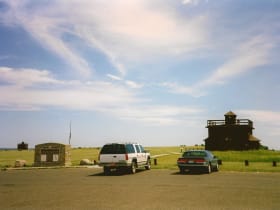
Fort Abraham Lincoln State Park
12 miles away
Fort Abraham Lincoln State Park: 7 miles south of Mandan off ND-1806. Entrance fee applies.