
Norlands Living History Center
290 Norlands Road
Livermore, ME
A 19th-century estate where you don't just tour the past, you live it, mucking the barn and reciting in the one-room school as a costumed interpreter treats you as a neighbor from 1870.
The Washburn-Norlands Living History Center is one of the most immersive history experiences in New England, a preserved 19th-century farm and estate in Livermore where visitors can genuinely live the past. In its signature live-in programs, guests take on the roles of 1870s residents, doing farm chores, cooking on a wood stove, attending the one-room school, and being treated by costumed interpreters as neighbors from another century.
The estate itself is the ancestral home of the Washburn family, whose sons rose from this rural farm to become governors, members of Congress, a Civil War general, diplomats, and business founders. Norlands preserves their farmhouse, barn, schoolhouse, church, and library, and uses them to bring the texture of 19th-century Maine life vividly to life.
What Travelers Love
- Immersive live-in programs that drop visitors fully into 1870s farm life
- The restored farmhouse, barn, one-room school, church, and library of the Washburn estate
- Costumed interpreters who stay in character as period neighbors
- The remarkable story of the Washburn family that rose from this farm to national prominence
Worth Knowing
- Signature live-in programs run on set dates and require advance registration
- Regular tours and seasonal events offer a lighter visit without the overnight
- It is a working historic farm, so dress for weather, barns, and uneven ground
- Hours are seasonal, so confirm the schedule before you drive out
Learn about Norlands Living History Center
The remarkable Washburn family
Norlands was the home of Israel and Martha Washburn and their large family. From this modest farm, an extraordinary set of sons went out into the world in the 19th century, rising to national prominence in politics, the military, business, and diplomacy.
Among them were multiple members of Congress, governors of several states, a Civil War general, a US minister abroad, and a founder of one of the country's best-known companies. Few American families produced so many notable figures from a single rural household.
The family maintained the estate as a symbol of their origins, building a fine library and church alongside the working farm, and it is that combination of humble farm and worldly ambition that Norlands preserves today.
Living the past
What sets Norlands apart is its commitment to living history in the fullest sense. Rather than viewing exhibits behind ropes, participants in its immersive programs take on period identities and spend their time doing the real work of a 19th-century farm.
That means splitting wood, tending animals, hauling water, cooking over a fire, and sitting for lessons in the one-room schoolhouse, all while interpreters remain in character and treat guests as fellow residents of the 1870s.
The approach turns history into something felt rather than observed, giving visitors a bodily sense of the labor, rhythms, and community of rural Maine before modern conveniences. Lighter tours and seasonal events offer a taste of the estate for those not ready to live it overnight.
The estate and the land
The grounds preserve a full complement of period buildings: the Washburn farmhouse, a large barn, a one-room schoolhouse, a stone library, and a church, together forming a small 19th-century world set in the western Maine countryside.
This region is part of the homeland of the Wabanaki peoples, whose long presence in the western foothills and river valleys predates the farms and villages of the colonial and early American eras.
Surrounded by fields and woods, the estate still feels like the working farm it was, and the seasonal rhythms of the land remain part of the experience, from haying in summer to the wood-heated rooms of a Maine winter.
Visiting today
Norlands offers experiences at several depths. The signature live-in programs, which run on set dates and require registration, are the fullest immersion, dropping participants into 1870s life for a day or more.
For those who want a lighter visit, the center also holds guided tours and seasonal events through the warmer months, from autumn harvest days to winter gatherings, letting travelers sample the estate and its story without committing to overnight farm chores.
Closest Boutels
The closest Boutel™ stays, so you can turn this stop into an overnight. Each is a place we chose through independent editorial review, never a paid placement.
Details
Livermore, ME
Frequently asked questions
What is the Norlands Living History Center?
The Norlands Living History Center, in the town of Livermore in western Maine, is an immersive living-history museum on a historic nineteenth-century farm estate, once the home of a prominent Maine family. The center brings the rural New England of the eighteen hundreds to life across a working farm, a grand mansion, a one-room schoolhouse, a church, a library, and barns, staffed by costumed interpreters who portray the daily life, work, and community of the era. Visitors can experience history hands-on, sometimes even in overnight immersion programs. With its historic farm and living-history interpretation, the Norlands Living History Center offers a fascinating destination in Maine.
What can you do at the Norlands Living History Center?
You can tour the historic farm estate, including the mansion, one-room schoolhouse, church, library, and barns, meet costumed interpreters who portray nineteenth-century life and demonstrate farming, crafts, and daily work, take part in hands-on activities, and immerse yourself in the rural New England of the eighteen hundreds. The center is especially known for immersive programs where participants live as people of the era for a time. The living history and the authentic setting are highlights. With its historic farm and immersive interpretation, the Norlands Living History Center offers an engaging experience in Livermore, Maine.
When is the best time to visit the Norlands Living History Center?
The Norlands Living History Center typically offers its programs and tours seasonally, often in the warmer months and around special events, so checking the current schedule before you go is essential, as it is not open every day and offerings vary. Special event days and seasonal programs bring the fullest living-history experience. Summer and fall are pleasant times in western Maine. Because access depends on the program schedule, planning around current events and tours is the key to visiting the Norlands Living History Center in Livermore, Maine.
What are the immersion programs at Norlands?
The Norlands Living History Center is especially known for its immersion programs, in which participants step fully into the nineteenth century for a day or even an overnight stay, living, dressing, working, and eating as people of the eighteen hundreds did, guided by costumed staff who stay in character. These deep, hands-on experiences let visitors truly feel what rural New England life was like, from farm chores to schoolhouse lessons. They are a distinctive and memorable offering. These immersive programs, along with regular tours and events, make the Norlands Living History Center a uniquely engaging destination in Maine.
What is near the Norlands Living History Center?
The Norlands Living History Center is in the town of Livermore in western Maine, within reach of the western Maine mountains and lakes, the Stanley Museum in Kingfield, the Rangeley Lakes region, and the route toward Augusta and central Maine. That makes the Norlands Living History Center a fascinating stop to combine with the Stanley Museum and the other attractions of western Maine on a visit to the state.
Nearby
Maine State House
22 miles away
People tend to admire the dome from the highway and drive on, but the capitol is free to walk into.

Old Fort Western
23 miles away
Most people driving through the capital never realize the oldest wooden fort in America sits right on the riverbank.
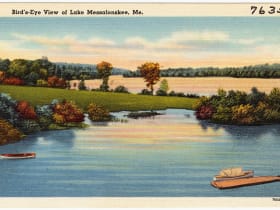
Messalonskee Lake
25 miles away
Messalonskee Lake anchors the southern end of the Belgrade chain, and its real draw for nature is the broad marsh at the head of the lake, nearly 1,300 acres of significant wading-bird and waterfowl h...