
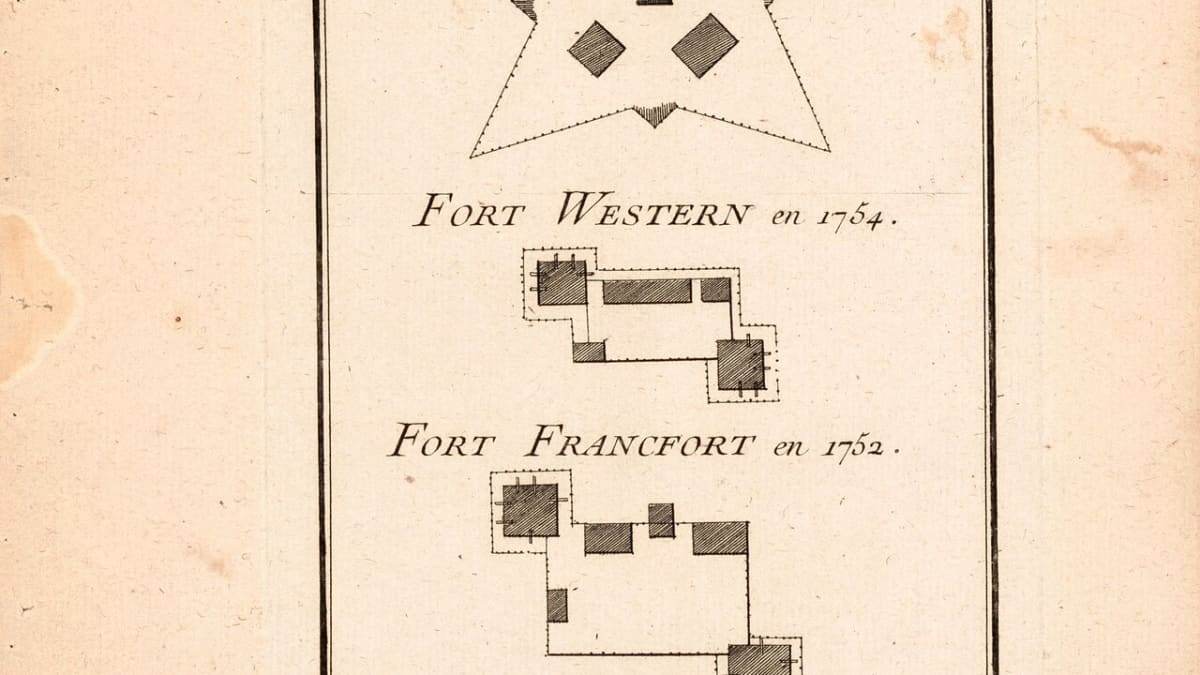
Old Fort Western
16 Cony Street
Augusta, ME
A 1754 log garrison and trading house on the Kennebec, the oldest wooden fort still standing in New England, where costumed interpreters keep the frontier past alive.
Old Fort Western is the oldest surviving wooden fort in New England, a 1754 garrison and trading post standing on the east bank of the Kennebec River in Augusta. Built during the colonial wars to guard the river and to trade with the Wabanaki peoples, its sturdy main house has survived for more than two and a half centuries, a rare and authentic piece of frontier Maine.
Today the fort is a living-history museum, a National Historic Landmark where costumed interpreters bring the eighteenth century to life through demonstrations of trade, cooking, and daily garrison routine. Set across the water from the modern State House, it links Maine's Indigenous, colonial, and Revolutionary past in a single riverside site.
What Travelers Love
- Standing inside the oldest surviving wooden fort in New England
- Costumed interpreters demonstrating 18th-century frontier and trade life
- The riverside setting on the Kennebec at the heart of Augusta
- A tangible link between Maine's colonial, Indigenous, and Revolutionary history
Worth Knowing
- The fort is a seasonal museum with costumed programming, so check dates and events
- It is a National Historic Landmark, an authentic structure rather than a reconstruction of the main house
- It pairs naturally with the State House and State Museum across the river
- Special events and reenactments happen through the warmer months
Learn about Old Fort Western
A fort on the Kennebec frontier
The Kennebec River was a vital route long before Fort Western, part of the homeland and travel network of the Wabanaki peoples, and it was up this river that Indigenous nations, traders, and later armies moved through the region.
The fort was built in 1754 by the Kennebec Proprietors, a group of Boston merchants, during the era of conflict between Britain and France. It served both as a defensive garrison and as a trading house, a place where goods were exchanged and the river guarded during unsettled times.
Its most famous moment came in 1775, when Benedict Arnold's expedition to attack Quebec gathered at Fort Western before pushing up the Kennebec into the wilderness, tying the site directly to the story of the American Revolution.
The oldest wooden fort
What makes Old Fort Western extraordinary is that its main house is an original eighteenth-century structure, not a reconstruction, making it the oldest surviving wooden fort in New England and a National Historic Landmark.
After its military and trading days ended, the building passed through other uses over the generations, and it was restored in the early twentieth century by the Gannett family, who gave it to the city of Augusta as a museum.
That survival is rare. Most wooden forts of its era rotted, burned, or were torn down, so to walk through the actual timbers of a 1754 garrison is to touch a piece of colonial New England that almost nowhere else preserves.
History brought to life
As a living-history museum, Old Fort Western uses costumed interpreters to demonstrate the trades, chores, and routines of eighteenth-century life, from open-hearth cooking to the work of a river trading post.
Programs and special events through the warmer months let visitors experience the fort as a working place rather than a static exhibit, deepening the sense of what daily life on the Kennebec frontier was actually like.
Standing on the riverbank across from the State House and State Museum, the fort completes a rich historical corner of Augusta, where the story of Maine runs from its Indigenous roots through the colonial frontier to the modern seat of government.
Visiting the fort
Old Fort Western operates as a seasonal museum, with costumed interpreters and special events concentrated in the warmer months, so checking the schedule ahead helps you catch the living-history programming at its fullest.
The riverside location makes it easy to build a larger visit. The State House, the State Museum, and the Kennebec River Rail Trail all lie within a short distance, so an afternoon here can trace Maine's story from a 1754 frontier garrison to the working capital just across the water.
Closest Boutels
The closest Boutel™ stays, so you can turn this stop into an overnight. Each is a place we chose through independent editorial review, never a paid placement.
Details
Augusta, ME
Frequently asked questions
What is Old Fort Western?
Old Fort Western, in the capital city of Augusta on the banks of the Kennebec River, is a remarkable historic site preserving the oldest surviving wooden fort in the United States, built in the mid-eighteenth century during the colonial era. The restored fort, with its sturdy main house, palisade, and blockhouses, served as a trading post and garrison on the colonial frontier, and today it is a living-history museum where costumed interpreters bring the eighteenth century to life through demonstrations and interpretation. A National Historic Landmark, it offers a vivid glimpse of colonial New England. With its historic fort and living history, Old Fort Western offers a fascinating destination in Augusta, Maine.
What can you do at Old Fort Western?
You can tour the restored colonial fort, including the oldest surviving wooden fort building in the country, explore the main house, palisade, and blockhouses, meet costumed interpreters who demonstrate eighteenth-century daily life, trades, and history, and learn about the fort's role as a colonial trading post and garrison on the frontier. The historic fort and the living-history interpretation are the highlights, immersing visitors in colonial times. It is engaging and educational for all ages. With its historic fort and costumed interpreters, Old Fort Western offers an immersive experience in Augusta, Maine.
When is the best time to visit Old Fort Western?
Old Fort Western is typically open seasonally with its fullest living-history programming in the warmer months, generally from around summer into early fall, so those are the times for the complete experience with costumed interpreters, and checking current days, hours, and program schedules before you go is wise, as they vary. As a largely outdoor historic site, it is best enjoyed in mild weather. Summer offers the most activity. For the fullest living-history experience, aim for summer through early fall at Old Fort Western in Augusta, Maine.
Why is Old Fort Western historically important?
Old Fort Western is historically important because it preserves the oldest surviving wooden fort in the United States, built in the mid-eighteenth century, and it played a role on the colonial New England frontier as a trading post and garrison, including as a staging point for a famous expedition during the Revolutionary War. Its remarkable state of preservation makes it a rare and authentic window into colonial life and frontier history. As a National Historic Landmark, it holds special significance. This deep history makes Old Fort Western a treasured historic site in Augusta, Maine.
What is near Old Fort Western?
Old Fort Western is in Augusta, Maine, on the Kennebec River, near the Maine State House, the Children's Discovery Museum, and within reach of the Belgrade Lakes with Messalonskee Lake, the L.C. Bates Museum, and the Kennebec Valley. That makes Old Fort Western a fascinating stop to combine with the Maine State House, the Augusta attractions, and the other sights of central Maine on a visit to the state.
Nearby
Maine State House
0.7 miles away
People tend to admire the dome from the highway and drive on, but the capitol is free to walk into.
Messalonskee Lake
14 miles away
Messalonskee Lake anchors the southern end of the Belgrade chain, and its real draw for nature is the broad marsh at the head of the lake, nearly 1,300 acres of significant wading-bird and waterfowl h...
Children's Discovery Museum
18 miles away
This is a let-them-loose kind of stop. The Children's Discovery Museum in downtown Waterville is built around four hands-on zones: a forest kids climb through, a maker mill with changing projects, a p...