

Noah Webster House
227 South Main Street
West Hartford, CT
The 18th-century farmhouse where Noah Webster was born, home to the man who gave America its dictionary, its speller, and much of its distinctive spelling.
The Noah Webster House is the 18th-century farmhouse where Noah Webster, the man who quite literally wrote the book on American English, was born in 1758. Webster spent his childhood on this working farm in what was then rural Hartford, and the modest saltbox home, restored and furnished to his era, preserves the humble beginnings of one of the most influential figures in American language and education.
Webster's reach is hard to overstate. His spelling book taught generations of American children to read, his choices are the reason Americans write color and center rather than colour and centre, and his great dictionary set out to define an American form of English distinct from Britain's. The house tells that story through costumed interpreters and hands-on programs, and doubles as West Hartford's local history museum.
What Travelers Love
- Standing in the modest farmhouse where a founder of American English was born
- Costumed interpreters bringing 18th-century daily life to hand
- The story of how one man reshaped how a whole nation spells and speaks
- A small, personal historic site that rewards curiosity
Worth Knowing
- The house is seen by guided tour with costumed interpreters; check days and hours
- It is a compact site, an easy hour that pairs well with the West Hartford center
- Hands-on programs and school-style lessons make it especially good for families
- The adjoining local history museum rounds out the West Hartford story
Learn about Noah Webster House
The man who standardized American English
Noah Webster was born here in 1758 into a farming family of old New England stock. Though his parents worked the land, they scraped together the means to send him to Yale, and he graduated in 1778 as the Revolution raged, coming of age exactly as the new nation was inventing itself.
Webster believed a truly independent America needed its own language, education, and culture, not just its own government. He set out to provide them. His speller, published in the 1780s and known for its blue cover, sold in staggering numbers over the following century and taught countless children their letters, giving Webster a lasting influence on how Americans learned to read.
He then spent decades on his masterwork, An American Dictionary of the English Language, published in 1828. In it he embraced simplified, distinctly American spellings, dropping the u from words like colour and reversing the letters in words like centre, and included American words and usages. Those choices largely became the standard American spelling still used today.
The house and the farm
The house is a classic New England saltbox, its long rear roof sloping toward the ground, built by Webster's family in the 18th century as the center of a working farm. It has been restored and furnished to reflect the period of Webster's boyhood, giving a vivid sense of the ordinary rural life from which he rose.
Costumed interpreters guide visitors through the rooms, demonstrating the cooking, chores, and crafts of 18th-century life and connecting them to young Noah's world. For children especially, the hearth, the tools, and the hands-on activities make the distant past tangible.
The farm and neighborhood that surrounded the house have long since given way to the suburb of West Hartford, so the preserved home stands as a pocket of the 1700s within a modern town, a reminder of the countryside this place once was.
A local history museum too
Beyond Webster himself, the site serves as the historical society and history museum for West Hartford, collecting and interpreting the story of the town from its colonial farming beginnings through its growth into a Hartford suburb.
The land here was, like all of the Connecticut River valley, part of the homeland of Native peoples long before English settlement, and the region's deep history stretches back thousands of years before the Webster family farmed it.
Rotating exhibitions, lectures, and community programs make the house a living local institution as well as a shrine to its famous native son, tying the personal story of one remarkable man to the broader history of the place that shaped him.
Season by season
Spring is a pleasant time to combine the house with a stroll through the greening West Hartford center nearby.
Summer brings the fullest program schedule and family activities, and the historic house offers a cool, shaded step back in time on a warm day.
Fall pairs the visit with New England's autumn color and often with seasonal history programs.
Winter draws on the site's hearth-centered interpretation, with candlelight and holiday programs that make the old farmhouse especially atmospheric, though hours may narrow, so check ahead.
Closest Boutels
The closest Boutel™ stays, so you can turn this stop into an overnight. Each is a place we chose through independent editorial review, never a paid placement.
Details
West Hartford, CT
Frequently asked questions
What is the Noah Webster House?
The Noah Webster House, in West Hartford, Connecticut, is the historic birthplace and childhood home of Noah Webster, the famous American lexicographer who created the first great American dictionary, preserved as a house museum. Webster, sometimes called the father of the American dictionary, revolutionized American spelling and education, and the restored eighteenth-century farmhouse where he was born and raised offers tours, period furnishings, and exhibits on his life, work, and the colonial era. Its connection to a foundational figure of American language and its historic setting make it a fascinating destination. A charming and historic house museum, it educates visitors. With its heritage, the Noah Webster House offers a compelling destination in Connecticut.
Who was Noah Webster?
Noah Webster was a famous American lexicographer, teacher, and writer, best known for creating the first comprehensive American dictionary and for reforming American spelling and education, earning him a reputation as the father of the American dictionary. His work helped standardize American English and shape American education and identity in the young nation. The house museum honors his life and legacy in his birthplace. Learning about Noah Webster enriches a visit to the Noah Webster House in Connecticut.
What can you see at the Noah Webster House?
You can tour the restored eighteenth-century farmhouse where Noah Webster was born and raised, see period furnishings, and explore exhibits on his life, his creation of the American dictionary, and colonial life. The historic birthplace, the period furnishings, the exhibits on Webster and his work, and the colonial setting are the draws, offering a charming and educational visit. The connection to a foundational American figure is the highlight. With its history, the Noah Webster House offers a rewarding visit in West Hartford, Connecticut.
When is the best time to visit the Noah Webster House?
As a mostly indoor house museum, the Noah Webster House can be enjoyed in various seasons, with tours offered on a schedule and special events, including colonial-themed programs, adding appeal at times. Because hours and tours can vary, checking the current schedule before you go is wise. For a visit, check current hours and any special programs at the Noah Webster House in Connecticut.
What is near the Noah Webster House?
The Noah Webster House is in West Hartford, Connecticut, within reach of Hartford with the Mark Twain House, the Wadsworth Atheneum, and Elizabeth Park, and the other attractions of the Hartford area. That makes the Noah Webster House a compelling stop to combine with the attractions of Hartford on a visit to Connecticut.
Nearby
Elizabeth Park Rose Garden
1.4 miles away
Locals guard this one, but it is free and open to anyone. Elizabeth Park holds the oldest municipal rose garden in the country, laid out in 1904, and for a couple of weeks in June its 15,000 rose bush...
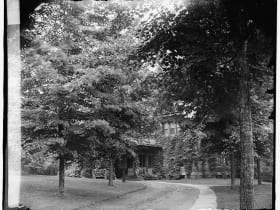
Mark Twain House and Museum
2.4 miles away
Many people pass through Hartford without realizing the house where Huckleberry Finn was written still stands, restored, and open.
Bushnell Park Carousel
3.4 miles away
A genuine antique that still spins for pocket change. The Bushnell Park Carousel dates to 1914, with 48 hand-carved horses, two fancy chariots, and a real Wurlitzer band organ pumping out music as it...
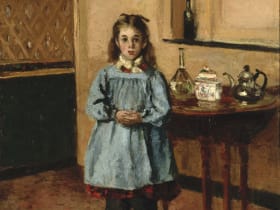
Wadsworth Atheneum Museum of Art
3.9 miles away
People are surprised a city the size of Hartford holds one of the oldest and best art museums in America.

Old State House
3.9 miles away
For a quick dose of Hartford history, stop at the Old State House at 800 Main St, one of the oldest statehouses in the country, finished in 1796 and often attributed to Charles Bulfinch.
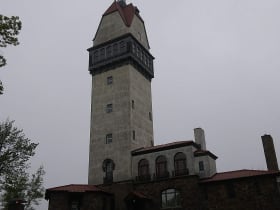
Heublein Tower at Talcott Mountain
5.6 miles away
Talcott Mountain gives the Hartford region its best summit view, and it comes with a castle at the top.

New Britain Museum of American Art
6.8 miles away
Few travelers expect the countrys first museum of American art to sit in New Britain, but it does, and it is a real find.
Action Wildlife Foundation
19 miles away
An unexpected safari in the Connecticut hills. Action Wildlife in Goshen lets families drive or walk among fields of bison, elk, zebra, camels, and watusi cattle, then hand-feed goats and smaller anim...