

New Britain Museum of American Art
56 Lexington Street
New Britain, CT
The first museum in the country devoted entirely to American art, holding three centuries of it, from colonial portraits to a sweeping Thomas Hart Benton mural cycle.
The New Britain Museum of American Art holds a distinction that surprises many first-time visitors: it was the first museum in the United States devoted solely to American art. Founded from a bequest in the early 20th century, it set out to collect the art of this country at a time when American work was often treated as second to European, and it has been building that collection ever since.
The result is a remarkably complete walk through American art, from colonial and early republic portraits through the grand landscapes of the Hudson River School, American Impressionism, the muscular realism of the early 20th century, and on into modern and contemporary work. Its most famous single treasure is a five-panel mural cycle by Thomas Hart Benton, one of the defining works of American Regionalist painting, on view in its own gallery.
What Travelers Love
- A deep, three-century sweep of American art in one approachable museum
- Thomas Hart Benton's five-panel mural cycle, The Arts of Life in America
- Strong holdings of Hudson River School landscapes and American Impressionism
- A welcoming scale, big enough to be serious, small enough to enjoy in an afternoon
Worth Knowing
- The collection is specifically American, a rare and clarifying focus for an art museum
- Rotating special exhibitions run alongside the permanent galleries, so check what is on
- The setting beside Walnut Hill Park invites pairing art with a walk outdoors
- It is an easy add to a Hartford-area museum day
Learn about New Britain Museum of American Art
A collection built on American art
The museum traces its origins to 1903 and to a fund left for the purchase of American art, an unusual mandate for its day. Rather than chase European old masters, its founders committed to collecting the art of their own country, and that focus has given the museum an unusually coherent and complete story to tell.
The galleries move roughly in chronological order, opening with colonial and early American portraiture and the young nation's sense of itself, then moving into the 19th century's love of landscape, with luminous Hudson River School canvases of the American wilderness and, later, the softer light of the American Impressionists, many of whom worked in Connecticut's own art colonies.
From there the collection carries into the 20th and 21st centuries, with realist and Regionalist painting, modernism, illustration, and a growing body of contemporary art, so that a single visit spans more than three hundred years of how Americans have pictured themselves and their land.
The Benton murals
The museum's signature work is The Arts of Life in America, a cycle of five murals painted by Thomas Hart Benton in the early 1930s. Benton, a leader of the Regionalist movement, filled the panels with vivid, restless scenes of everyday American life, music, dance, work, play, and the everyday people of the country's regions, rendered in his rippling, energetic style.
The murals were originally created for the library of the Whitney Museum in New York before coming to New Britain, where they are displayed together in their own gallery. Seeing them as a set, wrapping around the room, is one of the museum's defining experiences and a landmark encounter with American mural painting.
Benton's work here captures both the ambition and the tensions of its era, and the museum interprets the murals with attention to how they represent, and sometimes stereotype, the many peoples of America, prompting reflection as well as admiration.
The museum and its city
New Britain was long a manufacturing city, nicknamed the Hardware City for its tools, locks, and hardware factories that drew waves of immigrant workers. The museum grew as a cultural anchor within that industrious community, beside the Frederick Law Olmsted-designed Walnut Hill Park.
Over the decades the museum outgrew its original home and expanded with modern gallery wings, giving its growing collection room to breathe and space for major traveling exhibitions, while keeping its welcoming, human scale.
Its setting in central Connecticut places it within easy reach of the state's other art institutions, from the Wadsworth Atheneum in Hartford to the university museums in New Haven, making it a natural stop on any tour of Connecticut art.
Season by season
Spring pairs the galleries with the greening of neighboring Walnut Hill Park, a pleasant time for art indoors and a walk outdoors.
Summer brings major special exhibitions and a steady calendar of programs, a comfortable air-conditioned refuge on a hot afternoon.
Fall is a fine season to combine the museum with the surrounding park's autumn color and with wider leaf-season travel through central Connecticut.
Winter makes the museum an ideal cold-weather destination, with rotating shows and events offering a warm, unhurried few hours indoors.
Closest Boutels
The closest Boutel™ stays, so you can turn this stop into an overnight. Each is a place we chose through independent editorial review, never a paid placement.
Details
New Britain, CT
Frequently asked questions
What is the New Britain Museum of American Art?
The New Britain Museum of American Art, in New Britain, Connecticut, is a distinguished museum devoted entirely to American art, one of the first museums in the country dedicated solely to art of the United States. The museum holds an outstanding and wide-ranging collection of American art spanning the colonial era to the present, including paintings, sculpture, illustration, and contemporary works by many celebrated American artists, all in a handsome setting. Its focus on American art and its excellent collection make it a rewarding cultural destination. A superb and focused art museum, it delights visitors. With its American art, the museum offers a compelling destination in Connecticut.
What can you see at the New Britain Museum of American Art?
You can see an outstanding collection of American art spanning the colonial era to the present, including paintings, sculpture, illustration, and contemporary works by many celebrated American artists, along with changing special exhibitions. The wide-ranging American art, the works by celebrated artists, and the rotating exhibitions are the draws, offering a rich journey through the history of American art. Its focus and quality are highlights. With its collection, the museum offers a rewarding visit in New Britain, Connecticut.
When is the best time to visit the New Britain Museum of American Art?
As an indoor museum, the New Britain Museum of American Art is enjoyable year-round in any weather, making it a great stop in any season, with special exhibitions and events adding interest at various times. Because hours can vary, checking the current schedule before you go is wise. Because it is indoors, the New Britain Museum of American Art makes a rewarding stop any time of year in Connecticut.
What makes the New Britain Museum of American Art special?
The New Britain Museum of American Art is special as one of the first museums in the country dedicated solely to American art, giving it a distinctive focus and a deep, wide-ranging collection spanning the colonial era to the present. This singular devotion to art of the United States, and the quality of its holdings, set it apart. Its focus offers a rich, coherent journey through American art. This distinction makes the New Britain Museum of American Art a rewarding destination in Connecticut.
What is near the New Britain Museum of American Art?
The New Britain Museum of American Art is in New Britain, Connecticut, within reach of Hartford with the Wadsworth Atheneum and the Mark Twain House to the north, the central Connecticut towns, and the routes across the state. That makes the New Britain Museum of American Art a compelling stop to combine with the attractions of the Hartford area on a visit to Connecticut.
Nearby

Noah Webster House
6.8 miles away
History gets hands-on at the birthplace of the man who wrote the first American dictionary.
Elizabeth Park Rose Garden
7.8 miles away
Locals guard this one, but it is free and open to anyone. Elizabeth Park holds the oldest municipal rose garden in the country, laid out in 1904, and for a couple of weeks in June its 15,000 rose bush...
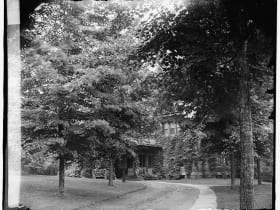
Mark Twain House and Museum
8.0 miles away
Many people pass through Hartford without realizing the house where Huckleberry Finn was written still stands, restored, and open.
Bushnell Park Carousel
8.4 miles away
A genuine antique that still spins for pocket change. The Bushnell Park Carousel dates to 1914, with 48 hand-carved horses, two fancy chariots, and a real Wurlitzer band organ pumping out music as it...
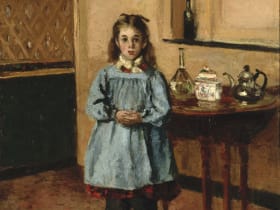
Wadsworth Atheneum Museum of Art
8.7 miles away
People are surprised a city the size of Hartford holds one of the oldest and best art museums in America.

Old State House
8.8 miles away
For a quick dose of Hartford history, stop at the Old State House at 800 Main St, one of the oldest statehouses in the country, finished in 1796 and often attributed to Charles Bulfinch.
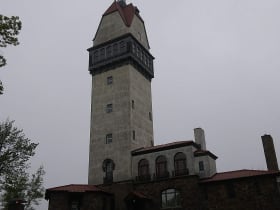
Heublein Tower at Talcott Mountain
12 miles away
Talcott Mountain gives the Hartford region its best summit view, and it comes with a castle at the top.
Action Wildlife Foundation
18 miles away
An unexpected safari in the Connecticut hills. Action Wildlife in Goshen lets families drive or walk among fields of bison, elk, zebra, camels, and watusi cattle, then hand-feed goats and smaller anim...