
Museum of the Red River
1314 E Washington St, Idabel, OK
Idabel, OK
A small-town museum with a big reputation, holding Native art from across the Americas and a life-size cast of a dinosaur named for Oklahoma, all in the far southeast corner of the state.
The Museum of the Red River is one of those places that surprises people who expect a small town to have only a small museum. Set in Idabel in the far southeast corner of Oklahoma, it holds a serious and wide-ranging collection of Native American art and artifacts drawn from across the Americas, along with regional history and natural history, and it has built a reputation that reaches well beyond its rural setting.
It is also the unlikely home of a life-size cast of Acrocanthosaurus, a large meat-eating dinosaur whose remains are strongly associated with Oklahoma, so much so that the state named it its official dinosaur. Between the sweep of its Native art collections and the drama of its dinosaur, the museum rewards the drive into this quiet, forested corner of the state.
What Travelers Love
- A far-reaching collection of Native American art from across the Americas
- The life-size cast of Acrocanthosaurus, a dinosaur closely tied to Oklahoma
- Strong ties to the Choctaw Nation and the deep history of the region
- A serious, well-curated museum in an unexpectedly small town
Worth Knowing
- It is in the far southeast corner of the state, so plan for a bit of a drive to reach it
- The collections are wide-ranging, so allow time to take them in fully
- It pairs well with the forests, rivers, and lakes of the southeast Oklahoma pineywoods
- Confirm current days and any special exhibits before making a special trip
Learn about Museum of the Red River
Native art from across the Americas
The heart of the museum is its collection of Native American art and artifacts, which ranges far beyond Oklahoma to include works from many cultures across North, Central, and South America. Pottery, textiles, carvings, and other objects show the artistry and diversity of Indigenous peoples over a vast span of geography and time.
That breadth is unusual for a museum of its size and location, and it reflects a commitment to Native art as a living, continent-spanning tradition rather than a regional footnote. Visitors come away with a richer sense of the depth and reach of Indigenous artistic achievement across the Americas.
The Choctaw Nation and the region
Idabel lies within the Choctaw Nation, and the region's history is deeply tied to the Choctaw people, who were forced from their southeastern homelands to Indian Territory in the nineteenth century along the routes remembered as the Trail of Tears. The Choctaw Nation remains a strong and central presence in southeastern Oklahoma today, and the museum's setting places its collections in a living Native community.
The museum also tells the wider story of the Red River country, a land of forests, rivers, and rich soil that has drawn people for a very long time. Its regional and archaeological holdings help visitors understand the deep human history of this corner of the state, from ancient peoples to the present-day nations who call it home.
The dinosaur in the small town
One of the museum's most talked-about features is its life-size cast of Acrocanthosaurus, a large predatory dinosaur that lived long ago in what is now the region and whose fossil connections to Oklahoma led the state to adopt it as its official dinosaur. Seeing the full-scale mount is a genuine thrill, especially for young visitors.
The dinosaur sits comfortably alongside the museum's art and history, a reminder that this small institution reaches across the whole span of the region's story, from the deep past of the land itself to the art of the peoples who live on it now. It is a big attraction in a small place, and part of what makes the museum worth the trip.
The southeast Oklahoma pineywoods
Idabel sits in the pine-and-hardwood country of southeast Oklahoma, a green, well-watered land quite different from the plains and prairies to the west. The Red River, the Ouachita foothills, and the forests and lakes of the region make this a scenic corner of the state, and a museum visit pairs naturally with time outdoors.
Nearby lie the mountain forests of the Ouachitas, the lakes and rivers of the pineywoods, and the popular recreation country around Beavers Bend to the north. The Museum of the Red River gives a rich cultural anchor to a part of Oklahoma many travelers never reach, and rewards those who make the effort to get there.
Closest Boutels
The closest Boutel™ stays, so you can turn this stop into an overnight. Each is a place we chose through independent editorial review, never a paid placement.
Details
Idabel, OK
Frequently asked questions
What is the Museum of the Red River?
The Museum of the Red River, in Idabel in southeastern Oklahoma, is an excellent museum celebrated for its outstanding collections of Native American art and artifacts, along with a famous dinosaur. The museum holds a remarkable collection of Native American art from across the Americas, honoring the artistry and cultures of many Native peoples, including those of the region, and it is also home to a mounted skeleton of Acrocanthosaurus, a large dinosaur that once roamed the area and serves as the Oklahoma state dinosaur. Its rich Native art and dramatic dinosaur make it a fascinating destination. A superb and wide-ranging museum, it educates and delights visitors. With its collections, the museum offers a compelling destination in Oklahoma.
What can you see at the Museum of the Red River?
You can see outstanding collections of Native American art and artifacts from across the Americas, exhibits honoring the region's Native peoples, and a dramatic mounted skeleton of Acrocanthosaurus, the large dinosaur that is the Oklahoma state dinosaur. The Native American art, the cultural exhibits, and the impressive dinosaur are the draws, offering a rich blend of art, culture, and natural history. The Native art and the dinosaur are both highlights. With its collections, the museum offers a rewarding visit in Idabel, Oklahoma.
What should visitors know about the Native American collections at the Museum of the Red River?
The Museum of the Red River is noted for its outstanding Native American art collections, which honor the artistry, cultures, and traditions of many Native peoples across the Americas, including those connected to the region, so approaching the collections with respect for their cultural significance enriches the experience. The museum presents this art thoughtfully, offering visitors a chance to appreciate the depth and beauty of Native artistic heritage. Its respectful presentation is a highlight. Appreciating these collections with respect enriches a visit to the Museum of the Red River in Oklahoma.
When is the best time to visit the Museum of the Red River?
As an indoor museum, the Museum of the Red River is enjoyable year-round in any weather, making it a great stop in any season and a welcome refuge from the heat or cold. Because hours can vary, checking the current schedule before you go is wise. Because it is indoors, the museum makes a rewarding stop any time of year in Idabel, Oklahoma.
What is near the Museum of the Red River?
The Museum of the Red River is in Idabel in southeastern Oklahoma, within reach of Beavers Bend State Park and Broken Bow to the north, the Ouachita National Forest, and the routes across southeastern Oklahoma. That makes the Museum of the Red River a compelling stop to combine with Beavers Bend State Park and the other attractions of southeastern Oklahoma on a visit to the state.
Nearby
Beavers Bend State Park
19 miles away
Beavers Bend State Park: 10 miles north of Broken Bow on US-259A. Park entry free; cabin and lodge reservations required for overnight.
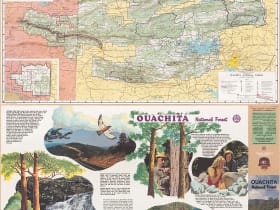
Ouachita National Forest
53 miles away
Talimena National Scenic Byway: US-271 from Talihina, OK to Mena, AR - 62 miles on a mountain ridgeline, free to drive, best in October.

Queen Wilhelmina State Park
61 miles away
Queen Wilhelmina sits atop Rich Mountain, the second-highest peak in Arkansas at nearly 2,700 feet, and the elevation changes everything: the air runs cooler, the views stretch for miles across parall...