
Museum of Appalachia
2819 Andersonville Hwy, Clinton, TN
Clinton, TN
A sprawling living-history village of log cabins, barns, and everyday mountain things, gathered over a lifetime to show how Southern Appalachian people really lived.
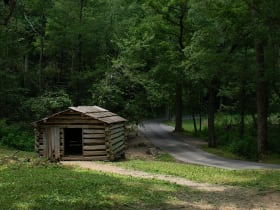
The Museum of Appalachia is less a museum in the usual sense than a living village, dozens of authentic log cabins, barns, and outbuildings gathered onto rolling East Tennessee farmland, with farm animals grazing among them and old-time music drifting across the grounds. It was built to preserve and honor the everyday life of the Southern Appalachian mountain people, and it does so with an intimacy few institutions can match.
The whole place grew from the lifelong obsession of one man, John Rice Irwin, who spent decades collecting the cabins, tools, instruments, quilts, and countless small objects of mountain life, along with the stories of the people who owned them. The result is a deeply personal, richly textured portrait of a culture, assembled not from grand artifacts but from the humble, handmade things that filled ordinary Appalachian lives.
What Travelers Love
- Wandering a village of authentic log cabins, barns, and a mountain church and schoolhouse
- Farm animals grazing among the buildings, giving the place a lived-in, working feel
- A hall of homemade tools, instruments, and folk art, much of it tied to the people who made it
- Live old-time and bluegrass music that brings the mountain culture to life
Worth Knowing
- The site is large and mostly outdoors, so wear good shoes and dress for the weather
- Special festivals, including a big fall homecoming, are highlights but draw the biggest crowds
- Farm animals are part of the experience, so watch children around fences and pens
- Give yourself time; the collection is deep and rewards a slow, curious wander
Learn about Museum of Appalachia
One man's lifelong collection
The museum is the life's work of John Rice Irwin, a schoolteacher and administrator descended from East Tennessee mountain families. Moved by the disappearing world of his own ancestors, Irwin began buying up log cabins, farm buildings, tools, and household objects across the region, often seeking out the people who had used them so their stories would not be lost.
Over the years he relocated genuine historic structures to his farmland near Clinton and filled them with the real belongings of mountain families, building not a polished re-creation but an authentic gathering of the true stuff of Appalachian life. He opened it to the public and grew it steadily, and it became one of the most respected folk-life collections in the country.
What gives the museum its soul is Irwin's insistence on the stories behind the objects. He knew where a fiddle came from and who had played it, whose hands had built a cabin or forged a tool, and that human connection runs through the whole place, turning a collection of old things into a portrait of real people.
The village and the animals
The grounds are laid out as a village of relocated log structures, a hewn-log church, a one-room schoolhouse, cabins, corn cribs, smokehouses, and barns, set among gardens and pastures. Walking among them, you get a vivid sense of how a self-sufficient mountain community fit together, from worship and schooling to the work of raising food and keeping warm.
Farm animals graze the fields and pens, sheep, goats, cattle, chickens, and peacocks, giving the village a living, working atmosphere rather than the stillness of a static museum. Split-rail fences, kitchen gardens, and the general air of a working farm make it easy to imagine the daily rhythm of the people who once lived this way.
The Hall of Fame and the handmade things
Alongside the buildings, the museum's display halls hold a staggering array of the objects of mountain life: homemade tools and gadgets, musical instruments crafted from whatever was at hand, quilts, baskets, folk art, and the personal possessions of memorable local characters. Much of it is tied to a named person and a remembered story.
One of the great strengths of the collection is its celebration of ingenuity, the clever homemade solutions of people who had little money and made or fixed nearly everything themselves. Together these objects tell the story of a resourceful, self-reliant culture, and they honor ordinary mountain people as makers and craftspeople in their own right.
Music, festivals, and living traditions
Music is woven through the museum, which regularly features old-time, bluegrass, and mountain string-band players, keeping alive the Appalachian musical tradition that produced so much of American country and folk music. On many days you can hear a fiddle or banjo somewhere on the grounds, a reminder that this was a singing, playing culture.
The museum's calendar of festivals brings the place to its fullest life, especially the big fall homecoming, when musicians, craftspeople, and demonstrators fill the village with the sounds and skills of the mountains. These gatherings turn the static collection into a living celebration of the culture it preserves, and they are the times many visitors love best.
Closest Boutels
The closest Boutel™ stays, so you can turn this stop into an overnight. Each is a place we chose through independent editorial review, never a paid placement.
Riverhouse at the Park
Honorable Mention205 Ski Mountain Rd, Gatlinburg, TN
45 miles away|Learn More ›
Details
Clinton, TN
Frequently asked questions
What is the Museum of Appalachia?
The Museum of Appalachia, in Clinton near Knoxville in eastern Tennessee, is a remarkable living-history museum and pioneer village that preserves the heritage and everyday life of the Appalachian people. Set on scenic grounds, the museum gathers a large collection of authentic log cabins, historic buildings, farm animals, gardens, and an astonishing array of artifacts of pioneer and mountain life, presenting the culture, crafts, music, and daily existence of Appalachia with warmth and authenticity. Its rich, hands-on portrayal of mountain heritage makes it a beloved destination. A charming and authentic heritage museum, it educates and delights visitors. With its Appalachian heritage, the museum offers a compelling destination in Tennessee.
What can you see at the Museum of Appalachia?
You can explore authentic log cabins and historic buildings, see farm animals and gardens, view a vast collection of artifacts of pioneer and mountain life, and experience the crafts, music, and daily culture of Appalachia, often with demonstrations and events. The historic buildings, the artifacts, the farm animals and gardens, and the living portrayal of Appalachian heritage are the draws, offering a rich and authentic experience. The immersive pioneer village is a highlight. With its heritage, the Museum of Appalachia offers a rewarding visit in Tennessee.
Is the Museum of Appalachia good for families?
Yes, the Museum of Appalachia is wonderful for families, with log cabins to explore, farm animals to see, gardens, hands-on heritage, and often music and craft demonstrations that engage children and adults alike. The living-history setting and the animals especially delight kids, while the authentic mountain culture enriches the whole family. Its outdoor grounds offer room to explore. Its family appeal makes the Museum of Appalachia a delightful destination in Tennessee.
When is the best time to visit the Museum of Appalachia?
The mild months of spring through fall are the most pleasant for exploring the outdoor grounds, buildings, and gardens, with the museum's demonstrations, festivals, and events, including a beloved fall heritage celebration, adding special appeal. Because programs and hours vary by season, checking the current schedule before you go is wise. For the fullest experience with events and pleasant weather, aim for spring through fall at the Museum of Appalachia in Tennessee.
What is near the Museum of Appalachia?
The Museum of Appalachia is in Clinton near Knoxville in eastern Tennessee, within reach of Knoxville, the Manhattan Project National Historical Park in nearby Oak Ridge, and the routes toward the Great Smoky Mountains. That makes the Museum of Appalachia a compelling stop to combine with the Manhattan Project National Historical Park and the other attractions of eastern Tennessee on a visit to the state.
Nearby
Manhattan Project National Historical Park
16 miles away
Oak Ridge is where a whole secret city sprang up overnight to help build the first atomic bomb, and the story grabs older kids and teens.

Obed Wild and Scenic River
34 miles away
The Obed is a rugged gorge on the Cumberland Plateau, where sandstone cliffs drop down to a rushing whitewater river, and it holds some of the darkest skies in all of Tennessee.

Dollywood
40 miles away
Dollywood gives families a full day that mixes serious thrill rides with Appalachian craft and music, so it works for a wide range of ages.
Great Smoky Mountains National Park
45 miles away
The most-visited national park, famous for misty ridgelines, wildflowers, and synchronous fireflies.