

Mount St. Helens National Volcanic Monument
Spirit Lake Hwy (SR 504)
Castle Rock, WA
The mountain that erupted in 1980 and lost its whole summit, now the world's front-row classroom on how life comes back.
Mount St. Helens is the rare landmark whose most important moment happened within living memory. On the morning of May 18, 1980, the volcano erupted with catastrophic force, and in the largest landslide in recorded history the whole north face slid away, unleashing a lateral blast that flattened forests for miles and stripped roughly thirteen hundred feet off the mountain's summit.
What is left is both a scar and a laboratory. Fifty-seven people died, whole valleys were buried, and a beloved peak became a gaping crater. In the decades since, scientists and visitors have watched an obliterated landscape come back to life, which is why the monument is often called the best place on earth to see how nature recovers from total destruction.
What Travelers Love
- Standing before a volcano that violently reshaped itself within living memory
- The eerie, powerful blast zone, where downed forests and new growth tell the story side by side
- Watching a landscape recover, from wildflowers to returning elk, in real time
- The sheer scale of what happened here, made vivid at the interpretive centers
Worth Knowing
- Access is in flux: a 2023 landslide destroyed a bridge and closed the upper Spirit Lake Highway, so the Johnston Ridge Observatory has been closed, with reopening expected only after major road repairs; check current road and center status before you go
- West-side alternatives such as the Coldwater Science and Learning Center, Coldwater Lake, and the Hummocks Trail have remained open, and the east and south sides of the mountain offer their own access
- This is high, exposed volcano country, so weather changes fast and the summit is often in cloud
- It is a national volcanic monument managed by the Forest Service, so a recreation pass or fee applies at developed sites
Learn about Mount St. Helens National Volcanic Monument
The day the mountain came apart
For weeks in the spring of 1980 the volcano had been swelling and shaking, a growing bulge on its north flank warning that something was building. On the morning of May 18 an earthquake shook that unstable slope loose, and the entire north face collapsed in a colossal debris avalanche. With the mountain's cap suddenly gone, the pressurized gas and magma inside blew sideways in a lateral blast that raced across the land faster than a car.
The blast flattened old-growth forest across a vast fan north of the peak, scalded everything in its path, and filled the valleys with mud and ash. Spirit Lake, once a jewel below the mountain, was blasted and buried and its level raised. Ash rose miles into the sky and drifted across several states. In minutes, one of the Cascades' most symmetrical peaks became a broken horseshoe crater, its summit lowered from about nine thousand six hundred feet to roughly eight thousand three hundred.
The 57 who died
The eruption killed fifty-seven people, and their stories are part of why the place stays with visitors. Among them was David Johnston, a young volcanologist monitoring the mountain from an observation post on the ridge that now bears his name; his last radio call, reporting that the eruption had begun, came moments before the blast reached him.
Another was Harry R. Truman, the stubborn old lodge owner at Spirit Lake who refused to leave the mountain he loved and was buried beneath the avalanche with his home and his cats. The monument does not treat the eruption as a spectacle alone, but as an event that took lives and remade a community, and the interpretive centers tell those human stories alongside the science.
A homeland and a living volcano
Long before it was a monument, the mountain was Loowit, or Lawetlat'la, to the Cowlitz and Yakama peoples and their neighbors, a powerful figure in stories passed down for generations. The mountain and its surroundings are recognized as a traditional cultural property, and for these communities the 1980 eruption was another chapter in a long relationship with a living, unpredictable peak.
And it remains living. St. Helens is an active volcano that rebuilt a lava dome inside its crater in the years after 1980 and stirred again in the mid-2000s. Scientists watch it closely, and the crater still steams. The mountain is not finished, which is part of what makes standing before it so charged.
How life came back
The most hopeful part of the story is the recovery. In the blast zone, life returned faster than anyone expected. Plants sheltered under late snow survived, gophers churned buried soil back to the surface, fireweed and lupine colonized the ash, and insects, birds, and eventually elk and their predators followed. Today the once-gray plain is greening year by year, a natural experiment in resilience that researchers still study.
Season shapes the visit. Summer into early fall is the reliable window, when the high country is snow-free, the recovering meadows bloom, and the interpretive sites are open. Winter buries the upper roads in snow. Whenever you come, the pairing of destruction and return, the standing skeletons of old forest amid new green, is the monument's enduring lesson.
Closest Boutels
The closest Boutel™ stays, so you can turn this stop into an overnight. Each is a place we chose through independent editorial review, never a paid placement.
Details
Castle Rock, WA
Frequently asked questions
What is Mount St. Helens National Volcanic Monument?
Mount St. Helens National Volcanic Monument, in southwestern Washington, preserves the site of the dramatic 1980 volcanic eruption that blew off the top of the mountain, devastated the surrounding landscape, and reshaped the region in one of the most significant volcanic events in U.S. history. The monument allows visitors to witness the still-recovering blast zone, the gaping crater, and the remarkable regrowth of life, while learning about the eruption and volcanology. With visitor centers, viewpoints, trails, and the awe-inspiring sight of the volcano and its devastation and recovery, Mount St. Helens National Volcanic Monument offers a fascinating and powerful look at the forces of nature in the Pacific Northwest.
What can you do at Mount St. Helens National Volcanic Monument?
You can drive to viewpoints and visitor centers like the Johnston Ridge area for dramatic views into the crater and across the blast zone, hike trails through the recovering landscape and, for the fit, more challenging routes, learn about the eruption and volcanology through exhibits and films, explore the ape cave lava tube on the south side, watch for wildlife returning to the area, and marvel at the regrowth of life. The story of destruction and recovery is compelling. With its crater views, visitor centers, trails, and volcanic scenery, Mount St. Helens offers a fascinating and educational experience in southwestern Washington.
What should I know before visiting Mount St. Helens?
The main viewpoints and visitor centers, especially those on the north side toward the crater, are reached by long, winding mountain roads that are typically open only seasonally, generally late spring through fall, and closed or inaccessible in winter due to snow, so checking current road and facility conditions before you go is essential. The different sides of the monument, north and south, are far apart and not directly connected, so plan which area to visit. Weather can obscure the mountain, so clear days are best. Being prepared for the seasonal access and long drives ensures a smooth visit.
When is the best time to visit Mount St. Helens National Volcanic Monument?
Summer through early fall is the best time, when the mountain roads and visitor centers, including those with the best crater views, are open, the weather is mildest, and clear days offer the best views of the volcano and blast zone, with wildflowers adding beauty to the recovering landscape in summer. Winter closes much of the access due to snow. Clear days are important, since clouds often shroud the mountain. For the fullest access to viewpoints and the best chance of clear views, aim for summer through early fall at Mount St. Helens National Volcanic Monument.
What is near Mount St. Helens National Volcanic Monument?
Mount St. Helens National Volcanic Monument is in southwestern Washington, within reach of the towns along its access routes, the Columbia River Gorge to the south, the Portland, Oregon, metro area, and Mount Rainier National Park to the north. That makes Mount St. Helens a fascinating stop to combine with the Columbia River Gorge, Mount Rainier, and the other natural attractions of southwestern Washington and the Cascade Range on a visit to the region.
Nearby
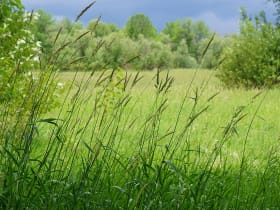
Ridgefield National Wildlife Refuge
37 miles away
Ridgefield NWR north of Vancouver is one of the best places in the Pacific Northwest to see sandhill cranes during fall migration, with birds sometimes foraging in fields visible from the auto tour ro...
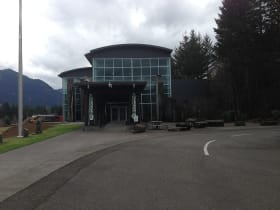
Columbia Gorge Interpretive Center
37 miles away
The Columbia Gorge Interpretive Center Museum in Stevenson documents the natural and human history of the gorge, from Ice Age floods through Native American cultures, the Lewis and Clark Expedition, a...

Bridge of the Gods and Cascade Locks
39 miles away
A slender steel toll bridge across the Columbia River in the heart of the Gorge, named for a Native American legend of a natural stone land bridge, at the historic town of Cascade Locks where steamboa...

Mount Rainier National Park
46 miles away
An active glaciated volcano ringed by wildflower meadows, the tallest peak in the Cascade Range.