
Mosier Twin Tunnels
103 Kingdom St
Mosier, OR
Two tunnels blasted through basalt in 1921, buried for decades, then dug back out as a walk-and-bike trail with the whole east Gorge spread out below.
The Mosier Twin Tunnels are a piece of engineering history you can walk straight through. When the original Columbia River Highway was pushed along this cliff in 1921, crews had to blast two short tunnels through a stubborn point of basalt to get the road past. For a few decades cars rolled through them, and then the modern freeway took over down at river level and the tunnels were abandoned, packed full of rock, and all but forgotten.
In 2000 they came back to life. As part of the long effort to rebuild the old scenic highway as a walking and biking route, the tunnels were dug back out and the roadway restored, this time with no cars at all. Today they are the centerpiece of one of the finest easy trails in the Gorge, a paved path that threads the cliffs on the sunny eastern edge of the canyon.
What Travelers Love
- Walking or biding through the two historic tunnels, cut by hand through solid rock a century ago
- The wide-open views down the Columbia from the dry, sunny east end of the Gorge
- A paved, mostly gentle grade that works for families, bikes, and strollers, with no cars
- Spring wildflowers and the century-old graffiti left by snowbound travelers inside the tunnels
Worth Knowing
- There are trailheads at each end; the Mark Hatfield West trailhead near Hood River and the east trailhead above Mosier, and a state trail parking pass is required
- The full route between the two trailheads runs about four and a half miles one way, so plan a turnaround or a shuttle
- This is the sunny, exposed side of the Gorge; bring water and sun protection in summer, and expect strong east winds
- Rock does fall here; a wooden catchment shed was built over the trail near the tunnels for exactly that reason
Learn about Mosier Twin Tunnels
A road blasted through the cliffs
The tunnels are part of the original Columbia River Highway, the pioneering scenic road engineered by Samuel Lancaster and completed in the 1910s and early 1920s. Lancaster wanted a highway that worked with the landscape rather than bulldozing through it, laying out graceful curves, stone guardrails, and arched viaducts, and building tunnels where a cliff left no other way.
Here at Mosier, that meant dynamiting two tunnels, one after the other, through a high point of solid basalt in 1921. Windows were cut in the rock wall so drivers could look out at the river as they passed. It was a marvel in its day, part of a road that drew tourists from across the country to see the Gorge.
Buried, then brought back
By the middle of the century the old highway had been bypassed, and the tunnels were considered a hazard. Crews filled them with rock rubble and sealed them off, and for a generation they sat buried and out of sight while traffic thundered by on the water-level freeway below.
Beginning in the 1980s, the Columbia River Gorge National Scenic Area Act set in motion a plan to piece the old highway back together as a trail. Workers excavated the tunnels, rebuilt the roadbed, and reopened the segment in 2000. Inside, they uncovered a surprise: graffiti scrawled by travelers who had been snowbound in the tunnels back in 1921, still legible on the rock a lifetime later.
The dry side of the Gorge
What makes this trail special is where it sits. The western Gorge near Portland is a rainforest of ferns and waterfalls, but out here at the east end the climate flips to sun and wind. The forest thins into Oregon white oak, grassland, and open rock, and the views run for miles up and down the great blue trench of the Columbia.
In spring the slopes explode with wildflowers, golden balsamroot and blue lupine spilling across the grass, a display that draws people from all over the region. In summer the same open ground turns dry and hot, and the famous Gorge wind funnels through with real force, which is why this stretch of river is a world capital for windsurfing and kiteboarding just downstream.
Walking or riding it
Because the old roadway is paved and never climbs too steeply, the trail is friendly to almost everyone, families with strollers, casual cyclists, and anyone who wants a big view without a hard climb. Many people start from either trailhead and simply turn around at the tunnels, while others ride the whole length between Mosier and Hood River.
Spring and fall are the sweet spots, with wildflowers or golden oaks and gentler temperatures. Summer works if you go early and carry water, and even winter days can be clear and bright out on the sunny side of the canyon. Whatever the season, take a minute at the tunnels to run a hand over the blasted rock and read the hundred-year-old names on the wall.
Closest Boutels
The closest Boutel™ stays, so you can turn this stop into an overnight. Each is a place we chose through independent editorial review, never a paid placement.
Details
Mosier, OR
Frequently asked questions
What are the Mosier Twin Tunnels?
They are two historic tunnels on a car-free stretch of the old Columbia River Highway, now a paved walking and biking trail between Hood River and Mosier. Cut through the basalt in the early twentieth century, the tunnels have window-like openings framing the Columbia River Gorge, and passing through them on foot or by bike is a highlight of one of the most scenic easy trails in the Gorge.
Can you bike the Mosier Twin Tunnels trail?
Yes, and it is one of the best easy rides in the Gorge. The paved, car-free path runs a few miles between the Hood River and Mosier trailheads on gentle grades that never get steep, making it enjoyable for riders of most abilities, and e-bikes make it easier still. It is shared with walkers, so keep a courteous pace, and you can go out and back or arrange a shuttle between the ends.
Do I need a pass to park at the trailheads?
Yes. Both trailheads require an Oregon State Parks day-use parking permit, available for the day or as an annual pass, so come prepared to pay or display a valid pass. There are restrooms and parking at either end, and starting from either the Hood River or Mosier side works well depending on which direction you want to ride or walk.
When is the best time to visit the Mosier Twin Tunnels?
The trail is open and lovely from spring through fall, and April and May are especially rewarding when wildflowers bloom along the cliffs and meadows. Because the route passes between the wet western Gorge and the drier east, it can feel like two climates in one outing. Summer is warmer and busier, so mornings are pleasant, and the paved path is fine in most weather.
Is the trail suitable for families and all abilities?
Very much so. The path is paved, wide, and gently graded, described as universally accessible, which makes it friendly for families, casual cyclists, strollers, and those who prefer an easy walk. Bring water and sun protection since parts are exposed, keep dogs leashed, and take your time to enjoy the tunnels, the carved historical graffiti inside them, and the big river views.
Nearby
Tom McCall Nature Preserve
5.1 miles away
The basalt benches here sit in a rain shadow: wet enough for a wildflower community, dry enough for desert species.
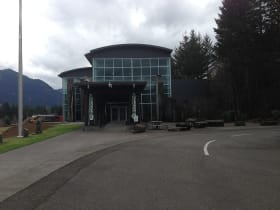
Columbia Gorge Interpretive Center
24 miles away
The Columbia Gorge Interpretive Center Museum in Stevenson documents the natural and human history of the gorge, from Ice Age floods through Native American cultures, the Lewis and Clark Expedition, a...

Bridge of the Gods and Cascade Locks
25 miles away
A slender steel toll bridge across the Columbia River in the heart of the Gorge, named for a Native American legend of a natural stone land bridge, at the historic town of Cascade Locks where steamboa...