
Moore Square
200 S Blount St
Raleigh, NC
A four-acre green at the heart of downtown Raleigh, laid out in the city's original 1792 plan, shaded by oaks two centuries old and watched over by the city's beloved giant copper acorn.
Moore Square is a piece of Raleigh that has been a public green for more than two centuries. When surveyor William Christmas laid out the new state capital in 1792, he set aside five squares for public use, and Moore Square, four acres at the eastern edge of the grid, is one of only two that survive as parkland today. Through all the changes around it, from a quiet churchyard neighborhood to a bustling market and arts district, the square has stayed a place for the city to gather.
Its signature is its trees. Grand oaks line the square, some of them as old as the park itself and others planted in beautification drives in the late 1800s, giving Raleigh its nickname as the City of Oaks a living meaning right downtown. At the south edge sits the park's other beloved feature, a giant copper acorn that has become a symbol of the city and the star of its New Year's Eve celebration.
What Travelers Love
- Grand oak trees, some as old as the park itself, shading a genuine downtown green
- The giant copper acorn, a quirky city symbol dropped from the sky each New Year's Eve
- A civic plaza with a fountain, splash feature, playground, and cafe pavilion
- A central, walkable spot for people-watching, festivals, and outdoor concerts
Worth Knowing
- The square was fully renovated and reopened in recent years, so it is a polished, modern park rather than an untouched historic relic
- It is a lively event space, so festivals, markets, and concerts can fill it on weekends; check ahead if you want it quiet
- It is in the heart of downtown, so use nearby garages or street parking rather than looking for a lot on site
- Shade is plentiful under the oaks, but the open plaza can be hot midday in summer
Learn about Moore Square
One of Raleigh's original squares
Raleigh was a planned city from the start, laid out on paper in 1792 to be North Carolina's permanent capital. William Christmas's plan centered on the capitol and reserved five public squares around the grid, and Moore Square was one of them. For a time it was known as Baptist Grove for the churches that stood nearby, and it served the surrounding residential blocks as a shady common.
As Raleigh grew, the neighborhood around Moore Square shifted from homes to commerce, and the square found itself at the edge of the City Market district, a hub of shops and trade. Through every change the four acres stayed public, one of the rare early American town squares still doing the job it was designed for more than two hundred years ago.
The City of Oaks and the giant acorn
The oaks are the soul of Moore Square. Some of the perimeter trees date back close to the park's founding, and the city added more in beautification efforts in 1871 and again in 1899, laying out diagonal walkways beneath them. Those towering canopies, echoed across the old town, are why Raleigh calls itself the City of Oaks, and Moore Square is the best place to stand among them.
At the square's southern edge sits its most photographed feature: a giant copper acorn, about ten feet tall, first made for the city's bicentennial. Every New Year's Eve the acorn is lowered from above at the stroke of midnight, a Raleigh tradition that draws thousands downtown, so the humble oak seed has become a full-fledged city symbol.
A historic green made new
In recent years Moore Square went through a major renovation that carefully preserved the historic oaks while reinventing the rest of the park for modern city life. The redesign opened up sightlines, added a civic plaza at the center with a shade trellis, an interactive water feature, and a children's play area, and tucked in a small building with restrooms and a food-and-drink pavilion. The result is a park that honors its two-century history while working hard as a daily gathering place.
Today the square hosts festivals, markets, and outdoor concerts, and on an ordinary day it fills with downtown workers at lunch, families at the splash feature, and visitors resting under the oaks between the museums and the restaurants of the City Market blocks. It is an easy, rewarding stop for anyone exploring downtown Raleigh on foot, a living link between the city's founding and its present.
Closest Boutels
The closest Boutel™ stays, so you can turn this stop into an overnight. Each is a place we chose through independent editorial review, never a paid placement.
Details
Raleigh, NC
Frequently asked questions
What is Moore Square?
Moore Square, in downtown Raleigh, is a historic and beautifully revitalized public park, one of the original squares laid out when the city was founded, now a vibrant green gathering place at the heart of downtown. The lovely park features shaded lawns, mature trees including cherished old oaks, gardens, public art, a playful giant acorn sculpture, a cafe, and open spaces for events and relaxation, surrounded by the restaurants, shops, and cultural venues of Raleigh's lively downtown and nearby entertainment district. A welcoming urban oasis blending history and modern city life, it invites visitors to gather and unwind. With its historic charm and downtown setting, Moore Square offers a delightful destination in North Carolina.
What can you do at Moore Square?
You can relax on the shaded lawns beneath the mature oaks, enjoy the gardens, public art, and the playful giant acorn sculpture, grab a bite at the cafe, let children play, attend events and gatherings held in the square, and explore the surrounding downtown restaurants, shops, and cultural venues. The historic green space, the public art, the events, and the vibrant downtown surroundings are the draws, making it a pleasant urban oasis for a stroll, a picnic, or people-watching. It anchors Raleigh's lively downtown. With its park and downtown setting, Moore Square offers an enjoyable experience in Raleigh, North Carolina.
When is the best time to visit Moore Square?
The mild months of spring through fall offer the most pleasant weather for enjoying the outdoor park, its lawns, and gardens, with the square hosting events, markets, and gatherings especially in the warm season, while evenings are lively given the surrounding downtown dining and entertainment. Weekends and event days are busiest. For the most pleasant weather and liveliest atmosphere, aim for spring through fall, timing a visit to an event if you like, at Moore Square in Raleigh, North Carolina.
What should I know before visiting Moore Square?
Moore Square is a free, open public park in downtown Raleigh, easy to visit any time, with a cafe and restrooms and plenty of surrounding downtown dining and parking options. It is liveliest around events, markets, and mealtimes given the neighboring restaurants and entertainment district. As with any urban park, being aware of your surroundings is wise. Checking for any scheduled events before you go can add to a visit. This easy, free access makes Moore Square a welcoming stop in downtown Raleigh, North Carolina.
What is near Moore Square?
Moore Square is in downtown Raleigh, within reach of the North Carolina Museum of Natural Sciences, the North Carolina State Capitol, the North Carolina Museum of Art Park, Pullen Park with its historic carousel, and the Triangle cities of Durham and Chapel Hill. That makes Moore Square a delightful stop to combine with the North Carolina Museum of Natural Sciences, the North Carolina State Capitol, and the other attractions of Raleigh on a visit to North Carolina.
Nearby

North Carolina State Capitol
0.2 miles away
One of the country's best-preserved Greek Revival statehouses, finished in 1840 and barely changed since.
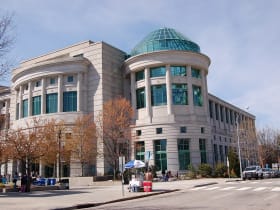
North Carolina Museum of Natural Sciences
0.2 miles away
The Southeast's largest natural history museum, free to enter, home to the world's only real Acrocanthosaurus skeleton, giant whale skeletons, live animals, and working science labs you can watch thro...
Pullen Park Carousel
1.6 miles away
For a quick, genuinely old-fashioned stop in Raleigh, ride the antique carousel at Pullen Park, one of the oldest public parks in the country, opened in 1887.
North Carolina Museum of Art Park
4.3 miles away
Raleigh visitors often miss that the state art museum is free and sits inside a huge sculpture park.