
Montezuma National Wildlife Refuge Overlook
3395 US-20, Seneca Falls, NY
Seneca Falls, NY
A vast Finger Lakes marsh at a great crossroads of the Atlantic Flyway, where hundreds of thousands of migrating birds gather each spring and fall.
Montezuma National Wildlife Refuge protects a great expanse of freshwater marsh at the north end of Cayuga Lake, one of the most important stopovers on the Atlantic Flyway. Twice a year, in spring and fall, hundreds of thousands of migrating waterfowl, geese, ducks, tundra swans, pour into these pools and reed beds to rest and feed on their long journeys.
The refuge sits in the middle of the Finger Lakes, where a wildlife drive and a series of overlooks let visitors watch the spectacle from close range. Beyond the migrating flocks, bald eagles, ospreys, herons, and a long list of marsh and shorebirds make Montezuma one of the premier birdwatching destinations in the Northeast.
What Travelers Love
- Waves of geese, ducks, and swans filling the marsh in migration
- The auto-tour drive with pull-offs and overlooks over the pools
- Bald eagles, herons, and ospreys hunting the wetlands
- A quiet, sweeping landscape of open water, reeds, and sky
Worth Knowing
- Spring and fall migrations are the peak; bring binoculars or a spotting scope
- Early morning and evening are the best light and the most bird activity
- The auto tour and some trails are seasonal, so check what is open before you go
- Stay in or near your car on the wildlife drive to avoid flushing the birds
Learn about Montezuma National Wildlife Refuge Overlook
Cayuga homeland and the great marsh
The marshes of Montezuma lie at the heart of the homeland of the Cayuga Nation, one of the original Six Nations of the Haudenosaunee, whose people lived along these lakes and wetlands for countless generations and who continue as a nation in the Finger Lakes today. The rich marshes were a vital source of fish, waterfowl, and plants.
The wetlands were once far larger, before drainage for the Erie Canal era and farming shrank them. In the 1930s the federal government established the refuge to protect what remained and to restore habitat for the migrating birds, and today Montezuma is managed to keep its pools, marshes, and grasslands healthy for wildlife.
A crossroads of the flyway
Montezuma sits at a natural bottleneck of the Atlantic Flyway, the great migratory corridor that funnels birds along the eastern side of the continent. The wide marshes offer a crucial rest and refueling stop, and in the peak of migration the pools can hold immense concentrations of Canada geese, snow geese, ducks, and tundra swans.
A wildlife drive loops through the refuge with pull-offs and overlooks over the main pool and the surrounding wetlands, letting visitors take in the flocks without disturbing them. Observation towers and short trails add more vantage points across a landscape of open water, cattail marsh, and grassland.
Wildlife beyond the waterfowl
The refuge was one of the early success stories in the return of the bald eagle to the Northeast, and eagles now nest and hunt over the marshes year-round. Ospreys fish the pools in the warm months, great blue herons and egrets stalk the shallows, and marsh hawks quarter low over the reeds.
Beyond the birds, the wetlands teem with muskrats, turtles, frogs, and fish, and the surrounding grasslands and woods hold deer, foxes, and a rich mix of songbirds. In migration the mudflats also draw shorebirds, making the refuge a magnet for birders through much of the year.
Season by season
Spring is one of the great shows, as returning waterfowl fill the pools and the marsh comes alive with the calls of geese and ducks. Summer is quieter and green, a season of nesting herons, ospreys, and marsh birds among the reeds.
Autumn rivals spring for spectacle, with huge flocks of geese and swans staging on the pools before pushing south. Winter is stark and cold, the marshes often frozen, but eagles remain and the open water that stays clear draws hardy wintering birds.
Closest Boutels
The closest Boutel™ stays, so you can turn this stop into an overnight. Each is a place we chose through independent editorial review, never a paid placement.
Details
Seneca Falls, NY
Frequently asked questions
What is Montezuma National Wildlife Refuge?
It is a globally renowned birding destination in the Finger Lakes, a vast wetland complex near Seneca Falls that serves as a major resting and feeding stop for waterfowl and other migratory birds traveling the Atlantic Flyway. With wetlands, grasslands, and woods supporting more than 300 bird species, it is a premier spot for birdwatching and nature photography, offering the chance to see huge numbers of birds in a beautiful natural setting.
How do you explore Montezuma refuge?
You can drive the roughly three-mile Wildlife Drive auto tour route, which lets you view birds and wetlands from your car, walk nature trails of varying lengths, and climb viewing towers and platforms for wider perspectives. The Wildlife Drive and visitor center are generally open from around April 1 through November 30. Bring binoculars, and a spotting scope helps for distant birds across the marshes.
When is the best time to see snow geese at Montezuma?
Late winter into spring, roughly late February through April, is spectacular, when tens of thousands of snow and Canada geese, along with many species of ducks, pause here on their way to breeding grounds farther north. Fall migration is also excellent. For the best wildlife viewing any time of year, come at dawn to mid-morning or in the late afternoon toward dusk, when birds are most active.
What should I know before visiting Montezuma refuge?
The refuge is free and generally open from about a half hour before sunrise to a half hour after sunset. Bring binoculars and, ideally, a scope, and drive slowly on the auto route to spot wildlife. Stay in your vehicle or on the designated trails and platforms to avoid disturbing the birds, and bring insect repellent in the warmer months, when the wetlands can be buggy.
What is near Montezuma refuge to combine with a visit?
The refuge sits in the heart of the Finger Lakes, close to Seneca Falls with its women's rights history, the wineries of the Cayuga and Seneca lake trails, and the scenery of the lakes themselves. That makes it easy to pair a morning of birdwatching with wine tasting, history, or lakeside exploring, adding a rich natural dimension to a Finger Lakes trip.
Nearby
The Windmill Farm and Craft Market
21 miles away
Most wine-country visitors never leave the lakeshore and miss this ridge-top market entirely.
Sonnenberg Gardens and Mansion
28 miles away
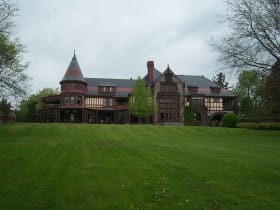
A Gilded Age estate on a rise at the north end of Canandaigua Lake, built by banker Frederick Thompson and his wife Mary, who after his death laid out nine themed formal gardens as a memorial to him.

Erie Canal Museum
30 miles away
Most travelers zip past Syracuse on the Thruway with no idea the Erie Canal once ran through the middle of it.