
Mogollon Ghost Town
917 Bursum Rd, Glenwood, NM
Mogollon, NM
A silver and gold town clinging to a steep canyon deep in the Gila high country, reached by a narrow switchback road and half returned to the mountains.
Mogollon is one of New Mexico's most atmospheric ghost towns, a former gold and silver camp clinging to the walls of a steep canyon high in the mountains of the state's rugged southwest. Getting there is half the experience, a narrow switchback road that climbs up out of the valley near Glenwood and threads into the Gila high country, discouraging the casual visitor and preserving the town's isolation.
In its day this was a booming, rough-edged mining town, tucked into a canyon so tight that its buildings crowded the creek and the road ran right down the middle. Floods, fires, and the swings of the mining economy battered it repeatedly, and when the ore played out most people left. Today a scatter of weathered buildings and mine ruins remain, some restored, some slowly returning to the mountain, in a place that still feels a long way from anywhere.
What Travelers Love
- The dramatic drive in, a narrow switchback road climbing into the mountains
- Weathered old buildings and mine ruins tucked into a steep, forested canyon
- The remote, quiet feel of a town half reclaimed by the Gila high country
- A vivid sense of the rough, isolated life of a mountain mining camp
Worth Knowing
- The road up is narrow, steep, and winding with tight switchbacks, so drive slowly and check conditions before you go
- Mogollon is a partly living community with private property; look and photograph from public areas and respect the residents
- The town and some businesses keep seasonal and limited days, so many services are not always open
- Winter snow and ice can close or hazard the mountain road, so a warm-season visit is safest
Learn about Mogollon Ghost Town
Gold, silver, and a rough camp
Mogollon grew up in the late 1800s around rich veins of gold and silver in the surrounding mountains. Ore was hauled out and mills processed it in the canyon, and the town swelled with miners, merchants, and all the trades that followed a mining boom, becoming for a time one of the more productive mining districts in the territory.
Life here was hard and often dangerous. The canyon setting was prone to flash floods that tore through the town, and fire was a constant threat among the wooden buildings. The town also earned a reputation as a wild place, remote and rough, where law and order were thin. Despite it all, mining continued in fits and starts for decades as ore prices rose and fell.
Bust and the slow fade
As the richest ore was worked out and metal prices dropped, Mogollon's fortunes declined. Mines closed, reopened, and closed again through the early twentieth century, and each downturn drove more people away. The remoteness that had always made the town hard to reach now made it hard to sustain.
By the middle of the century the town was largely abandoned, its buildings emptying out and beginning to weather in the mountain climate. Unlike many ghost towns that vanished entirely, though, Mogollon held on to enough of its structures, and a handful of residents, to survive as a place you can still walk through and read.
The drive and what remains
The road to Mogollon is an experience in itself, a narrow, paved mountain route that climbs in tight switchbacks from the valley below, with steep drop-offs and blind curves that ask for slow, careful driving. It is the kind of road that filters out the crowds and rewards the patient.
At the top, the town strings along the canyon: old commercial buildings, cabins, a theater, and the scattered ruins of mills and mine works climbing the slopes. Some structures have been restored and a few businesses open on seasonal days, while others stand weathered and empty. Much of the town is private, so visitors are asked to explore respectfully from the public road and public areas.
Seasons and the Gila country around it
The warm months, late spring through fall, are the time to visit, when the mountain road is clear and any seasonal businesses are most likely to be open. Fall adds color to the canyon, and summer days are cooler here than in the lowlands thanks to the elevation. Winter can bring snow and ice that make the switchback road hazardous or impassable.
Mogollon sits on the doorstep of the Gila, one of the wildest stretches of country in the Lower 48, including the nation's first designated wilderness. The same rugged remoteness that shaped the town's rough history now makes it a gateway to hot springs, cliff dwellings, and deep forest for those continuing on into the high country.
Closest Boutels
The closest Boutel™ stays, so you can turn this stop into an overnight. Each is a place we chose through independent editorial review, never a paid placement.
Christopher Creek Lodge
Boutel1355 Christopher Creek Loop, Christopher Creek, AZ
147 miles away|Learn More ›
Details
Mogollon, NM
Frequently asked questions
What is the Mogollon Ghost Town?
Mogollon is a historic former mining ghost town nestled high in the rugged mountains near Glenwood in southwestern New Mexico. Once a booming gold and silver mining town in the late nineteenth and early twentieth centuries, with thousands of residents, Mogollon largely emptied as the mines declined, leaving behind atmospheric historic buildings clinging to the steep canyon. Today a tiny community and a handful of seasonal shops, a museum, and preserved structures remain, offering a fascinating glimpse into the Old West mining past. Reached by a dramatic, winding mountain road, the Mogollon ghost town offers a memorable, remote, and photogenic step back into New Mexico's mining history.
How do you get to the Mogollon Ghost Town?
Mogollon is reached by driving a narrow, steep, and winding mountain road that climbs from near Glenwood into the mountains, a dramatic route with sharp curves and drop-offs that requires careful, confident driving and is not suited to large vehicles or nervous drivers. The remote road can be especially challenging or closed in winter due to snow and ice. The scenic but demanding drive is part of the adventure. Because of the road conditions and the town's seasonal, remote nature, checking current access and road conditions before you go is wise to safely reach the Mogollon ghost town.
What can you see at the Mogollon Ghost Town?
You can wander the historic main street and see the atmospheric old buildings clinging to the steep canyon, including preserved structures from the mining era, visit the small museum and any seasonal shops or cafe that may be open, learn about the town's boom-and-bust mining history, photograph the evocative Old West scenery, and enjoy the dramatic mountain setting. The remote, quiet atmosphere adds to the ghost-town appeal. With its preserved historic buildings, mining history, and stunning mountain location, the Mogollon ghost town offers a fascinating and photogenic glimpse into the Old West past of southwestern New Mexico.
When is the best time to visit the Mogollon Ghost Town?
Late spring through fall is the best time, when the mountain road is most accessible and any seasonal shops, museum, or cafe are more likely to be open, and the weather is mildest, with fall bringing beautiful color to the mountains. Winter brings snow and ice that can make the steep, winding access road hazardous or impassable, so it is best avoided then. Because the town's seasonal businesses keep limited schedules, checking what is open before you go is wise. For the best access and experience, aim for the warm-weather months at the Mogollon ghost town.
What is near the Mogollon Ghost Town?
The Mogollon ghost town is in the mountains near Glenwood in southwestern New Mexico, close to the scenic Catwalk National Recreation Trail, the vast Gila Wilderness and Gila Cliff Dwellings to the east, and within reach of the town of Silver City. That makes the Mogollon ghost town a fascinating and remote stop to combine with the Catwalk, the Gila Wilderness, and Silver City on a visit to the beautiful mountains of southwestern New Mexico.
Nearby

Catwalk National Recreation Trail
8.1 miles away
The Catwalk is one of the most unusual short hikes in New Mexico.
Cosmic Campground
14 miles away
Cosmic Campground was the very first Dark Sky Sanctuary in the United States, tucked into the Gila National Forest near Alma, New Mexico, with a full circle view of the sky and no permanent lights for...
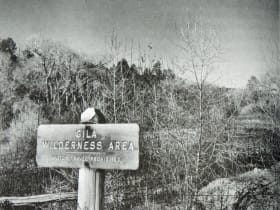
Gila Wilderness
20 miles away
The Gila supports one of the most intact riparian ecosystems in the Southwest, partly because it lacks a major dam on its upper reaches.

Coronado Trail Scenic Byway
36 miles away
A famously winding free drive on US-191, running south from the Springerville and Eagar area over the Mogollon Rim toward Clifton through hundreds of curves, high pine and aspen forest, and the sweepi...