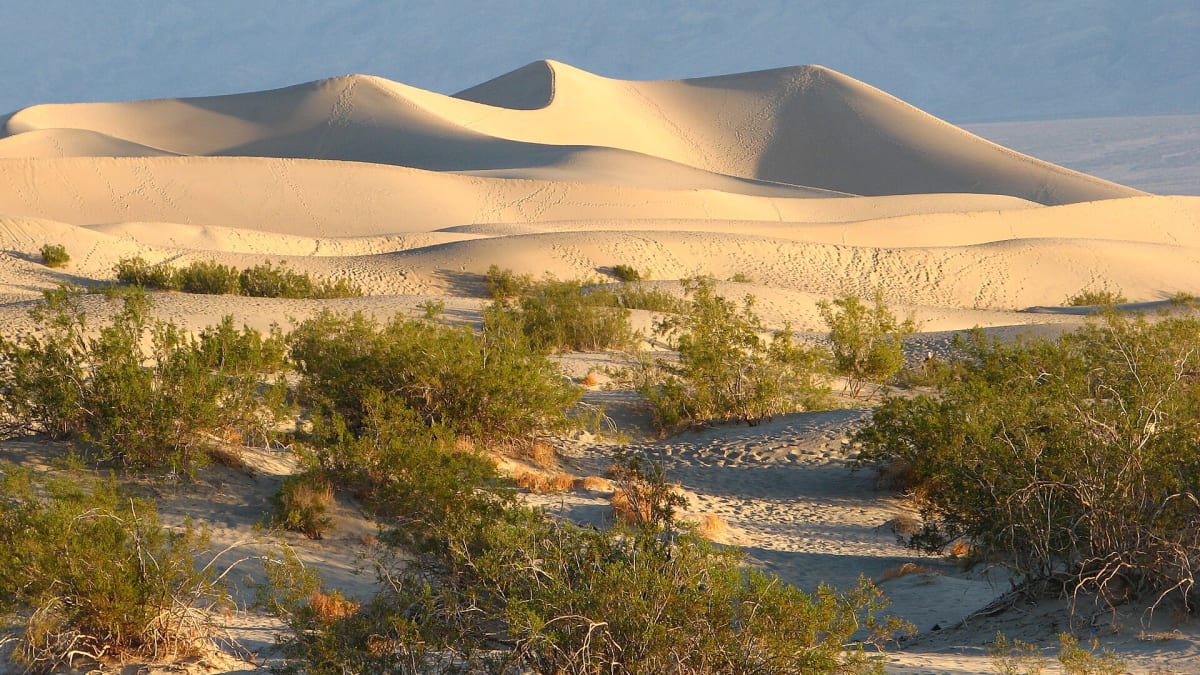
Mesquite Flat Sand Dunes
Mesquite Flat Sand Dunes, Death Valley National Park, CA
Death Valley, CA
Ripple-patterned dunes near Stovepipe Wells, glowing gold at sunrise and sunset.
The Mesquite Flat Sand Dunes are the most accessible dunes in Death Valley, rising in smooth, rippled waves just off the highway near Stovepipe Wells. Easy to reach and free to wander, with no marked trails, they invite visitors to simply walk out into a sea of golden sand shaped by the wind into graceful crests and hollows.
The dunes are a favorite for sunrise and sunset, when low light casts long shadows that reveal every ripple and the sand glows warm against the dark desert mountains. Early mornings often reveal delicate tracks left overnight by kit foxes, lizards, and beetles, and clusters of mesquite trees dot the sand, giving the dunes their name.
What Travelers Love
- Graceful, rippled dunes that are easy to reach and free to explore
- Beautiful light and long shadows at sunrise and sunset
- Delicate animal tracks in the sand at dawn
- Sweeping views of the dunes against the desert mountains
Worth Knowing
- It is inside Death Valley National Park, so an entrance pass is needed
- There are no marked trails; you simply walk out onto the dunes
- The sand can be very hot; go early or late and bring water
- Sunrise offers the freshest, wind-smoothed ripples and animal tracks
Learn about Mesquite Flat Sand Dunes
Walking the dunes
There are no trails at Mesquite Flat; visitors simply park and walk out across the sand in any direction. The tallest dunes rise about 100 feet, and reaching them is a workout in soft sand, but even a short stroll onto the nearer dunes rewards you with rippled ridges and sweeping views.
The dunes are constantly reshaped by the wind, so their patterns are always changing. Walking out a distance leaves the parking area behind and brings a wonderful sense of solitude amid the sculpted sand, with the Grapevine and Cottonwood mountains rising all around.
Light, life, and timing
Sunrise and sunset are the magic hours here. Low light turns the sand gold and etches every ripple in shadow, and at dawn the dunes are freshly smoothed by the night wind and marked with the tracks of the animals that crossed them, kit foxes, kangaroo rats, lizards, and beetles.
Because the open sand offers no shade and can grow blisteringly hot, the cooler months and the edges of the day are the best times to visit. Bring water, wear sturdy shoes or go barefoot when the sand is cool, and take care not to lose track of your starting point on the featureless dunes.
Closest Boutels
The closest Boutel™ stays, so you can turn this stop into an overnight. Each is a place we chose through independent editorial review, never a paid placement.
Sands Motel of Boulder City
Honorable Mention809 Nevada Way, Boulder City, NV
134 miles away|Learn More ›
Details
Death Valley, CA
Frequently asked questions
What are the Mesquite Flat Sand Dunes?
The Mesquite Flat Sand Dunes are the most accessible sand dunes in Death Valley National Park, California, rising just off the highway near Stovepipe Wells. They are a field of smooth, rippled dunes shaped by the wind, the tallest reaching about 100 feet, and are free to explore with no marked trails, so visitors simply walk out onto the sand. Named for the mesquite trees that dot them, the dunes are famous for their beauty at sunrise and sunset, when low light casts long shadows and turns the sand gold. Dawn also reveals delicate tracks left overnight by desert animals. Easy to reach yet wonderfully scenic, they are a favorite Death Valley stop.
Can you walk on the Mesquite Flat Sand Dunes?
Yes, visitors are free to walk anywhere on the Mesquite Flat Sand Dunes. There are no marked trails; you simply park at the roadside lot and set out across the sand in whatever direction you like. Walking to the tallest dunes, about 100 feet high, is a real workout in the soft sand, but even a short stroll onto the nearer ripples is rewarding. Sandboarding and sledding are not allowed, but walking, photography, and quiet exploration are encouraged. Because the open sand can become dangerously hot and offers no shade, it is best to go early or late in the day, bring plenty of water, and keep track of your starting point, since the dunes can look the same in every direction.
When is the best time to visit the Mesquite Flat Sand Dunes?
The best times to visit the Mesquite Flat Sand Dunes are sunrise and sunset, when the low-angle light casts long shadows that reveal every ripple in the sand and bathe the dunes in warm gold. Sunrise is especially rewarding, because the dunes are freshly smoothed by the night wind and marked with the tracks of animals that crossed in the dark. Seasonally, the cooler months from late fall through early spring are the most comfortable, since Death Valley summers are brutally hot and the open sand offers no shade. If you visit in warmer months, go at dawn or dusk, bring plenty of water, and avoid the midday heat entirely.
Why are they called the Mesquite Flat dunes?
The Mesquite Flat Sand Dunes are named for the mesquite trees that grow among them. Mesquite is a hardy desert plant with deep roots that can reach underground water, allowing it to survive in the harsh, dry environment of the dune field. The trees form small hummocks where sand collects around them, and they provide vital food and shelter for desert wildlife. As you walk out onto the dunes, especially around the edges, you will see these gnarled, green mesquite clusters dotting the sand. The word 'flat' refers to the broad, low basin near Stovepipe Wells where the dunes have gathered, hemmed in by the surrounding mountains that stop the sand from blowing away.
Nearby

Zabriskie Point
21 miles away
Zabriskie Point is Death Valley most iconic overlook, a short walk from the parking area to a viewpoint over a maze of golden, wildly eroded badlands.

Artists Palette
26 miles away
Artists Palette is a stretch of desert hills splashed with pastel greens, pinks, purples, and golds, the result of volcanic minerals oxidizing in the rock.

Badwater Basin
32 miles away
Badwater Basin is the lowest point in North America, 282 feet below sea level, a vast expanse of blinding white salt flats ringed by towering desert mountains in Death Valley National Park.