
Linville Caverns
19929 US-221, Marion, NC
Marion, NC
Deep inside Humpback Mountain runs a limestone cave lit for visitors, hung with stone icicles and home to a stream of trout that have gone blind in the dark.
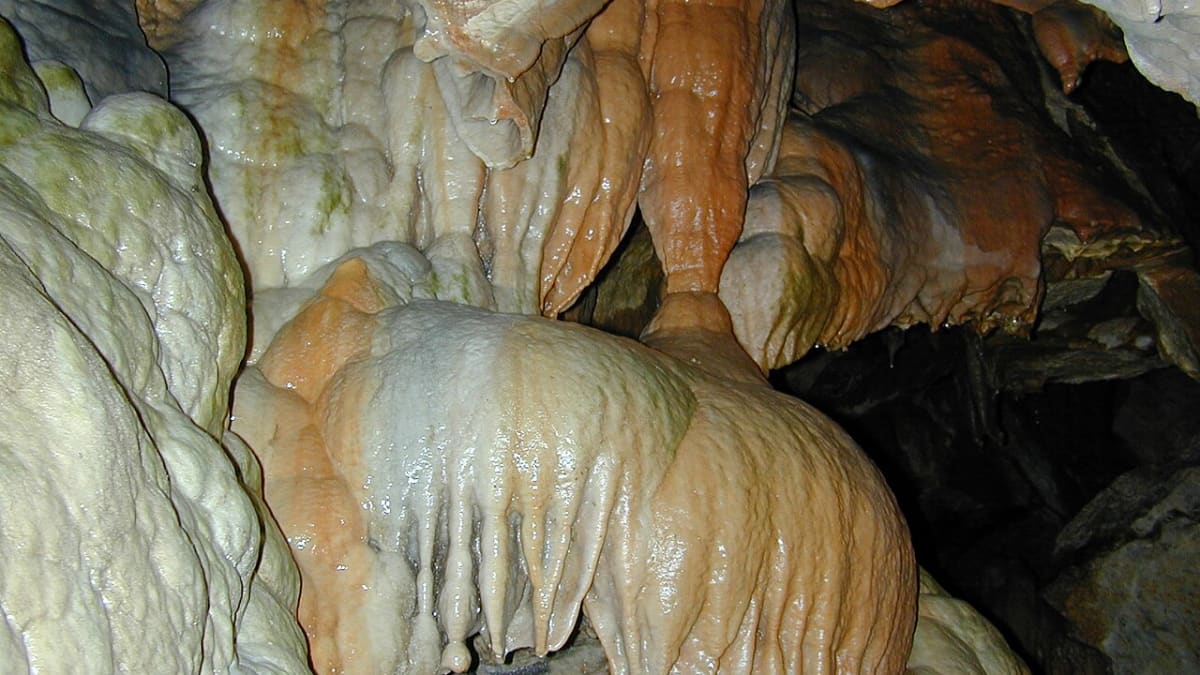
Linville Caverns is the only show cave in North Carolina, a natural limestone cavern hidden inside Humpback Mountain along the highway between Marion and Linville. Discovered in the 1800s when local fishermen noticed trout swimming out of the mountainside, the cave was later opened to visitors, and today a lit, paved path leads deep into the rock past stone formations that took countless centuries to grow.
Inside, the temperature holds steady all year, cool and still, while the cave keeps working the way it always has, water seeping through the limestone drop by drop to build stalactites from the ceiling and stalagmites from the floor. A cold underground stream runs through the cavern, home to trout that have adapted to a life without light, and the guides who lead each tour weave together the cave's geology, its wildlife, and a Civil War hiding place into a short, memorable walk beneath the mountain.
What Travelers Love
- Walking a lit path deep into the mountain past stalactites and flowing rock
- The stream of blind trout that live in the cave's cold water
- The steady, cool temperature that holds year round, a relief on a hot day
- A guided tour that shares the cave's geology and its Civil War history
Worth Knowing
- The cave stays cool year round, so bring a light layer even in summer
- Paths are paved but can be damp, low, and uneven in places, so watch your head and footing
- Tours are guided and run on a schedule, so it is worth checking times before you arrive
- The mountain highway is winding, so allow extra driving time
Learn about Linville Caverns
Discovered by following the fish
The story of Linville Caverns begins with trout. In the mid-1800s, local fishermen noticed fish appearing to swim in and out of the base of Humpback Mountain, which led them to investigate the opening in the rock and discover the cave within. It was a natural wonder hidden in plain sight, its entrance small but its passages winding back into the limestone heart of the mountain.
During the Civil War, the cave served a grimmer purpose. Deserters from both armies are said to have used the cavern as a hiding place, sheltering in its cool darkness, and part of the tour recounts this chapter. The cave was later developed as a public attraction, with a lit and paved path installed so that visitors could safely follow the same passages back into the mountain that the trout first revealed.
How the cave and its formations grew
Linville Caverns is a limestone cave, carved out over an immense span of time by water working slowly through the rock. Rainwater, made faintly acidic as it passes through soil, dissolves the limestone along cracks and seams, hollowing out the passages you walk through today. It is a process measured not in years but in ages.
The formations inside are built by the same water in reverse. As each drop hangs from the ceiling and slowly gives up its dissolved mineral, it leaves behind a tiny ring of stone, and over the centuries these rings grow downward into stalactites, while the drips that fall build stalagmites up from the floor. Where the two meet they form columns, and sheets of flowing rock coat the walls. Because the growth is so slow, the shapes visitors see are the patient work of an unimaginable amount of time.
The blind trout and life in the dark
The cold stream that runs through Linville Caverns is home to trout, and some of them have adapted to their lightless world in a striking way. Fish that live in the deep, dark reaches of the cave, where no daylight ever reaches, have over generations lost the use of their eyes, becoming effectively blind because sight is of no use where there is nothing to see.
These blind trout are one of the tour's most memorable features, a living example of how creatures change to fit an extreme home. The cave's still, dark, constant environment supports other quiet life as well, and the guides point out how a place with no seasons, no sunlight, and an unchanging temperature shapes everything that manages to live there.
The Blue Ridge around the cave
Linville Caverns sits along a winding mountain highway in the rugged Blue Ridge, between the town of Marion in the foothills and the high country around Linville. The drive to it is scenic in its own right, climbing through forested slopes, and the cave makes an easy, weatherproof stop on a longer mountain trip, cool on a hot day and dry in the rain.
The surrounding area is rich with things to see. Linville Falls, one of the most photographed waterfalls in the Blue Ridge, plunges into its gorge just up the road, the Blue Ridge Parkway threads the ridgelines nearby, and the mountain towns of the High Country, with their trails, overlooks, and small downtowns, spread out to the north.
Closest Boutels
The closest Boutel™ stays, so you can turn this stop into an overnight. Each is a place we chose through independent editorial review, never a paid placement.
Details
Marion, NC
Frequently asked questions
What are Linville Caverns?
Linville Caverns, near Marion in the Blue Ridge Mountains of North Carolina, are the only show caverns in the state open to the public, a beautiful limestone cave beneath Humpback Mountain. Guided tours lead visitors along lighted pathways through the cave's chambers, revealing stalactites, stalagmites, flowstone, and other formations, along with an underground stream home to trout, all in the cool, constant temperature of the cave. Long a beloved regional attraction, Linville Caverns offers an accessible and fascinating glimpse into the underground world of the mountains. With its formations and guided tours, Linville Caverns offer a fascinating destination in North Carolina.
What can you do at Linville Caverns?
You can take a guided walking tour through the cave along lighted pathways, marveling at the stalactites, stalagmites, flowstone, and other formations, see the underground stream with its trout, learn about the cave's geology and history, and enjoy the cool underground environment. The beautiful cave formations, the informative guided tour, and the unique underground stream are the highlights, offering wonder for all ages in the only show caverns in the state. It is an accessible cave experience. With its formations and tours, Linville Caverns offer an engaging experience in North Carolina.
What should I know before visiting Linville Caverns?
The cave stays cool year-round at a constant temperature, so bringing a light jacket is wise even in summer, and comfortable, non-slip shoes help on the paved but sometimes damp pathways. Tours are guided and run on a schedule, and admission is charged, so checking current tour times and hours before you go is smart. The developed pathways make it fairly accessible, though there are some low or narrow spots. Coming prepared for the cool temperature ensures a comfortable visit to Linville Caverns in North Carolina.
When is the best time to visit Linville Caverns?
Because the cave stays a constant cool temperature year-round, Linville Caverns are a comfortable destination in any season, making them a refreshing escape on a hot summer day or a cozy indoor outing in cooler or rainy weather. They pair well with the Blue Ridge Parkway and nearby attractions in the warm months. Summer and weekends are busiest for tours. Checking current tour times before you go is wise. Because the cave is comfortable year-round, Linville Caverns make a rewarding stop in any season in North Carolina.
What is near Linville Caverns?
Linville Caverns are near Marion in the Blue Ridge Mountains of North Carolina, near Linville Falls and the Linville Gorge, within reach of Grandfather Mountain, the Blue Ridge Parkway, Mount Mitchell, and the High Country. That makes Linville Caverns a fascinating stop to combine with Linville Falls, Grandfather Mountain, and the other attractions of the High Country on a visit to North Carolina.
Nearby

Blue Ridge Parkway
1.1 miles away
America's Favorite Drive, a 469-mile mountain parkway with no trucks or billboards, running the crest of the southern Appalachians from Shenandoah to the Great Smokies.

Linville Falls
2.5 miles away
For a High Country waterfall without a long haul, stop at Linville Falls on the Blue Ridge Parkway near milepost 316.

Grandfather Mountain
14 miles away
Grandfather Mountain is one of the wildest peaks in the southern Appalachians, its rocky, wind-battered ridgeline holding sixteen distinct habitats and rare plants found almost nowhere else, which ear...
Roaring Fork Falls
18 miles away
A long ribbon of water sliding down a mossy rock face in Pisgah National Forest below Mount Mitchell, reached by an easy, nearly flat forest walk short enough for small children.
Roan Mountain State Park
20 miles away
Roan Mountain is one of the wonders of the southern Appalachians, and the state park is its gateway.