
Lee Metcalf National Wildlife Refuge
4567 Wildfowl Ln
Stevensville, MT
A quiet floodplain of ponds, cottonwood forest, and wet meadow along the Bitterroot River, alive with waterfowl and framed by two mountain ranges.
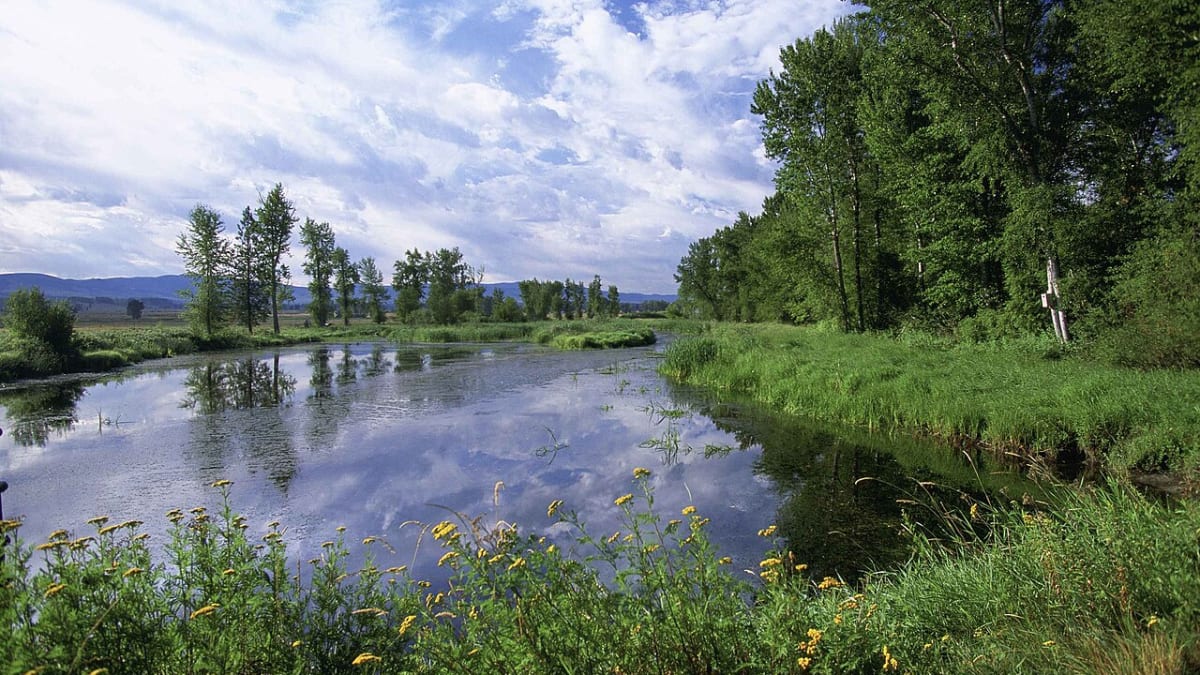
Lee Metcalf National Wildlife Refuge is a green, watery ribbon on the floor of Montana's Bitterroot Valley, roughly 2,800 acres of ponds, wetlands, wet meadow, and cottonwood forest strung along the Bitterroot River. It sits between two very different mountain ranges, the tall, glacier-carved Bitterroots on the west and the gentler Sapphires on the east, and that floodplain setting makes it one of the best places in the valley to see wildlife up close.
The variety of habitat is the whole point. Because the refuge folds together open water, marsh, grassland, and riverside forest in a small area, it draws an unusual richness of life: around 250 species of birds, plus dozens of mammals and a good list of reptiles and amphibians. On a single slow visit you might see waterfowl rafting on the ponds, a bald eagle in a cottonwood, herons stalking the shallows, and songbirds working the brush, all against a wall of mountains.
What Travelers Love
- A rich mix of ponds, marsh, wet meadow, and riverside cottonwood forest packed into an easy-to-walk area
- Roughly 250 bird species recorded, from clouds of waterfowl to eagles, herons, and songbirds
- Level, quiet trails and viewing spots with big views of the Bitterroot and Sapphire Mountains
- A peaceful, uncrowded place to slow down, watch wildlife, and listen to the river valley
Worth Knowing
- This is a working wildlife refuge, so parts of it open and close by season to protect nesting and wintering birds; check the current access before you go
- Spring and fall migration bring the biggest numbers of waterfowl and are the standout times to visit, though there is always something to see
- Bring binoculars, water, and bug protection in the warm months, and dress for wind and mountain weather that can change fast
- Regulated hunting and fishing are allowed in season on parts of the refuge, so seasonal rules and closures apply
Learn about Lee Metcalf National Wildlife Refuge
A refuge born on the Bitterroot
The refuge was established in 1964 to protect this stretch of the Bitterroot River floodplain for migratory birds, originally under the name Ravalli National Wildlife Refuge for the county it sits in. The land had been bought years earlier with the help of the federal duck stamp program and the Migratory Bird Conservation Commission, the same effort that pieced together dozens of refuges across the country.
In 1978 it was renamed for Lee Metcalf, the Montana senator and lifelong conservationist who served on that very commission and pushed hard for protecting wild land and waterfowl. It was a fitting tribute: the lands that became this refuge were among the many acres the commission set aside during his years of work, and his name now marks one of the loveliest pieces of protected valley bottom in western Montana.
Where the mountains meet the marsh
What makes the refuge special is how much different habitat it packs into a short walk. The Bitterroot River braids through it, leaving behind old channels, ponds, and sloughs, and the ground steps up from open water to cattail marsh to wet meadow to grassy benches, all shaded in places by tall gallery forests of cottonwood along the river. Each of those layers supports a different set of creatures, so a short loop can carry you past several little worlds.
That is why the bird list runs so long. More than thirty kinds of waterfowl use the ponds, and the refuge also hosts grebes, wading birds, hawks and eagles, swallows and swifts over the water, and a deep bench of warblers, sparrows, finches, and other songbirds in the brush and trees. White-tailed deer, muskrat, and other mammals move through the wetlands, and the whole scene plays out under the dramatic skyline of the Bitterroot Range.
The rhythm of the seasons
A refuge like this changes completely through the year, and knowing the rhythm helps you time a visit. Spring and fall migration are the showstoppers, when big pulses of ducks, geese, and other waterfowl drop into the ponds to rest and feed, and the valley fills with movement and sound. Late spring and early summer bring nesting birds and their young, while winter holds a quieter cast of hardy residents and visitors from the north.
Because the refuge exists first to protect that wildlife, some areas open and close by season to keep nesting and wintering birds undisturbed, and regulated hunting and fishing are allowed on parts of it at certain times. The refuge also hosts seasonal community events like a spring birding festival and a fall scarecrow gathering. It is always worth a quick check of current conditions and access before you drive out, so you know which trails and viewpoints are open on the day you come.
Visiting Lee Metcalf
The refuge sits just a couple of miles north of Stevensville and a short, easy drive from Hamilton, with Missoula about half an hour up the valley, so it fits neatly into a Bitterroot day. Level trails and viewing areas let you walk out among the ponds and meadows at your own pace, and the flat ground makes for gentle, family-friendly wandering with the mountains always in view.
Come with binoculars and time to spare, since the refuge rewards patience more than mileage; the trick is to stop, stand still, and let the wildlife settle back around you. Early morning and the hour before sunset are best for both animals and light. Pack water and, in the warm months, protection from sun and insects, and remember there are no services out among the ponds. It is the kind of unhurried, quietly beautiful stop that makes the Bitterroot Valley worth slowing down for.
Closest Boutels
The closest Boutel™ stays, so you can turn this stop into an overnight. Each is a place we chose through independent editorial review, never a paid placement.
Details
Stevensville, MT
Frequently asked questions
What is Lee Metcalf National Wildlife Refuge?
Lee Metcalf National Wildlife Refuge, in Montana's Bitterroot Valley near Stevensville, is a beautiful refuge of wetlands, ponds, riverbottom forest, and grasslands along the Bitterroot River, a haven for birds and wildlife against the backdrop of the Bitterroot Mountains. The refuge protects rich habitat where visitors can watch waterfowl, songbirds, raptors, deer, and other wildlife from trails, viewing areas, and a wildlife-viewing drive, with the mountains rising beyond. A peaceful and scenic place for birdwatching and quiet walks, it delights nature lovers. With its wetlands and wildlife, Lee Metcalf National Wildlife Refuge offers a tranquil destination in Montana.
What wildlife can you see at Lee Metcalf National Wildlife Refuge?
You can see abundant waterfowl on the ponds and wetlands, songbirds, raptors such as hawks and eagles, ospreys, deer, and other wildlife amid the riverbottom forest and grasslands, with the refuge especially rich in birds. The variety of birdlife, the waterfowl on the wetlands, the raptors, and the peaceful setting are the draws, making it a favorite for birdwatchers. The changing seasons bring different birds. With its wildlife and scenery, Lee Metcalf National Wildlife Refuge offers a rewarding visit in the Bitterroot Valley, Montana.
What can you do at Lee Metcalf National Wildlife Refuge?
You can walk the trails through wetlands and forest, watch birds and wildlife from viewing areas, drive the wildlife-viewing route, photograph the scenery and animals, and enjoy the peaceful riverbottom setting beneath the Bitterroot Mountains. The trails, the wildlife viewing, the scenic drive, and the birdwatching are the draws, offering a tranquil nature experience. Bringing binoculars enhances the birding. With its trails and wildlife, Lee Metcalf National Wildlife Refuge offers a rewarding experience in Montana.
When is the best time to visit Lee Metcalf National Wildlife Refuge?
Spring and fall are especially rewarding for the migrating waterfowl and birds that pass through the refuge, while spring through fall offers pleasant weather for the trails and wildlife viewing, and each season brings different birdlife. Early morning and evening are prime times for spotting wildlife. Because some areas may follow seasonal access rules, checking current information before you go is wise. For the richest birdwatching, aim for spring or fall at Lee Metcalf National Wildlife Refuge in Montana.
What is near Lee Metcalf National Wildlife Refuge?
Lee Metcalf National Wildlife Refuge is near Stevensville in Montana's Bitterroot Valley, within reach of Stevensville, the Bitterroot River and mountains, the Daly Mansion and Blodgett Canyon to the south, and Missoula to the north. That makes Lee Metcalf National Wildlife Refuge a tranquil stop to combine with the other attractions of the Bitterroot Valley and Missoula area on a visit to Montana.
Nearby
Daly Mansion
18 miles away
The Daly Mansion is the 50-room Georgian-revival summer estate of Copper King Marcus Daly, preserved as a public historic site on 46 wooded acres north of Hamilton in the Bitterroot Valley.
Blodgett Canyon Trailhead
20 miles away
A few miles west of Hamilton, the Blodgett Canyon Trailhead opens into a glacier-carved granite gorge often called the Yosemite of Montana, with cliffs rising more than two thousand feet above the cre...
A Carousel for Missoula
23 miles away
This is a genuine community-built treasure hiding in plain sight in a riverside park.